14 Mm vs 16 Mm Spark Plug Socket: Which Do You Need?

Use the socket that matches the spark plug hex: 14 mm plugs need a 14 mm spark plug socket, and 16 mm plugs need a 16 mm socket. The wrong size can round the plug, crack the insulator, or stop the job cold. This guide shows how to measure the hex, read common plug markings, and confirm the fit in a real plug well.
| Decision factor | 14 mm | 16 mm | Winner |
|---|---|---|---|
| Hex size | Smaller metric spark plug hex; measured across the flats | Larger metric spark plug hex; also treated as 5/8 inch in common socket listings | 16 mm for broader socket compatibility |
| Fit on common plugs | Used on some specialized engines and less common plug designs | Common on many modern vehicles, including a wide range of European and Asian vehicles | 16 mm |
| Check speed | Best confirmed from the exact plug part number or manual before removal | Best confirmed from the exact plug part number or manual before removal | tie |
| Risk if guessed | Wrong choice can slip on a 16 mm hex or damage a smaller plug | Wrong choice can slip on a 14 mm hex or round the plug | tie |
| Accessory fit in tight wells | May still need thin-wall clearance in deep or narrow plug wells | May still need thin-wall clearance in deep or narrow plug wells | tie |
How to match the socket to the spark plug hex
The key measurement is the spark plug hex, not the thread diameter on the box. A plug marked “14 mm” can refer to thread size, while the socket choice depends on the hex measured across the flats. That is why 14 mm and 16 mm should be compared as socket-fit sizes, not as package labels.
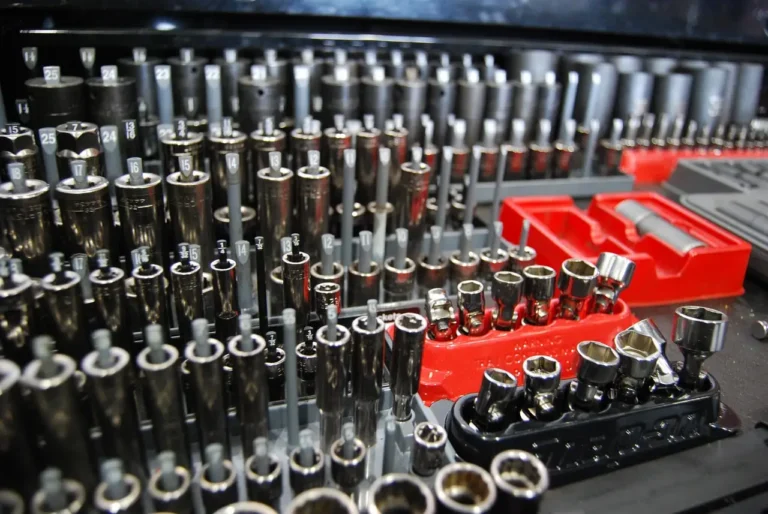
For many socket guides, 16 mm is treated as the same nominal size as 5/8 inch. That is why 5/8 inch spark plug sockets are so common on standard plugs, while 13/16 inch sockets are used on larger or heavy-duty plugs. The label on the box is not enough on its own.
14 mm
Choose 14 mm when the spark plug hex measures 14 mm across the flats. It is the smaller of the two options here and is listed as less common, but still essential for some specialized engines. If the plug box or manual names a 14 mm hex, that is the size to match.
16 mm
Choose 16 mm when the plug hex measures 16 mm across the flats. It is one of the most common metric sizes and is commonly used on many modern vehicles, including a wide range of European and Asian vehicles. In many socket listings, 16 mm is the same nominal fit as 5/8 inch.
Do you need a 14 mm or 16 mm socket?
Use the exact spark plug part number or the manufacturer manual first. That is the cleanest decision rule, because plug packaging can show thread size while the socket choice depends on the hex. If the documentation says 14 mm hex, buy a 14 mm socket; if it says 16 mm hex, buy 16 mm.
If the exact plug is already out or visible, confirm the hex before you buy another tool. This avoids the common mistake of choosing a socket from the box label alone. It also matters with aftermarket plugs, because some replacement plugs change socket requirements even when the vehicle stays the same.
Say your manual lists a plug with a 16 mm hex, but the replacement box only mentions thread diameter. In that case, the manual wins. A 14 mm socket may feel close at first, then slip and mark the hex once torque is applied.
When the manual wins over the package
The manufacturer manual is the best first check because it identifies the plug size the engine was designed to take. If the manual and the package disagree, stop and confirm by plug part number. That simple step prevents buying a socket that fits the thread but not the hex.
Measure the spark plug hex across the flats with a vernier caliper if the plug is out or easy to reach. Do not measure point to point, and do not use the thread diameter. Across-flats measurement is the only number that tells you which socket fits.
Caliper checklist
- Open the caliper jaws wide enough to fit over the hex.
- Place the jaws on two opposite flat faces.
- Close gently until both faces contact without rocking.
- Read the measurement across the flats.
- Match the result to 14 mm or 16 mm.
If the plug is deep in a plug well, a caliper may be awkward to use before removal. In that case, start with the owner or manufacturer manual, then confirm the fit with the socket once access allows. A caliper is a verification tool, not always the first step in a tight engine bay.
Picture a plug well with a narrow tube and a recessed hex. A standard socket may fit the hex itself but still fail to clear the surrounding wall. In that case, the correct size can still need a thin-wall socket to get down into the well.
What size socket fits most modern plugs?
16 mm fits many modern spark plugs, especially on a wide range of European and Asian vehicles. Most standard spark plugs still use one of a few common socket sizes, and 5/8 inch is often listed with the same nominal fit as 16 mm. For older or larger plugs, 13/16 inch still comes up often.
That does not make 16 mm universal. Spark plug size varies by engine and plug model, so the exact plug part number or manual should settle the choice. If the plug is a specialized design, 14 mm may be the correct socket even when 16 mm is more common overall.
Where 13/16 inch still comes up
13/16 inch spark plug sockets are used for larger or heavy-duty plugs. They are not the first choice for most modern plugs, but they remain common on some older or larger engines. If a plug feels obviously oversized compared with a standard small-hex plug, do not force a 16 mm socket onto it.
Spark plug socket fit check
Use the plug hex size to choose the socket, then verify how the socket sits in the well. A correct hex size still can fail if the socket wall is too thick for the recess, if the plug is damaged, or if the plug style uses a different grip profile. This is the practical check that catches real-world fit problems.
| Plug hex size | Common inch equivalent | How to verify | What to do if the socket slips |
|---|---|---|---|
| 14 mm | No single inch equivalent is the usual shorthand in this guide | Confirm the hex across the flats with a vernier caliper or check the manufacturer manual | Stop, inspect for rounded corners, and confirm the plug part number before retrying |
| 16 mm | 5/8 inch | Check the manual first, then confirm the hex across the flats if access allows | Use the correct size socket and a thin-wall version if the well is tight |
| 13/16 inch | 21 mm | Confirm the plug listing or manual before buying a socket | Do not force a smaller socket; switch to the correct larger size |
Thin-wall versus standard socket clearance
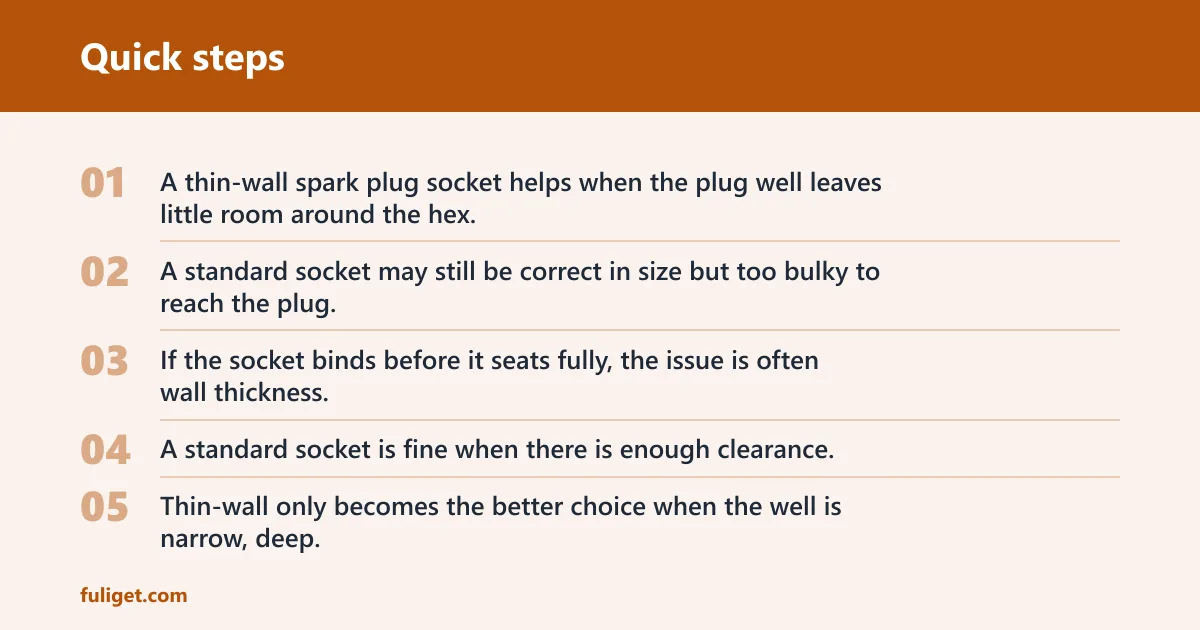
A thin-wall spark plug socket helps when the plug well leaves little room around the hex. A standard socket may still be correct in size but too bulky to reach the plug. If the socket binds before it seats fully, the issue is often wall thickness, not hex size.
A standard socket is fine when there is enough clearance. Thin-wall only becomes the better choice when the well is narrow, deep, or surrounded by a tube that limits access. The fit problem should be solved at the well first, then at the hex.
Rubber insert or magnetic socket?
A rubber insert spark plug socket helps grip the plug, keeps it from dropping, and can protect the ceramic insulator during removal and installation. A magnetic spark plug socket does the same retention job in a different way, and it is often useful in tight spaces where the plug must be held securely during extraction. Both can be correct; the choice depends on access and retention preference.
When a rubber insert helps
Use a rubber insert when you want extra friction on the plug body and a soft contact surface around the insulator area. It is a practical option for standard removal and reinstallation, especially when the plug is not awkwardly hidden. The insert can also reduce the chance of the plug slipping out of the socket mid-lift.
When a magnetic socket is better
Choose a magnetic spark plug socket when the plug sits deep in a tight engine bay and needs positive retention without a rubber grip sleeve. Magnetic hold can be easier when the plug is long, the well is narrow, or the tool has to travel straight out of a recess. It is an alternative, not a requirement.
What happens if the size is wrong?
The most common failure is slippage. A socket that does not match the hex can round the plug, crack the ceramic insulator, or leave the plug stuck partway out of the head. If the plug is already partially rounded, the wrong socket makes the problem worse very quickly.
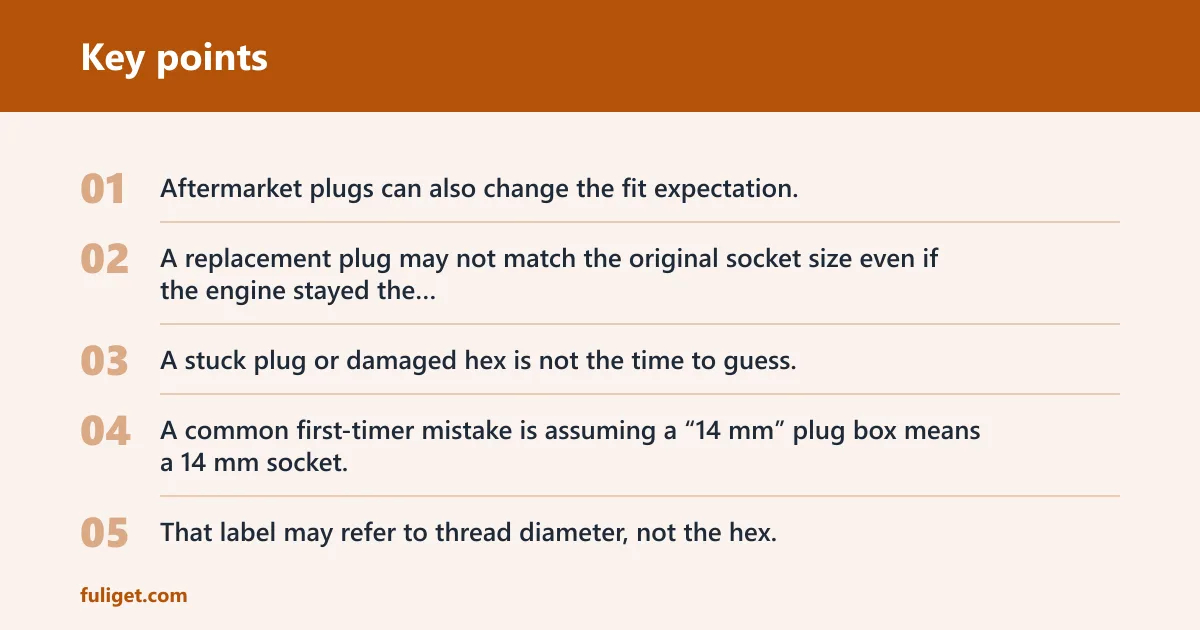
Aftermarket plugs can also change the fit expectation. A replacement plug may not match the original socket size even if the engine stayed the same, so the exact plug part number matters. A stuck plug or damaged hex is not the time to guess.
A common first-timer mistake is assuming a “14 mm” plug box means a 14 mm socket. That label may refer to thread diameter, not the hex. If the socket slips even slightly, stop before you round the flats and make removal harder.
Rounded hexes and stuck plugs
Rounded hexes usually come from forcing a nearly correct socket or using a loose fit on a dirty plug. Stuck plugs get worse when the wrong size socket twists on the hex instead of gripping it squarely. If the plug resists, verify the size again before applying more force.
Aftermarket plugs and mixed sizing
Aftermarket plugs can differ from the original equipment plug in socket size even when the thread and reach remain correct. That is why the plug part number is the safer reference than a broad vehicle guess. If the replacement listing does not clearly state the hex, check the manufacturer manual or the plug itself before installation.
Choose 14 mm if you need the smaller hex
Choose 14 mm if the plug is listed with a 14 mm hex, or if a vernier caliper shows 14 mm across the flats. It is the right pick for some specialized engines and for plugs that are clearly smaller than the common 16 mm size. Do not buy it from a package label that only names thread diameter.
Choose 16 mm if the plug is the common metric size
Choose 16 mm if the manual, plug part number, or caliper reading points to a 16 mm hex. It is the common metric choice on many modern vehicles, and it is commonly treated as the same nominal size as 5/8 inch. If access is tight, confirm whether a thin-wall socket is also needed.
Frequently asked questions
Do I need a 14 mm or 16 mm spark plug socket?
Use the plug hex, not the thread label on the box. If the spark plug hex measures 14 mm across the flats, buy a 14 mm socket. If it measures 16 mm, buy 16 mm, which is commonly treated as the same nominal fit as 5/8 inch.
How do I tell what size spark plug socket my engine needs?
Start with the manufacturer manual or the exact plug part number. If the plug is accessible, measure the hex across the flats with a vernier caliper. That workflow is more reliable than guessing from the vehicle alone, because the same engine family can use different plugs.
Is 16 mm the same as 5/8 inch for spark plugs?
In common socket sizing, yes. Many spark plug guides treat 16 mm and 5/8 inch as the same nominal size for plug sockets. That is why a 5/8 inch spark plug socket is often the right choice for plugs listed as 16 mm.
What size socket fits most modern spark plugs?
16 mm is the common metric size you will see most often on many modern vehicles. Many standard plugs also map to 5/8 inch in common socket listings. Still, confirm the exact plug model, because size varies by engine and plug design.
Can I measure a spark plug hex with a caliper?
Yes. Use a vernier caliper and measure across the flats, not across the points. That tells you whether the hex is 14 mm or 16 mm. If the plug is deep in the head, the manual may be the easier first check.
Should I use a rubber insert or magnetic spark plug socket?
Either can work. A rubber insert helps grip the plug and protect the ceramic insulator, while a magnetic spark plug socket holds the plug securely in tight spaces. Choose the one that matches the plug well and the access you have.
What happens if I use the wrong spark plug socket size?
The socket can slip, round the hex, crack the insulator, or leave the plug stuck. That risk is highest when the plug is already tight or the hex is slightly damaged. If the fit feels loose, stop and confirm the size before applying more force.