Can a Small Air Compressor Run Air Tools at Home?

Many small home compressors can run brad nailers, staplers, inflators, and some ratchets, but most tend to fall short on impact wrenches, grinders, and spray guns when airflow demand stays high; for those, plan on a larger tank and higher CFM. If you size it wrong, tools stall, pressure drops, and paint or fasteners come out badly. This guide separates burst tools from continuous-demand tools and shows which air tools a small compressor can handle, plus the specs that matter.
Quick answer for home garages
For home use, the first filter is CFM at 90 PSI, not tank size. A small compressor can handle tires, brad nailers, finish nailers, and other short-burst tasks, but it usually struggles with impact wrenches used for long runs and with spray guns that demand steady airflow. A 6-10 gallon unit is often a practical step-up for broader garage work.
Tank size mainly buys you time between cycles. It does not make up for too little airflow, and a big tank with weak CFM still runs out once the tool keeps pulling air.
What small compressors handle well
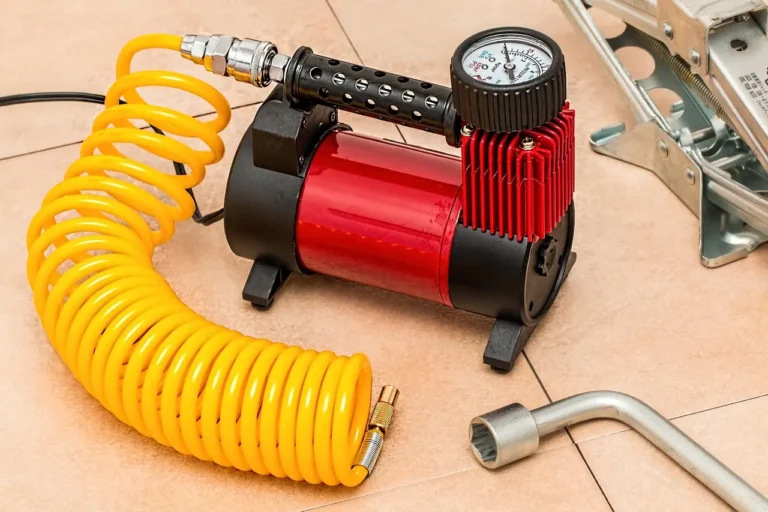
Small portable compressors are strongest at brief, interrupted tasks. Tire inflation is about 1.2 CFM, and low-demand nailers usually fit the category well. That makes a compact oil-free pancake compressor a solid match for trim work, inflation, and occasional air cleanup.
Where small compressors fall short
Impact wrenches need about 3-5 CFM, and light HVLP spray painting needs 4+ CFM. That is where many compact units run out of air first, especially if the work lasts long enough for the compressor to recover repeatedly.
Fast rule for choosing by task
- Start with the tool’s CFM at 90 PSI.
- Choose a compressor that meets or exceeds that number.
- Use tank size to decide how long you can work before recovery cycles start.
- Check noise level if the garage is attached to living space.
Say your job is inflating a car tire and blowing dust out of a filter. A 1-10 gallon unit can feel perfectly adequate, because the tool demand is short and intermittent. Suppose the same compressor is asked to spray a fence panel. The tank empties quickly, and the spray pattern starts to suffer.
What counts as a small compressor?
A small home-garage compressor is commonly in the roughly 1-10 gallon range, with 6-gallon and 8-gallon models showing up often because they are still portable but give more buffer than a tiny unit. The class covers both oil-free and oil-lubricated designs, and the right one depends on how often you move it and how hard you plan to run it.
Portable oil-free vs oil-lubricated units
Portable oil-free compressors are common for DIY and inflation because they are low-maintenance and easy to carry. Oil-lubricated compressors usually run cooler and are often quieter, but they ask for more maintenance and are better suited to heavier DIY use.
Common tank sizes in the 1-10 gallon range
A 1-gallon unit can handle very light jobs and inflation. A 6-gallon tank is a common compact size for nailers and light garage work. An 8-gallon unit is a useful middle ground when you want longer run time without jumping to a stationary machine.
Why 6-gallon and 8-gallon models are common picks
Those sizes hit the practical compromise many homeowners want: still movable, but less likely to cycle constantly on short tasks. They are also common enough that you can compare more models around the same class instead of choosing from only tiny inflators or full-size shop units.
What specs matter most?
CFM at 90 PSI is the main compatibility spec for air tools. Tank size matters for runtime between cycles, but it cannot fix a compressor that simply does not move enough air. Noise level in dBA matters too, especially in attached garages and early-morning use, where a quieter machine can be easier to live with.
CFM at 90 PSI and why it leads the decision
Most home garage tasks need 1.2-4.2 CFM at 90 PSI. That range covers a lot of typical use, but the exact tool matters. A compressor should meet the tool’s demand at that pressure, or it will fall behind during use.
Tank size and why it only extends runtime
Tank size is a reserve, not an endless source of air. A larger tank stretches the time before the motor kicks back on, which helps with burst tools, but a tool that needs continuous airflow will still drain the system if CFM is too low.
Noise level in dBA for attached garages
Noise under 70 dBA is described as livable for early-morning garage use. That matters if the compressor sits under a bedroom or near a shared wall. One example quiet compressor is rated at 56 dB, while some compact units are much louder, such as a model rated at 78.5 dBA.
Hose length, regulator losses, and setup effects
Long hoses, restrictive fittings, and a poorly set regulator can make a capable compressor feel weaker. If pressure drops at the tool, the compressor may not be the only problem. Shorter hoses and clean fittings help a small unit feel closer to its rated output.
Can a small compressor run air tools?
Yes, but only the right kind. The useful split is between burst-use tools and continuous-demand tools. Burst tools pull air in short pulses, so a small tank can keep up for a while. Continuous tools keep asking for air, so CFM becomes the limit long before the tank size feels generous.
One-shot tools versus continuous-demand tools
Brad nailers, finish nailers, and tire inflators work in short bursts. Impact wrenches sit in the middle because they are intermittent but can use a lot of air. Spray guns and similar tools are harder because they need a steady supply instead of a quick pulse.
How to read the fit line between burst use and sustained use
If a tool is triggered, used briefly, and released, a small compressor may be enough. If a tool keeps pulling air while the job continues, the compressor needs both enough CFM and enough reserve to avoid rapid pressure drop. That is the difference between short jobs and all-morning jobs.
When a tool works only for short jobs
A compressor can feel fine for one wheel nut, then feel weak for a full set. That is normal when CFM is close to the tool’s demand. The tank carries the first burst, but recovery speed decides whether the job stays workable.
Air tool fit matrix
This table maps common home air tools to minimum practical CFM at 90 PSI and shows which compressor class is realistic. Use the borderline column to separate short-burst success from sustained use that will push a small unit too hard.
| Common home air tool | Minimum practical CFM at 90 PSI | Realistic compressor class | Borderline cases |
|---|---|---|---|
| Tire inflator / blow-off gun | About 1.2 CFM | 1-6 gallon | Works well in short bursts; long air cleaning sessions push recovery time up. |
| Brad nailer | 0.3-0.5 CFM | 1-6 gallon | Usually fine for trim and small projects; rapid repetitive nailing can still cycle the compressor often. |
| Finish nailer | About 1 CFM | 1-6 gallon | Good for intermittent trim work; long trim runs are easier with a 6-gallon or larger tank. |
| Ratchet | 3-5 CFM | 6-10 gallon | Short bursts are realistic; long fastener removal sessions can outrun a small tank and lower-CFM unit. |
| Impact wrench | 3-5 CFM | 6-10 gallon, sometimes larger | One or two fasteners may be fine; sustained wheel or suspension work often exposes weak recovery. |
| Light HVLP spray gun | 4+ CFM | Larger compressor | Short touch-up work may pass; longer passes usually drain a small compressor too fast for even spray. |
Can a 6 gallon compressor handle your garage tasks?
Yes, for many of them. A 6-gallon compressor is often enough for tire inflation, blow-off use, brad nailers, and finish nailers. It can also handle brief impact wrench use, but it is usually not the right answer for extended spray painting or long wrenching sessions.
Tire inflation and blow-off use
These are the easiest jobs for a 6-gallon unit because the air demand is short and light. The tank gives a useful buffer, and the motor has time to recover between bursts. That is why this class feels practical for routine garage maintenance.
Brad nailers and finish nailers
Brad nailers usually sit around 0.3-0.5 CFM, and finish nailers are still low-demand compared with heavier tools. For trim work, molding, and small carpentry projects, a 6-gallon compressor is a sensible fit if the work is intermittent rather than continuous.
Impact wrenches for brief bursts
Impact wrenches need about 3-5 CFM, so a 6-gallon compressor may work for quick tasks but can struggle if you keep the trigger down or move through many fasteners. The tank may start strong, then pressure falls faster than the motor can restore it.
Why spray guns are the stress test
Light HVLP spray painting needs 4+ CFM and steady delivery. That is where a small compressor often shows its limit first. The spray pattern can become uneven as pressure sags, which is why small units are a poor choice for extended painting.
Quiet or powerful: which tradeoff matters more?
Quiet operation matters most in attached garages, but lower noise can come with slower recovery or a smaller motor. A quiet compressor under 70 dBA is easier to live with, yet it still needs enough CFM for the tool. The best choice is the one that fits both your noise limit and your task list.
Quiet compressors under 70 dBA
Noise under 70 dBA is a useful target for neighborhood-friendly use and early-morning projects. Quiet compressors are often oil-free, which keeps maintenance simple, but some quiet models trade away recovery speed or peak airflow.
Oil-free convenience
Oil-free portable compressors are common for homeowners because they are simple to move and simple to maintain. They fit inflation and nailer work well. For heavier use, the convenience can be offset by louder operation or more frequent cycling.
Oil-lubricated durability and recovery
Oil-lubricated compressors often suit heavier DIY use better because they are usually cooler-running and can be quieter. They also tend to feel more comfortable for longer sessions, though the added maintenance is part of the purchase decision.
What matters in an attached garage
If the garage shares a wall with living space, noise may matter as much as raw output. A compressor that is loud but fast can still be unpleasant, and a quiet one that is too weak can waste time. Pick the side of that tradeoff that fits your projects.
When should you move up to a larger unit?
Move up when your work shifts from occasional bursts to repeated, sustained airflow demand. If the compressor recovers slowly, the pressure drops during use, or you spend more time waiting than working, the small unit has reached its limit. That is the point where a larger stationary model makes more sense.
Signs you have outgrown a small compressor
If the motor runs almost constantly, the tool slows near the end of each task, or pressure never fully recovers between cycles, the compressor is undersized for the job. Tank size alone will not solve that problem if the CFM is too low.
Tasks that point to a larger stationary model
Repeated impact wrench use, longer spray painting sessions, and multi-tool weekends are the clearest signs. Those jobs need more continuous air than a compact 1-10 gallon unit usually provides. A larger stationary unit is the cleaner fit once the work stops being occasional.
A simple decision rule for shopping up
If the tool’s demand sits near the top of the 1.2-4.2 CFM home-garage range, and you plan to use it often, start looking above the small-compressor class. If your work is mostly inflation, nailing, and short bursts, a 6-10 gallon portable unit remains the practical choice.
A common beginner mistake is assuming a large tank alone will let a small compressor power a paint sprayer or impact wrench nonstop. A 6-gallon unit with weak CFM can still disappoint on an impact wrench, while a smaller but better-matched compressor can handle nailers and inflation without much trouble. Match the tool first, then choose the tank.
Frequently asked questions
Can a small air compressor run an impact wrench at home?
Sometimes, but only for brief bursts. Impact wrenches need about 3-5 CFM, so a small compressor may handle a few fasteners before pressure drops. For repeated wheel work or longer sessions, a 6-10 gallon unit with enough CFM is the more realistic choice.
Can a 6 gallon air compressor run air tools?
Yes, many of them. A 6-gallon compressor is a strong fit for tire inflation, blow-off use, brad nailers, and finish nailers. It can also help with brief impact wrench use, but it is not the right match for light HVLP spray painting or sustained high-demand work.
What air tools can a small compressor run?
Small compressors can run tire inflators, brad nailers, finish nailers, and other short-burst tools with low air demand. Some ratchets also work if the task is brief. The limit shows up when the tool needs steady airflow, because CFM becomes more important than tank size.
How much CFM do I need for a home garage air compressor?
For most home garage tasks, 1.2-4.2 CFM at 90 PSI covers a wide range of use. Tire inflation sits near 1.2 CFM, while impact wrenches need about 3-5 CFM and light HVLP spray painting needs 4+ CFM. Match the compressor to the hardest tool you plan to use.
Will a small air compressor run a nail gun?
Yes, usually. Brad nailers generally use 0.3-0.5 CFM, and finish nailers are still low-demand compared with impact tools or spray guns. For trim work and other short jobs, a small portable compressor is often enough, especially when the nails are driven in short bursts.
Can a portable air compressor run spray guns?
Only limited spray work, and often not well. Light HVLP spray painting needs 4+ CFM, which is where many compact compressors start to struggle. A small tank may help with a short touch-up, but steady spraying usually needs more airflow and a larger compressor class.
Is a quiet small air compressor enough for DIY air tools?
It can be, if the jobs are light and intermittent. Noise under 70 dBA is easier to live with in an attached garage, and some quiet models are very appealing for early-morning use. The tradeoff is that quiet operation does not guarantee fast recovery or enough CFM for harder tools.