What Size Air Compressor Do You Need for Car Tires?

For most cars, a 12V portable inflator is often enough. For SUVs and trucks, choose a compressor with higher airflow, roughly 1.0–2.0 CFM at 90 PSI, or expect longer fill times. Using one that is too small wastes time and can leave low tires underinflated. This guide explains what size air compressor you need for car tires and how to choose for cars, SUVs, and trucks.
PSI and airflow explained
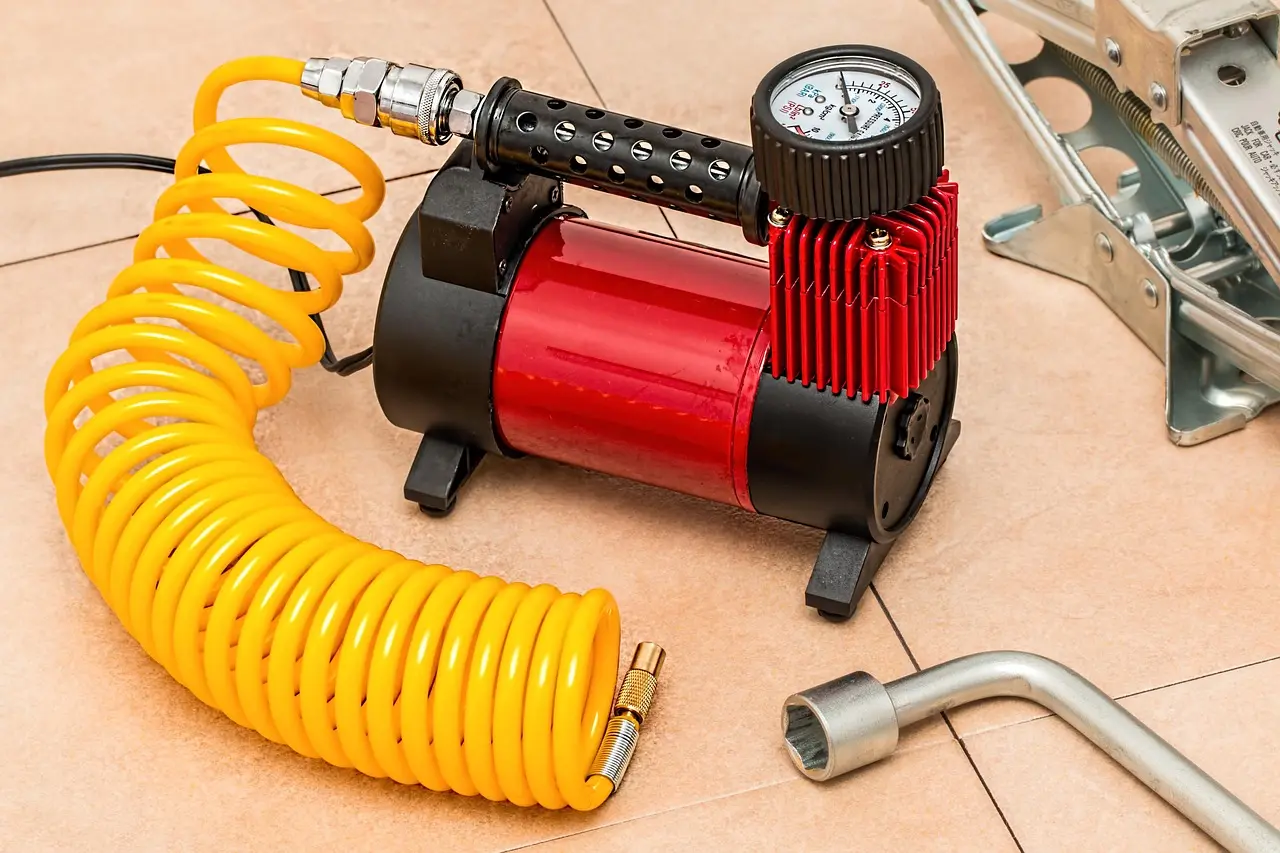
The short answer is simple: most sedans and compact cars do fine with a portable tire inflator, while SUVs and trucks need more airflow or more patience. Tire inflation comes down to two numbers, the pressure target in PSI and the fill speed in CFM or SCFM. A unit can reach the right pressure and still be slow.
Pressure target versus airflow target
PSI is the pressure you want in the tire. That target comes from the vehicle tire placard, not the tire sidewall. Airflow controls how fast the tire gets there. A small compressor can hit the same PSI as a larger one, but it may take much longer, especially on larger tires.
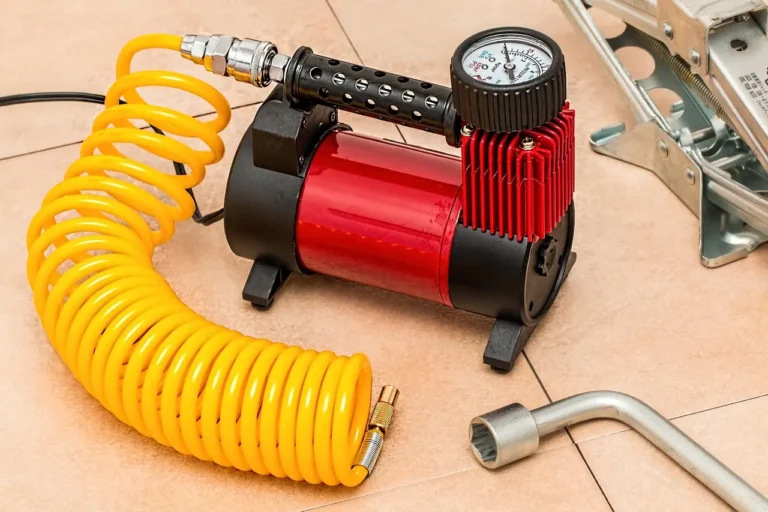
A portable air compressor is the simplest solution for home or road inflation. That is why many drivers do not need a shop-style unit for tires. They need enough output to top up a tire in a reasonable time, with a gauge you can trust.
Air compressor decision table
This table gives a practical rule for vehicle type, tire size band, and acceptable fill time. “Minimum practical compressor class” means the smallest class that makes tire inflation workable without feeling painfully slow.
| Vehicle type | Tire size band | Acceptable fill time | Minimum practical compressor class |
|---|---|---|---|
| Sedan | Small to medium passenger tires | About 1 to 3 minutes per tire for a top-up | 12V portable inflator with digital gauge and auto shut-off |
| Crossover | Passenger tires with moderate volume | About 2 to 4 minutes per tire for a top-up | Portable inflator, preferably a higher-output 12V or cordless unit |
| SUV | Larger passenger tires | About 3 to 6 minutes per tire for a top-up | Higher-capacity portable inflator, or a compressor with stronger airflow |
| Half-ton truck | Larger load-carrying tires | About 5 to 10 minutes per tire, depending on starting pressure | Higher-airflow portable compressor, around 1.0–2.0 CFM at 90 PSI |
| Heavy truck | Large-volume tires | More than 10 minutes can become normal | High-output compressor or accept a slow fill; check duty cycle and airflow first |
When fill time becomes too slow
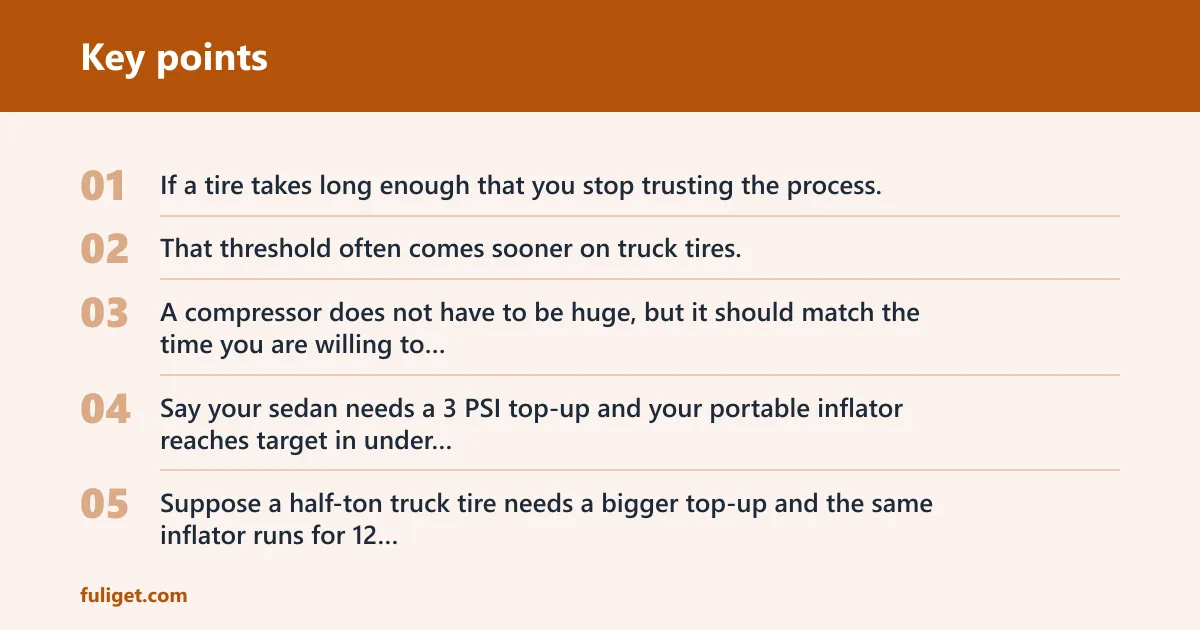
If a tire takes long enough that you stop trusting the process, the compressor is too small for your use case. That threshold often comes sooner on truck tires, because the tire volume is larger even when the target PSI is the same. A compressor does not have to be huge, but it should match the time you are willing to spend.
Say your sedan needs a 3 PSI top-up and your portable inflator reaches target in under two minutes. That is a good fit. Suppose a half-ton truck tire needs a bigger top-up and the same inflator runs for 12 minutes per tire. The pressure may still be correct, but the tool is frustratingly slow for regular use.
PSI, CFM, and SCFM
PSI is the tire pressure target. CFM means cubic feet per minute, and SCFM means standard cubic feet per minute. In plain terms, CFM and SCFM describe airflow, which is why they matter for how quickly a compressor can fill a tire. The Spruce Tools says CFM means cubic feet per minute and SCFM stands for standard cubic feet per minute.
PSI is the target pressure
For tire inflation, PSI tells you when to stop. The proper number comes from the vehicle placard, not the tire sidewall. The sidewall number is the maximum, not the recommended fill pressure. That difference matters because overfilling can happen if you treat the sidewall as the target.
CFM tells you inflation speed
CFM is the useful buying number when you want faster fill times. More airflow means the compressor can move more air into the tire each minute. The Spruce Tools recommends multiplying the tool requirement by 1.5 to estimate compressor CFM. That planning is why a unit that can run an impact wrench may still be only marginal for a big tire job.
Why SCFM ratings need context
SCFM is standardized airflow, which makes compressor comparisons easier. The catch is that ratings are only useful when you compare them under similar conditions. Many compressors are compared at 90 PSI, so that number is the one to watch when a seller lists tire-inflation capability.
What PSI should you set?
Set tire pressure to the number on the vehicle tire placard. Most manufacturers place it inside the driver’s door jamb, and it may also appear in the glove box or fuel filler door. The placard number is the fill target for cold tires, while the number on the sidewall is the maximum tire pressure, not the recommended setting.
Cold tire checks and gauge use
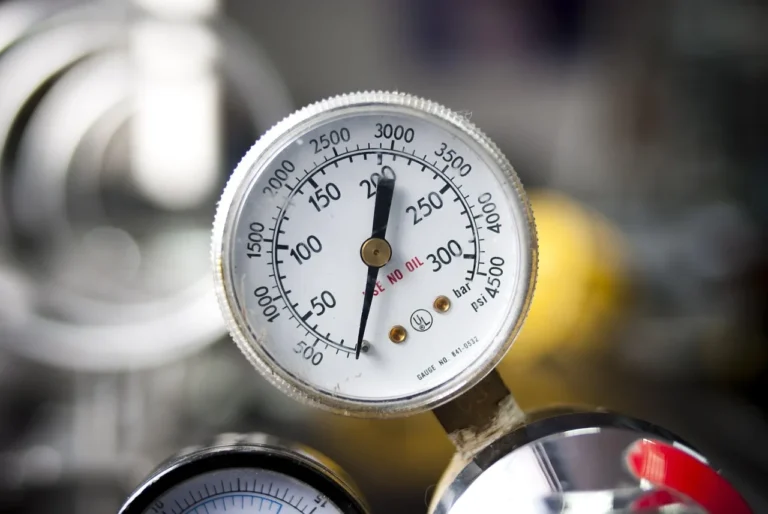
Check tire pressure when the tires are cold for the most accurate reading. Heat from driving raises pressure and can make a tire read higher than it really is at rest. Use a separate digital gauge, not only the compressor gauge, then fill in short bursts until you reach the placard value.
A common first-timer mistake is checking a tire after a long drive and stopping at a number that looks right when the tire is still warm. Once the tire cools, the reading can change. The better habit is simple: park, wait for the tire to cool, then measure and adjust.
Will a portable inflator work?
Yes, a portable tire inflator can work for car tires, and it often works for SUVs and light trucks too. A 12V or cordless portable air compressor is the simplest choice for topping up tires at home or on the road. For many drivers, that is enough if the goal is routine pressure correction rather than fast, repeated fills.
12V corded versus cordless inflators
12V corded inflators plug into the vehicle, so their run time depends on the power source and the outlet’s condition. Cordless units are convenient, but weak battery charge can slow inflation or stop it early. If the tool feels sluggish on a larger tire, the issue may be battery output rather than tire size alone.
Auto shut-off and digital gauges
Auto shut-off is useful because it stops the inflator at the set pressure. That helps prevent overinflation, especially when you are topping off tires one at a time. A digital gauge is also useful because it gives a direct number instead of a rough estimate.
When a portable unit is enough
A portable inflator is enough when you want to top up a sedan, compact crossover, or many SUVs without waiting too long. One reviewed portable tire inflator is rated at 150 PSI, and it is presented as suitable for cars, SUVs, and light trucks. That makes it a practical baseline for home use.
How much compressor power do you need?
For car tires, you usually do not need a large tank. Usable airflow matters more than tank size for this job. The Spruce Tools says tank sizes can range from 1 gallon to 80 gallons, but tire inflation is usually limited by airflow, not storage volume.
Minimum practical airflow for car tires
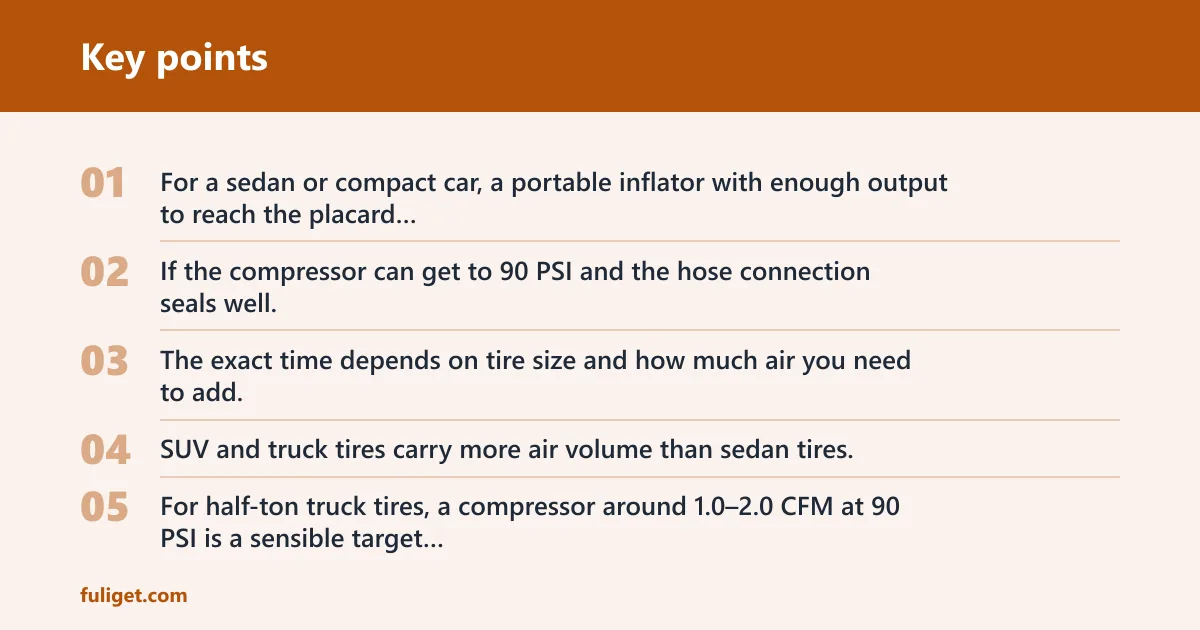
For a sedan or compact car, a portable inflator with enough output to reach the placard pressure in a few minutes is usually the right class. If the compressor can get to 90 PSI and the hose connection seals well, it can handle routine tire work. The exact time depends on tire size and how much air you need to add.
More airflow for larger tires
SUV and truck tires carry more air volume than sedan tires, so they usually need either more airflow or more patience. For half-ton truck tires, a compressor around 1.0–2.0 CFM at 90 PSI is a sensible target if you want a practical fill time. Heavy truck tires can push a portable unit to the edge of what feels acceptable.
Tank size versus usable output
A larger tank can help with repeated air use, but for tire inflation the main question is still airflow. If the compressor delivers enough air at the pressure you need, a small tank can be fine. If airflow is low, a big tank alone will not make a slow inflator feel fast.
How to inflate a tire safely
Connect the chuck to the tire valve stem so it seals securely, then read the starting pressure. Inflate in short bursts, recheck with a separate gauge, and stop at the placard target. This approach is slower than guessing, but it keeps the final pressure accurate.
- Park the vehicle and let the tires cool if they were driven recently.
- Find the placard pressure in the driver’s door jamb, glove box, or fuel filler door.
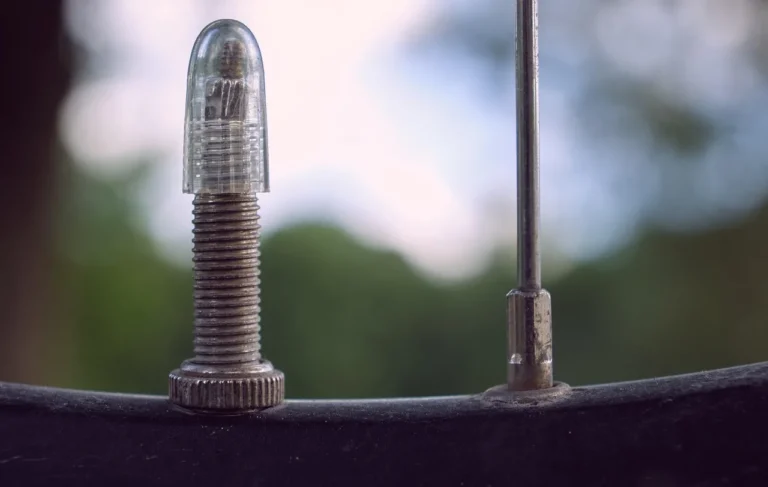
- Remove the valve stem cap and attach the chuck firmly.
- Start the compressor and fill in short bursts.
- Check pressure with a separate digital gauge.
- Stop at the placard number, then reinstall the valve cap.
If the chuck does not seal well, the compressor may sound like it is working harder than it should while little pressure appears at the tire. A loose connection, weak battery, or hot tire reading can all make the job confusing. The fix is usually basic: reseat the chuck, check the power source, and measure again when the tire is cool.
Picture a crossover with 235/55R19 tires that is 4 PSI low on all four corners. A portable 12V inflator with auto shut-off can usually handle that routine top-up without trouble. Now picture a heavy pickup tire that is far below target and the compressor is still crawling toward pressure after several minutes. That is when airflow, not PSI rating, becomes the limiting factor.
Frequently asked questions
What size air compressor do you need for car tires?
Most car tires only need a portable tire inflator, not a large shop compressor. A 12V or cordless unit with a digital gauge and auto shut-off is enough for routine top-ups, as long as it can reach the vehicle placard pressure without dragging on too long.
What size air compressor do I need to fill truck tires?
Truck tires need more airflow than sedan tires, so a stronger portable unit is usually the minimum practical choice. For half-ton trucks, around 1.0–2.0 CFM at 90 PSI is a useful target. Bigger tires can still be filled with a portable compressor, but the wait gets longer.
Can a portable air compressor fill SUV tires?
Yes. A portable air compressor is often enough for SUV tires, especially for topping off rather than starting from very low pressure. The main question is fill time. If you can accept a few minutes per tire, many portable inflators are a practical fit.
What PSI should I set for my air compressor for tires?
Set the tire to the placard PSI, not the sidewall maximum. The placard is usually on the driver’s door jamb, glove box, or fuel filler door. Check pressure when the tire is cold, then use short bursts and a separate gauge to finish accurately.
Do I need a large tank to inflate car tires?
No. For car tires, usable airflow matters more than tank size. A large tank can help with repeated tool use, but tire inflation usually depends on how much air the compressor can supply at pressure. A portable inflator is often enough for home tire care.
How long does it take to fill a tire with an air compressor?
It depends on tire size, starting pressure, and compressor output. A sedan top-up can be quick, while SUV and truck tires take longer because they hold more air. If the fill time feels annoyingly long, the compressor is probably undersized for your use.