Where Should You Store a Car Emergency Kit in Your Vehicle?

Store a car emergency kit in the cabin, within easy reach of the driver, and secure it so it cannot slide or become a projectile; keep only a backup kit in the trunk if needed. Bad placement costs time in a breakdown and can turn loose items into hazards in a crash or hard stop. This guide covers the best storage spots, restraint methods, and which temperature-sensitive items should stay out of extreme heat or cold.
Choosing the right storage spot
Keep the kit where you can grab it fast, where it stays restrained, and where heat, cold, and moisture will not ruin the contents. The right spot is the one you can reach quickly without blocking pedals, airbags, or seat travel.
For a small kit, under-seat or center-console storage often works best. For a larger roadside kit, trunk or rear cargo storage can be the safer fit if the case is strapped down and a smaller grab-and-go kit stays up front.
Car emergency kit storage decision matrix
| Storage location | Access speed | Security | Capacity | Heat exposure | Best-fit kit type |
|---|---|---|---|---|---|
| Under-seat storage | Fast from the driver seat | Good if the case fits snugly | Low to medium | Moderate, depending on floor heat and HVAC airflow | Compact kit, first-aid basics, frequently needed items |
| Trunk storage | Slower during a roadside stop | Good if strapped or boxed in | High | Higher heat and cold swings | Larger roadside kit, heavier tools, backup supplies |
| Glove compartment storage | Very fast from the front seat | Good for small items only | Very low | Moderate | Paperwork, flashlight, small tools, narrow items |
| Center console storage | Very fast from the driver seat | Good if contents stay packed together | Low | Moderate | Phone charger, first aid basics, light tools |
| Cargo-area storage | Slower than front-cabin storage | Good with a net, bins, or straps | Medium to high | Higher heat and cold swings | SUV or wagon kit, travel kit, winter gear, off-road kit |
Under-seat storage
Under-seat storage works well for a compact case that holds the items you may need first: flashlight, gloves, first aid, a charger, or a small tool set. POP SUGAR recommends keeping the kit in a box under your seat, which fits the goal of fast access from the driver position.
This option depends on seat clearance. The case must not block seat travel or interfere with rails, wiring, or airbag space under the seat. A slim, hard-sided case or zippered case usually fits best.
Trunk storage
Trunk storage is the better choice when the kit is larger, heavier, or meant for longer travel. Popular Mechanics notes that roadside kits come in multiple sizes, and larger kits can include jumper cables, flares, tow ropes, and hand tools. Those items are often easier to keep organized in a trunk or cargo bin.
The tradeoff is access. A trunk is slower to reach if the car stops in traffic, the rear is blocked, or the driver must step out quickly. If you use the trunk, keep a smaller front-cabin kit for first-response items and restrain the larger kit with straps, bins, or a cargo net.
Glove compartment storage
The glove compartment is a good spot for very small items: paperwork, a flashlight, a compact notepad, or a few basic tools. It is not the place for bulky gear, loose bottles, or a full roadside kit.
Use this space for items you may need with one hand while seated. If the compartment is already crowded with manuals, insurance papers, and registration documents, move nonessential items elsewhere so access stays simple.
Center console storage
The center console suits compact essentials that need the fastest reach from the driver seat. It works well for a phone charger, first aid basics, a pen, or light tools. Because capacity is limited, it should hold only the smallest items you want to grab without leaving the seat.
If the console has a deep bin, keep the kit in a small labeled organizer so it does not sink beneath other items. That makes the contents easier to find in low light or under stress.
Cargo-area storage
Cargo-area storage is a strong choice for SUVs, wagons, and hatchbacks with rear load space. It gives room for larger kits, winter gear, and heavier items that would crowd the cabin. The key is restraint: the kit must stay in place during turns, braking, and sudden stops.
Use a cargo net, a strap-down case, or a non-slip mat so the container stays put. A loose bag in the rear can turn into a moving object during a hard stop.
Should a car emergency kit be under the seat or in the trunk?
Under-seat storage is better for quick access, while trunk storage is better for larger or heavier kits. The safer choice depends on what is in the kit and how often you need it. A compact, frequently used kit belongs near the driver; bulkier backup gear can stay in the trunk.
When under-seat storage makes sense
Choose under-seat storage when the kit is compact, light, and built for immediate use. POP SUGAR’s under-seat box layout fits a basic kit with a rain poncho, an LED flashlight, and gloves, which are useful when weather, darkness, or a minor roadside problem makes quick access important.
Say your car has narrow front-seat clearance and the passenger seat is empty. A slim case under the driver seat can still be reached fast, while leaving room for the seat to move normally.
When trunk storage is the better choice
Use the trunk when the kit includes jumper cables, tow gear, a folding shovel, or a full winter loadout. The same source notes that a Haiphaik kit is described as an 8.5-pound kit with a rugged, zippered case, nearly 12-foot jumper cables, a folding shovel, and a toolkit. That is a better fit for rear storage than for a tight cabin space.
Trunk storage also makes sense for winter preparation. The same source notes that a First Aid Only kit with over 200 bandages is compact enough to fit in awkward spaces, but the broader winter set may still belong in a larger rear container if it includes blankets, water, or extra tools.
What to avoid with either location
Do not leave loose items on the seat, floor, or rear shelf. During a hard brake or collision, an unsecured kit can move fast enough to injure someone or jam a pedal. Avoid spots that interfere with airbags, seat rails, or seat movement.
Also avoid storing heat-sensitive items where they face long exposure to sun or extreme cabin temperatures. Water, snacks, batteries, and some first-aid items can degrade if they live in the wrong place for months.
How do you keep the kit from sliding?
Keep the kit in one container and restrain that container. A hard-sided case, zippered case, water-resistant bag, or labeled organizer all work if the size matches the space and the kit cannot drift under braking or cornering.
Choose a container that fits the space
A container should fit the chosen storage spot without forcing the seat out of position. In a tight cabin, a slim hard case or zippered organizer usually works better than a loose tote. In the trunk or cargo area, a larger labeled box may be easier to manage.
If the case is too large, it may tilt, shift, or block other gear. If it is too small, items scatter and take longer to find.
Use straps, nets, or non-slip surfaces
Restraint methods matter as much as the container. Use a cargo net, bungee cords, a strap-down case, or a non-slip mat to keep the kit from sliding around. In a trunk or cargo area, bin-style storage with a tie-down point is often the cleanest setup.
A common first-timer mistake is placing a heavy roadside bag in the trunk without restraint. The bag seems stable until a sharp turn or hard stop sends it into a side panel or another item.
Keep the contents packed as one unit
Pack the kit so the most-used items stay together. A labeled organizer keeps gloves, flashlight, first aid, charger, and small tools in one place. The goal is fast grab-and-go access, not a pile of loose gear.
If the kit includes water or snacks, keep them in a sleeve or side pocket so they do not crush softer items. Separate any sharp tools from first aid supplies.
What belongs in a car emergency kit?
A useful kit covers roadside waiting, minor repairs, and weather exposure. Keep the contents compact, organized, and matched to the place where the kit will live. Include the items most likely to help you stay visible, warm, and able to signal for help.
Basic roadside items
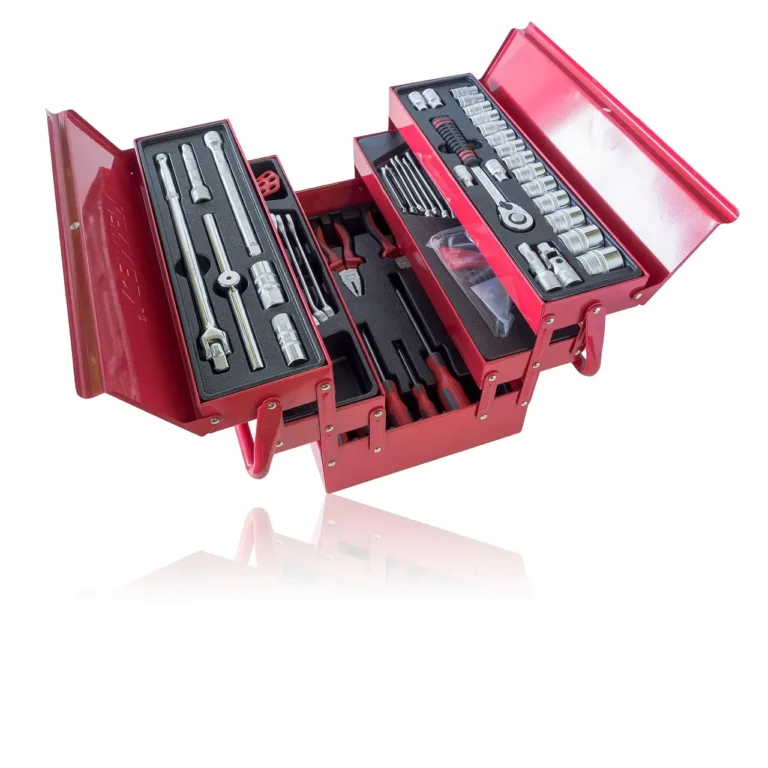
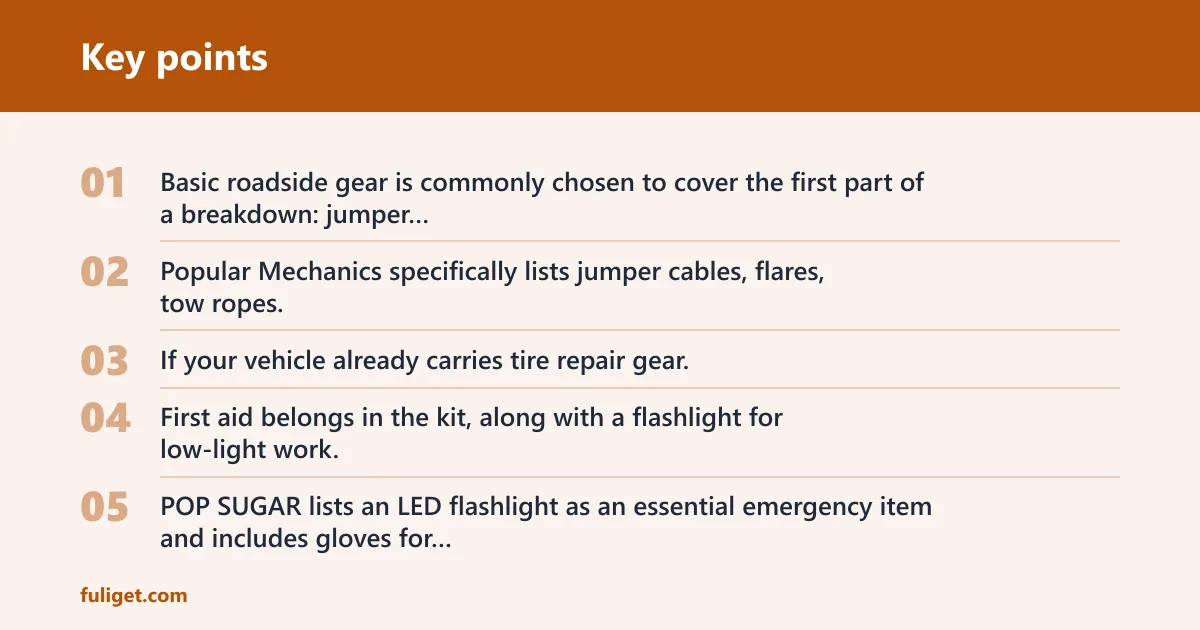
Basic roadside gear is commonly chosen to cover the first part of a breakdown: jumper cables, a tow strap or tow rope, hand tools, a tire inflator or sealant if appropriate, and a phone charger. Popular Mechanics specifically lists jumper cables, flares, tow ropes, and hand tools as common kit components.
If your vehicle already carries tire repair gear, keep this kit focused on the next steps after the car stops safely.
First aid and visibility items
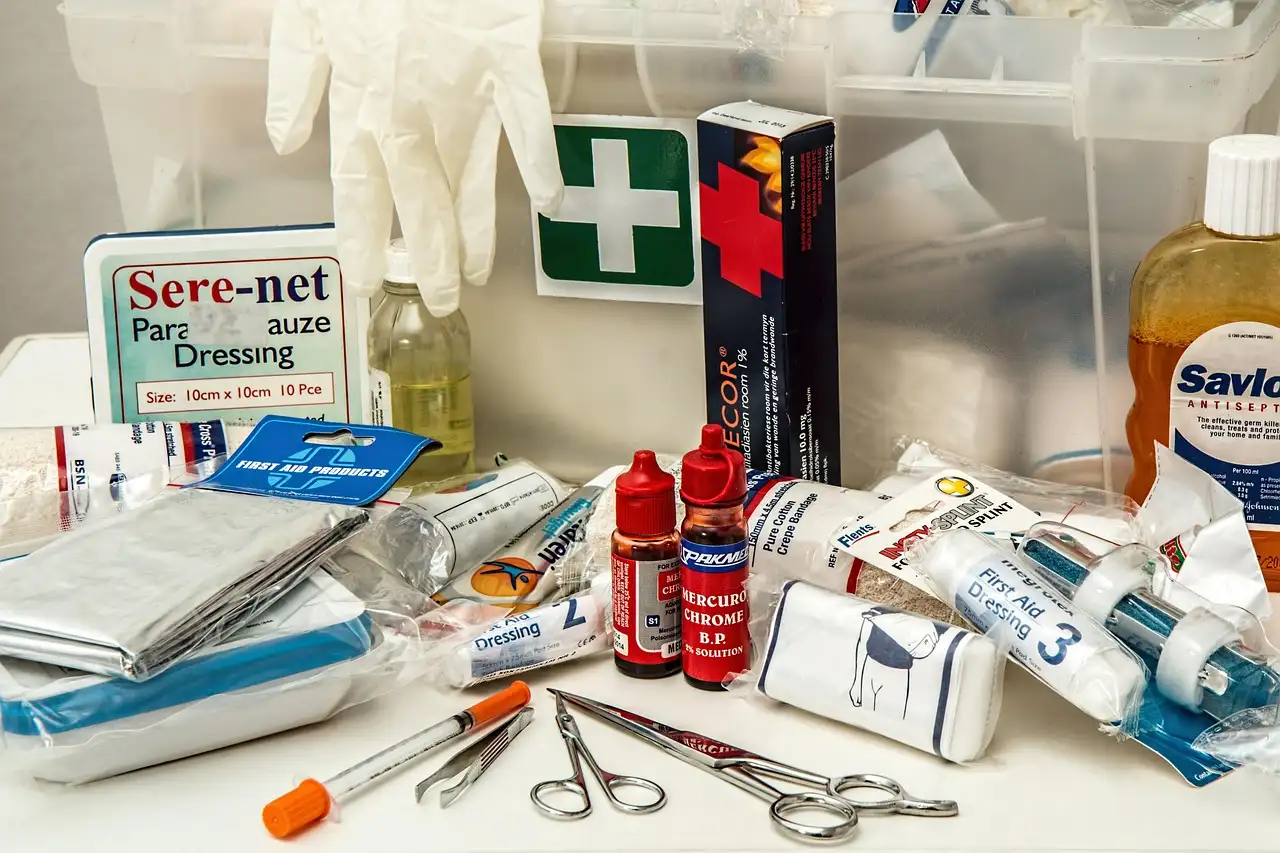
First aid belongs in the kit, along with a flashlight for low-light work. The same source lists an LED flashlight as an essential emergency item and includes gloves for messy or cold tasks. A compact first aid kit should stay near the top of the container.
For a more complete first aid loadout, choose a compact kit that fits awkward spaces. The same source notes a First Aid Only kit with over 200 bandages, which is a clue that compact does not have to mean sparse.
Winter and climate-specific supplies
Cold-weather gear matters when temperatures drop or you may be waiting outside the car. Add a blanket, gloves, water, snacks, and a rain poncho for weather exposure. The same source notes that one roadside kit is suitable for winter preparation, which is a good reminder that the contents should match the season.
Store these items with heat and cold in mind. Water can freeze, snacks can spoil or soften, and batteries can lose performance in temperature swings. Blankets and gloves are best kept in a container that stays dry and easy to open.
Items that should stay out of the main kit
Do not pack heavy, fragile, or temperature-sensitive items loosely in the same space as the main kit. Avoid glass containers, loose batteries, and anything that can leak onto first aid supplies. If a tool is sharp or heavy, give it its own slot or wrap.
Paperwork, a charger, and a small flashlight can stay in a glove box or console. Bigger items belong in a restrained case.
How do you check reach from the driver seat?
A common rule of thumb is to do about a 10-second reach test from the driver seat: sit normally, reach for the kit, and check whether you can grab it without unbuckling, stretching dangerously, or moving into the passenger space. If the reach is slow or awkward, move the kit to a better spot.
Run a 10-second reach test
- Sit in the driver seat as you normally drive.
- Reach for the kit without opening more than one storage area.
- Time the reach. If it takes longer than about 10 seconds, the setup is probably too slow for emergency use.
- Make sure the kit can be removed in one motion.
- Return the kit and confirm it still stays restrained.
Check access with the seat adjusted normally
Test the storage spot with the seat in a normal driving position, not fully forward or fully back. The kit should remain reachable when the seat is set for safe pedal control. It should not force the driver to twist hard or reach behind the backrest.
If a child seat or tall front passenger changes the available space, test the kit in that real setup, not in an ideal empty cabin.
Check access with rear cargo or passenger constraints
Picture an SUV with a packed cargo area, two child seats in back, and a narrow center aisle. In that case, a small front-cabin kit is easier to reach than a rear bin buried under luggage. For trucks and EVs with unusual storage layouts, the same rule applies: fastest safe reach wins.
If the trunk is blocked by luggage, groceries, or a stroller, a trunk-only setup is not enough. Keep a smaller cabin kit for the first response and a fuller backup kit in the rear.
Frequently asked questions
Where should you store a car emergency kit in your vehicle?
Store it in the cabin, where the driver can reach it quickly, and secure it so it cannot slide during a stop. Under-seat, center-console, or glove-box storage works for compact kits. Keep a larger backup kit in the trunk only if the main kit stays accessible up front.
What is the safest place to keep emergency supplies in a car?
The safest place is generally the one that combines fast driver access with secure restraint and no interference with pedals, airbags, or seat movement. For most compact kits, that means the front cabin. For larger kits, a restrained trunk or cargo bin is safer than loose storage.
How do you keep a car emergency kit easy to reach in an accident?
Keep the kit in the driver’s reach path and test it from the normal seat position. Avoid buried storage, locked cargo under other items, or spots that require the passenger seat to move. A labeled organizer in a predictable place is easier to grab under stress.
What should be in a car emergency kit?
Include a flashlight, gloves, first aid supplies, water, snacks, and weather protection such as a rain poncho or blanket. Add jumper cables, simple tools, and a phone charger if the kit has room. Keep the contents matched to the kit’s size and storage location.
How do you store a roadside kit so it does not slide around?
Use one container and secure it with a cargo net, bungee cords, a strap-down case, or a non-slip mat. A hard-sided case or zippered bag helps keep items together. Do not leave the kit loose on the floor, seat, or cargo area.