What Expires in a Car Emergency Kit and When Replace It?

Replace most car emergency-kit items every 6 to 12 months, with batteries, medications, water, and sealants checked first; a hot trunk can shorten that window to 3 to 6 months. Skip the check, and you get dead batteries, spoiled supplies, and tools that quit at the roadside. Follow this item-by-item replacement schedule, and use a 10-minute inspection routine.
What breaks down in storage
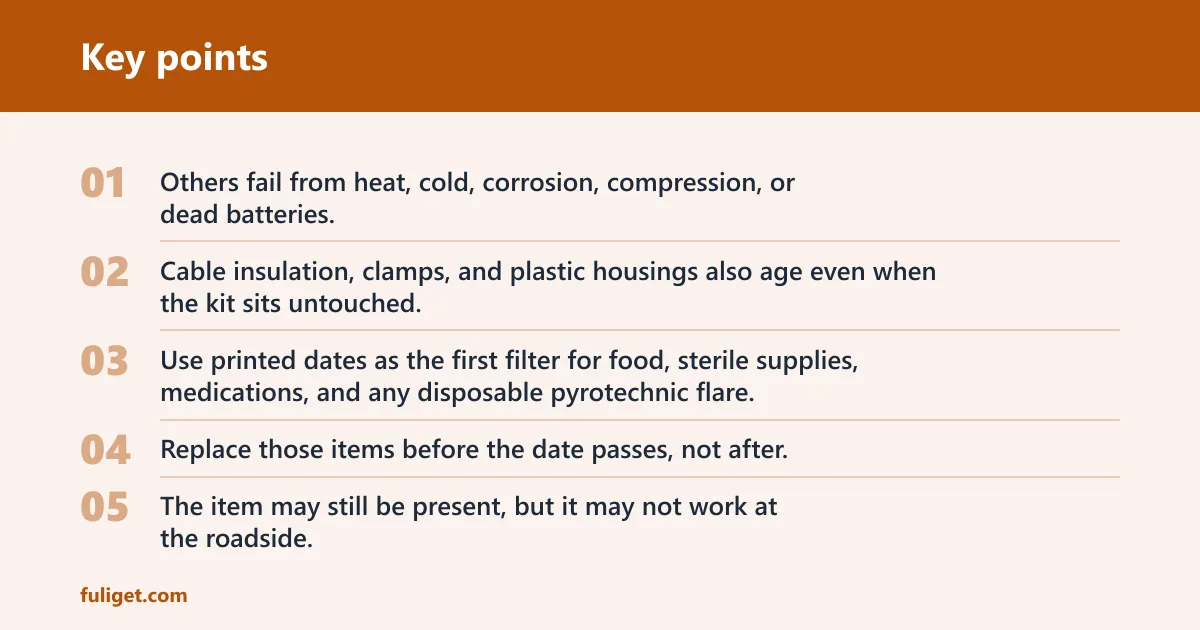
Some items expire on a date. Others fail from heat, cold, corrosion, compression, or dead batteries. In a trunk kit, the fastest losses are water, snacks, sterile first aid items, medications, and anything powered by a battery. Cable insulation, clamps, and plastic housings also age even when the kit sits untouched.
Items with date-based expiration
Use printed dates as the first filter for food, sterile supplies, medications, and any disposable pyrotechnic flare. Replace those items before the date passes, not after. Trunk heat speeds up chemical and adhesive breakdown, so a kit that looks fine on the outside can still be out of date or weakened inside.
Items that fail by wear or storage conditions
Jumper cables, a jump starter, a tire inflator, a flashlight, reflective gear, and a safety hammer usually fail through damage, loss of charge, or corrosion. The item may still be present, but it may not work at the roadside. That is why inspection matters as much as replacement.
Why the trunk shortens shelf life
Heat dries seals, softens plastics, and drains batteries. Cold lowers battery output and can make some plastics brittle. Humidity and condensation can corrode contacts, blur labels, and weaken packaging. A trunk is not climate-controlled, so replace items sooner than you would in an indoor storage box.
What fails first in trunk storage?
Heat-sensitive food and water usually age first, followed by batteries and rechargeable gear. Sterile items can also fail early if packaging opens, crumples, or absorbs moisture. In practice, the items most likely to disappoint are the ones that look normal until the moment you need them.
Heat-sensitive food and water
Bottled water and bars often become the first items to rotate. Water stored in a hot trunk tastes stale faster, and plastic bottles are more likely to deform. Energy bars also lose texture and quality long before they become visibly spoiled, so date checks matter.
Battery-powered gear
Flashlights, LED flares, jump starters, and some inflators fail silently when charge drops or cells age out. A flashlight can still turn on and yet be too dim to matter. A jump starter that sat uncharged for months can also be unusable when you reach for it.
Sterile and medical items
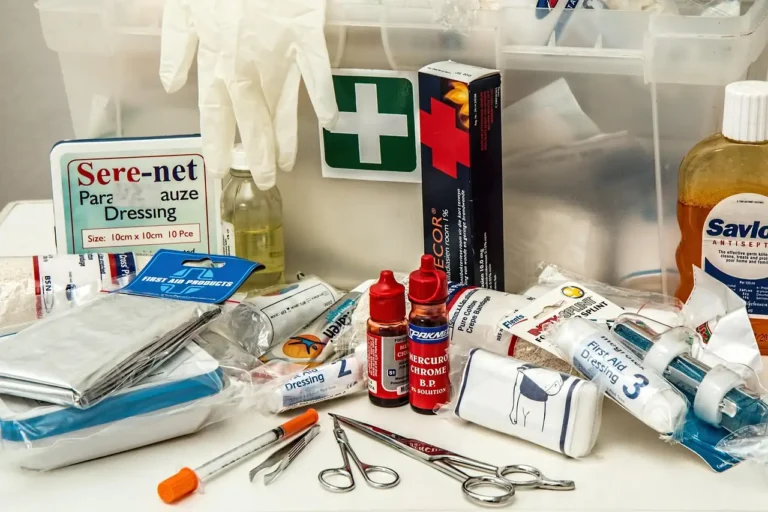
Bandages, gauze, antiseptic wipes, burn ointment, and prescription medicines are all vulnerable to heat and time. Sterile packaging is the warning sign here. If the wrapper is torn, swollen, wet, or expired, the item should leave the kit and be replaced.
Replacement schedule by item type
Set different cadences for different items. Water and food need routine rotation. Medications and sterile supplies follow printed dates and package condition. Electrical gear needs charging and function checks. The goal is a kit that stays ready without forcing a full rebuild every month.
Water and snacks
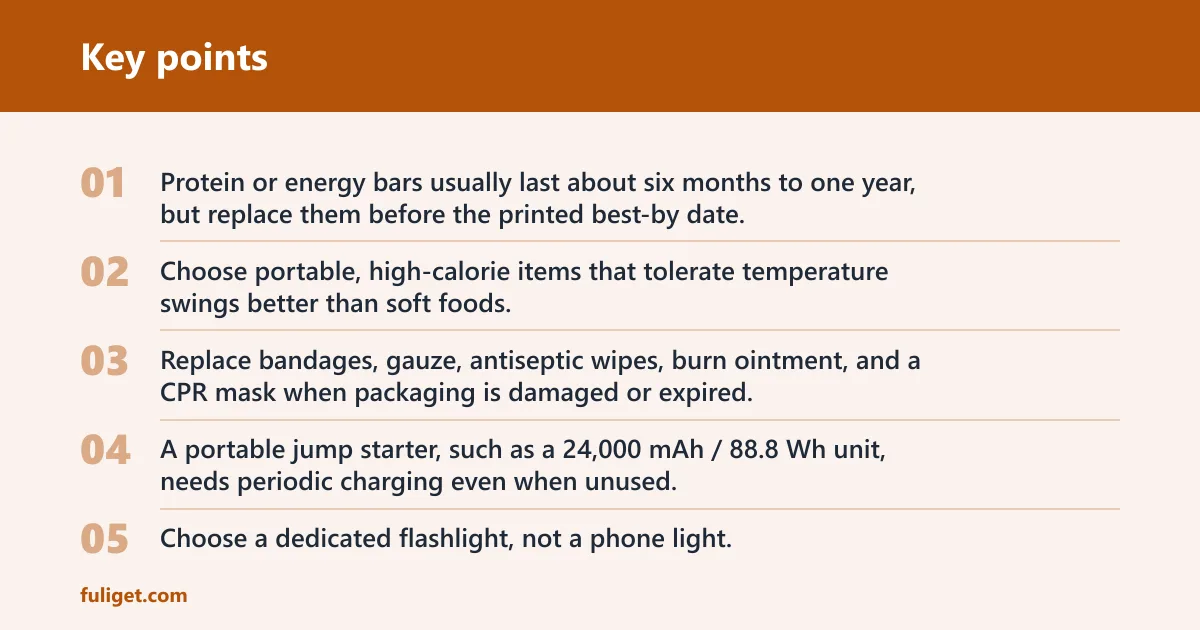
Rotate bottled water at least every six months, and store it in refillable, high-quality bottles if you want better durability. If space allows, keep enough for 72 hours. Protein or energy bars usually last about six months to one year, but replace them before the printed best-by date. Choose portable, high-calorie items that tolerate temperature swings better than soft foods.
First aid supplies and medications
Replace bandages, gauze, antiseptic wipes, burn ointment, and a CPR mask when packaging is damaged or expired. Keep prescription medication current, which means checking both the label date and whether the medicine is still appropriate for the current prescription. Do not leave old pills in the kit because they “seem fine.”
Jump cables, jump starter, and inflator
Jumper cables should be inspected for cracked insulation, loose clamps, or corrosion. Rigs Rated cites a 12 ft, 8 gauge, 300 amp cable in one reviewed kit, which is a useful example of the size and current rating many drivers look for. A portable jump starter, such as a 24,000 mAh / 88.8 Wh unit, needs periodic charging even when unused. A tire inflator or air compressor, including a 150 PSI or 12V inflator, should have its hose, seals, and power connection checked on schedule. (Caranddriver)
Flashlight, flares, triangle, hammer, and blanket
Choose a dedicated flashlight, not a phone light. Car and Driver highlights a flashlight with 500-lumen output, two AA batteries, and IPX8 resistance. Test the beam and battery condition regularly. For warning devices, Car and Driver cites reflective triangle flares, LED flares, and pyrotechnic flares as options; replace disposable or expired pyrotechnic types, and keep USB-rechargeable units charged. A safety hammer and seatbelt cutter combo should be checked for corrosion, looseness, or damage, and it should stay within easy reach. An emergency blanket should stay dry and free of tears or compression damage.
Car kit replacement matrix
Use this table as the maintenance core of the kit. It separates date-based items from wear-based items and gives a simple trigger for replacement. In hot and cold climates, the same item may need attention sooner because the trunk works against it every day.
| Item | Typical failure mode | Inspection interval | Replacement trigger | Notes for hot/cold climates |
|---|---|---|---|---|
| Bottled water | Stale taste, bottle deformation, seal loss | Every 6 months | Past rotation date, swollen bottle, bad smell, damaged cap | Heat shortens freshness; keep out of direct sun and rotate sooner in summer |
| Protein or energy bars | Staleness, melted coating, texture change | Every 3 months | Past best-by date, oil separation, severe softening or hardening | High heat can ruin texture fast; cold can make bars hard to chew |
| Bandages, gauze, antiseptic wipes | Expired adhesive or sterile packaging damage | Every 6 months | Torn wrapper, wet packaging, expired date | Humidity weakens wrappers; heat dries adhesive and shortens useful life |
| Burn ointment | Expired formula, container leakage | Every 6 months | Past date, cracked tube, separated contents | Heat can thin ointment and stress the container seam |
| Prescription medication | Expired or no longer current | Every month | Past label date or prescription change | Store as cool as possible; avoid leaving medicine exposed to summer heat |
| Jumper cables | Cracked insulation, corroded clamps | Every 6 months | Visible damage, loose clamps, rust, exposed metal | Cold makes plastic brittle; salt and moisture speed corrosion |
| Portable jump starter | Charge loss, battery aging, dead ports | Every 3 months | Won’t hold charge, won’t power on, swollen case | Heat shortens battery life; cold reduces starting performance |
| Tire inflator or air compressor | Hose cracks, seal leaks, weak power connection | Every 6 months | Air loss, broken connector, failed power-up | Cold stiffens hoses; heat can dry seals and soften plugs |
| Flashlight and batteries | Dim beam, dead cells, corrosion in battery tube | Every 3 months | Weak output, leaked battery, rusted contacts | Alkaline cells can leak in heat; cold reduces output from many batteries |
| Reflective triangle, LED flare, pyrotechnic flare | Cracked case, dead charge, expired disposal item | Every 6 months | Broken reflector, failed battery, expired pyrotechnic unit | Cold drains rechargeables; heat can damage battery packs and plastics |
| Safety hammer / seatbelt cutter | Corrosion, looseness, dull cutter, cracked handle | Every 6 months | Rattle, rust, blade damage, missing mount | Humidity can corrode metal edges and fasteners |
| Emergency blanket | Tears, compression damage, reduced reflective surface | Every 12 months | Hole, tear, crushed packaging, moisture damage | Store dry; cold is less of a problem than puncture or wet storage |
How to inspect the kit in 10 minutes
A quarterly check can be short and still useful. The point is to catch silent failure before the weather or a breakdown exposes it. If the kit sits in a trunk all year, a 10-minute routine is enough to find most problems early.
- Open the kit. Pull everything out of the bag or box so you can see dates, damage, and missing items. Hidden items are easy to forget, especially small batteries and medicine packets.
- Check dates first. Look at water, bars, sterile supplies, burn ointment, and medicines. Replace anything at or beyond its date, and remove any package that is swollen, wet, torn, or sticky.
- Inspect power gear. Turn on the flashlight, check the battery compartment, and verify the beam is bright and steady. Then check the jump starter charge, test the inflator briefly, and confirm any LED flare or USB device still charges.
- Examine cables and tools. Look for cracked insulation on jumper cables, rust on clamps, loose fasteners on the hammer, and bent or damaged triangles. Any visible flaw should be treated as a replacement trigger, not a cosmetic issue.
- Repack by reach. Put the most urgent items where your hand reaches first: flashlight, warning device, glove, cutter, and basic first aid. Keep the safety hammer within easy reach, not buried under water or food.
Say your jump starter is a 24,000 mAh unit that still powers on, but the battery icon drops quickly after a three-month gap. That is a storage failure, not a roadside surprise. Recharge it immediately, then shorten the next check interval so the problem does not repeat.
Suppose a box of energy bars sits through a hot summer and the wrappers are intact, but the bars feel oily and stiff. That kit item has still failed, even without visible damage. Replace the whole pack before the next trip, because texture changes often come before obvious spoilage.
What changes in hot or cold weather?
Extreme weather changes the order in which items fail. Heat attacks batteries, adhesives, and plastics. Cold slows battery output and can crack brittle materials. Humidity adds corrosion and condensation. The right schedule is the one that reacts to those conditions before the kit is needed.
Summer heat checks
In hot weather, check batteries, bar texture, water bottles, and plastic cases more often. Summer heat can reduce flashlight performance, shorten jump starter life, and make a tire inflator’s hose or seal age faster. If the trunk feels unusually hot after parking, move the most sensitive items into a cooler storage spot.
Winter cold checks
In cold weather, batteries lose output, cables stiffen, and plastic tools become more brittle. A jump starter may still be charged but deliver less useful power in freezing conditions. Keep the blanket dry, keep the flashlight batteries fresh, and inspect cable jackets for cracks after deep cold spells.
Humidity and condensation
Moisture is the quiet problem. It corrodes battery contacts, rusts clamp jaws, and weakens packaging. After wet weather or repeated temperature swings, open the kit and look for fogged cases, damp cloth, rust spots, and swollen packages. Dry the storage area before repacking the kit.
Frequently asked questions
What items in a car emergency kit expire?
Water, energy bars, first aid supplies, burn ointment, prescription medication, and disposable pyrotechnic flares are the main date-based items. Battery-powered gear also “expires” by losing charge or capacity. Jumper cables, a hammer, and triangles usually fail by wear, corrosion, or cracked plastic rather than a printed date.
How often should I replace water in my car emergency kit?
Rotate bottled water at least every six months, and sooner if the trunk gets very hot. If you have room, aim to keep enough for 72 hours. That target matters because a roadside delay can become an overnight wait, especially in heat or winter weather.
Do first aid supplies in a car kit expire?
Yes. Bandages, gauze, antiseptic wipes, burn ointment, and prescription medicine all need date checks. Replace anything with damaged packaging or an expired label. Keep reusable items, such as a CPR mask, clean and dry, and do not leave medicine in the kit after the prescription changes.
When should I replace jumper cables in an emergency kit?
Replace them when the insulation cracks, clamps corrode, or the cable jacket feels brittle. A cable can look serviceable and still fail under load if the clamp teeth are rusted or loose. Check them at least twice a year, and after any winter exposure to road salt.
How long do protein bars last in a car emergency kit?
Many protein or energy bars last about six months to one year, but trunk heat can shorten that. Replace them before the printed best-by date. If the coating melts, the bar dries out, or the package swells or leaks, replace it sooner.
What should I do with expired items from my car emergency kit?
Throw out expired food, opened sterile items, and damaged packaging. Follow local rules for medication disposal, since many areas treat drugs separately from household trash. Recharge or recycle electronics only if the maker allows it, then restock the kit the same day so the car does not stay half-ready.