
Tool Roll vs Tool Box: Which Is Better for Car Tools?

A small roadside kit is often paired with about 10 to 20 hand tools, with a tool roll for portability and a tool box for heavier, louder, or expanding car tools. Poor storage wastes trunk space, lets parts bang around, and slows repairs when you need the right wrench fast. This guide compares tool rolls and tool boxes by portability, capacity, noise, weather exposure, and the kind of car work each one fits best.
| Factor | Tool roll | tool box | Winner |
|---|---|---|---|
| Packability in a vehicle | Folds flat and rolls shut, so it tucks into a trunk, glovebox, or small shelf with little wasted space. | Uses a rigid shell that takes more room, even in a portable size. | Tool roll |
| Retention for sockets and loose parts | Good for hand tools, but loose sockets and mixed pieces can shift if the pockets are crowded. | Compartments, trays, and hard walls keep loose parts contained better. | tool box |
| Best fit for heavier kits | Works best when the load stays compact and light. | Handles larger tools, socket sets, and expanding collections more effectively. | tool box |
| Noise and vibration control | Soft walls reduce clatter, but tools can still rub if packed loosely. | Rigid walls protect tools from shifting, especially when fitted with trays or inserts. | tool box |
| Workshop mobility | Best for carrying a focused kit from the vehicle to a repair spot. | Better for a bench, shelf, or garage bay where the kit can stay organized. | tool box |
How each storage type fits car kits
A tool roll fits compact car kits that need to travel in a trunk or glovebox without taking over the space. A tool box fits better when the kit is growing, includes sockets or loose parts, or needs firmer protection against movement and rattling inside a vehicle.
What each storage type is designed to do
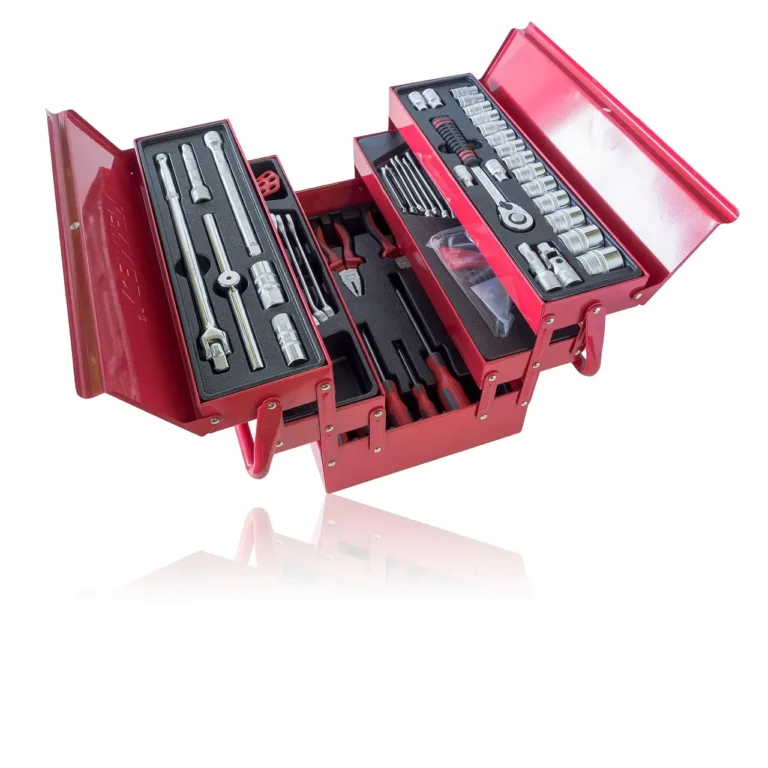
A tool roll is a soft-sided organizer that typically packs flat and rolls shut. It suits compact, frequently used hand tools such as wrenches, pliers, hex keys, and small inspection tools. A tool box is a rigid container with compartments or trays, so it can handle heavier tools and loose parts with less shifting.
That difference matters in a car. Vehicle storage has vibration, braking forces, and cornering loads that turn loose tools into moving cargo. A soft roll saves space, but a hard box usually keeps sockets, adapters, and mixed pieces from scattering.
Why vehicle storage changes the choice
Car storage is not the same as shelf storage. Tools in a trunk or trailer need to stay put when the vehicle moves, and they need to come out quickly when a roadside repair starts. That is why the best option depends on the kit, not only the tools themselves.
A trunk kit may include about a 10-piece wrench set, a flashlight, and a tire gauge. A roll keeps that bundle flat and easy to pull out. Suppose the kit also adds a socket set, breaker bar, and spare fasteners. The box starts making more sense because the extra pieces need retention, not only compact carry.
Tool storage comparison table
The practical difference comes down to space, access, and how much movement the kit will face. Tool rolls are easier to stash in a vehicle. Tool boxes are better at controlling loose parts and larger loads, especially when the kit grows beyond a basic roadside set.
| Comparison point | Tool roll | tool box |
|---|---|---|
| Portability | Light, flexible, and easy to carry by hand. | Less flexible, but still portable in small and mid-size versions. |
| Space use | Stores flat and fits tight vehicle spaces. | Takes more room, especially when built for larger tools. |
| Organization | Best when each tool has a slot or pocket. | Better when you need compartments, trays, or stackable sections. |
| Retention in motion | Enough for light, compact hand tools. | Stronger control for sockets, adapters, and mixed parts. |
| Workshop fit | Useful for a focused grab-and-go kit. | Better for bench, shelf, or larger garage storage. |
Portability and space
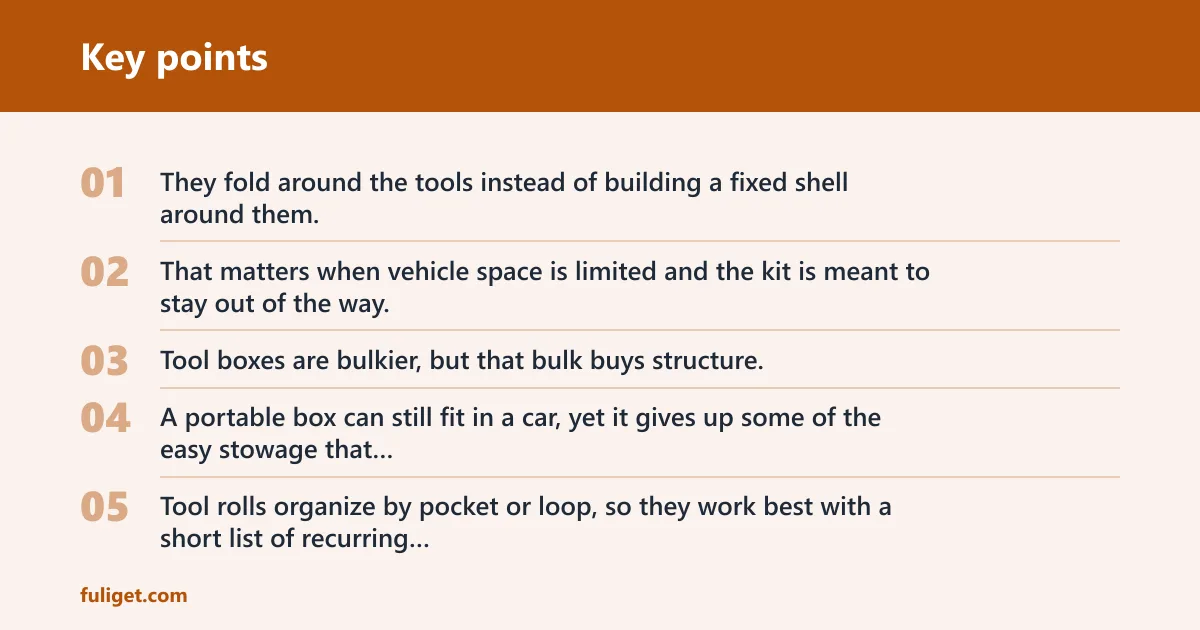
Tool rolls win on packability. They fold around the tools instead of building a fixed shell around them, which makes them easier to stash in a trunk pocket, glovebox, or small garage shelf. That matters when vehicle space is limited and the kit is meant to stay out of the way.
Tool boxes are bulkier, but that bulk buys structure. A portable box can still fit in a car, yet it gives up some of the easy stowage that makes a roll appealing for emergency use.
Organization and access
Tool rolls organize by pocket or loop, so they work best with a short list of recurring hand tools. They are fast when the tools are easy to identify by shape. A tool box is better when the kit needs trays, dividers, or stacked layers for different sizes of hardware.
That matters for automotive tools because the mix often includes wrenches, sockets, hex keys, and inspection tools. A roll can handle part of that mix. A box is more forgiving when the layout has to keep every loose piece in one place.
Capacity and retention
Tool rolls have a hard limit: once the pockets are crowded, tools press against each other and the roll becomes awkward to close. Socket-heavy sets are a common example. Those loose-size pieces need secure retention, which is why a rigid box with compartments is usually the stronger choice.
Tool boxes also cope better with heavier tools. Large boxes can hold larger tools and power tools, and some models include pull-out trays and stackable sections. That is useful when a kit moves from occasional car repair into regular workshop use.
Vehicle fit and workshop fit
For a vehicle, the best fit is often the smallest storage that still keeps the tools from shifting. For a garage, the best fit is often the one that keeps the kit easy to access and easy to return after use. Workshops benefit from quick access and easy maneuverability, while residential garages often benefit from compact efficiency.
Tool carts and rolling tool chests sit in a different category. They are mobility-first workshop storage, with multiple drawers and, often, a work surface. They make sense when tools stay in the garage and move around the shop floor, but they are poor matches for compact in-vehicle carry.
Is a tool roll better than a toolbox for car tools?
A tool roll is better for car tools when the kit is small, hand-tool focused, and meant to live in the vehicle. A tool box is better when the set is heavier, includes many loose pieces, or is likely to expand. The best choice depends on whether you need compact carry or secure retention.
When compact kits favor a roll
A roll works well for roadside essentials that get used as a single bundle. Think tire tools, a few common wrenches, pliers, hex keys, a small flashlight, and an inspection mirror. The flat shape keeps the kit from taking over the trunk.
A common first-timer mistake is buying a box for a six- or eight-piece emergency set. That adds bulk without solving a real storage problem. For a low-volume kit, the roll is usually the more efficient format.
When larger sets favor a box
Once the kit starts holding socket rails, extensions, adapters, and extra fasteners, a box becomes easier to manage. The rigid sides reduce shifting, and the internal compartments help you keep similar items together. That matters when the kit stays in a vehicle that vibrates on the road.
If the set keeps growing, the box also leaves more room for future additions. A roll rarely gets better as the collection expands; it usually gets harder to close and harder to sort.
What should go in a car tool roll?
A car tool roll should hold compact, frequently used hand tools that stay manageable in flat pockets. Good candidates are combination wrenches, pliers, screwdrivers, hex keys, a small inspection light, and a few specialty tools for the vehicle you own. The roll should stay light enough to close cleanly.
Best tools for a roll
Choose tools that are slim, flat, and easy to count at a glance. Automotive tools that fit well in a roll include short wrenches, trim tools, small needle-nose pliers, and hex keys. These are the kinds of items you want ready for roadside checks, simple repairs, or quick adjustments.
Tools that usually outgrow a roll
Socket sets are the first thing to move out of a roll. They are loose by nature and need secure retention. Larger ratchets, breaker bars, power tools, and spare hardware also tend to push a roll past its practical limit.
If the tool count keeps climbing, move the overflow into a box and keep the roll as a grab kit. That split keeps the most-used tools easy to reach while protecting the heavier set from rattling around.
Car tool decision matrix
This table separates vehicle emergency kits from workshop sets, because they do not need the same storage. A roadside kit should stay compact and quiet. A repair kit with sockets or spare parts needs firmer retention. Use the do-not-use column for cases where neither format is a good fit.
| Tool type | Best storage format | Why it fits |
|---|---|---|
| Roadside emergency kit | Tool roll | Keeps a small, frequently used set flat in the trunk or glovebox and is easy to pull out fast. |
| Occasional DIY car repair kit | tool box | Handles a wider mix of tools, keeps loose parts contained, and makes socket storage safer in a moving vehicle. |
| Track-day spares | Tool roll | Best when the spare set is light, repetitive, and meant for fast access between runs. |
| Socket-heavy sets | tool box | Sockets need secure retention, and rigid compartments prevent pieces from shifting or mixing in transit. |
| Mixed hand-tool kits | tool box | A mixed set usually combines odd shapes and loose parts, so trays and dividers keep it organized. |
| Bulky power tools or wet-storage needs | Do not use either | Power tools and wet tools need a different storage plan, especially if battery protection, drying, or drainage matters. |
Roadside emergency kits
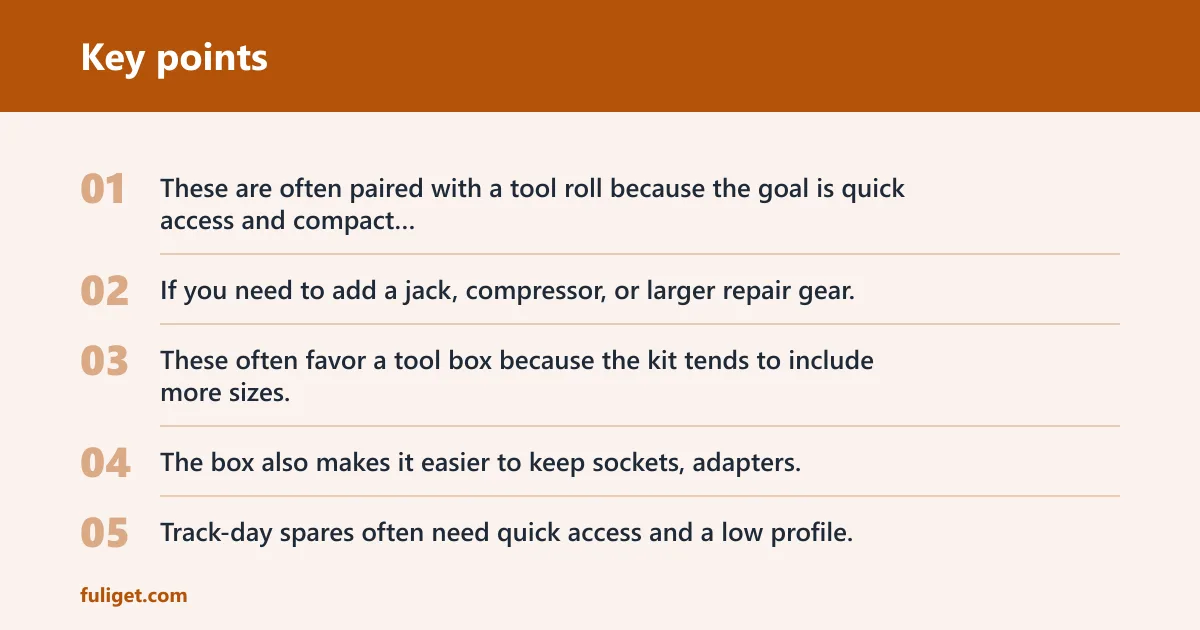
These are often paired with a tool roll because the goal is quick access and compact carry. Keep the set short and focused. If you need to add a jack, compressor, or larger repair gear, move those items out of the roll and into a separate container.
Occasional DIY car repair kits
These often favor a tool box because the kit tends to include more sizes, more loose pieces, and more repeat use. The box also makes it easier to keep sockets, adapters, and fasteners together when the kit is taken out and put back repeatedly.
Track-day spares
Track-day spares often need quick access and a low profile. A tool roll fits that pattern if the spares are small and predictable. If the spare list includes more hardware, a small tool box can keep the kit from becoming a tangled bundle.
Socket-heavy sets
These are box territory. Sockets are loose-size items, and loose-size items are where rolls start to fail. A rigid case with compartments is the cleaner way to keep sizes separated and stop them from rolling around in the car.
Mixed hand-tool kits
Mixed kits usually include tools with different shapes and storage needs. A box handles that variety better because it can use trays, slots, and stacked layers. A roll can still work if the set stays small, but it loses ground once the mix becomes cluttered.
Do not use cases
Skip both formats when the load includes bulky power tools, wet parts, or anything that needs drying and drainage. Those jobs need a storage plan built around the item itself. A car tool roll is not meant to protect a charger, and a basic box is not the right answer for moisture control.
Choose Tool roll if… / Choose tool box if…
Choose a tool roll if you need flat, compact carry for a small roadside kit, if the tools are mostly hand tools, and if the kit needs to fit in a trunk, glovebox, or small garage shelf. Choose a tool box if you need more capacity, better retention for sockets and loose parts, or a storage format that can grow with the collection.
Choose Tool roll if…
- You are building a compact emergency kit with a short list of repeat-use hand tools.
- Space in the vehicle matters more than extra capacity.
- You want the kit to pack flat and stay easy to move.
- You are not carrying a socket-heavy or expanding set.
Choose tool box if…
- You store sockets, adapters, fasteners, or mixed parts that need secure retention.
- The kit is likely to grow beyond a basic roadside bundle.
- You want trays, compartments, or stackable organization.
- Your main storage spot is a garage shelf, bench, or fixed home area.
How do I keep car tools from rattling around in a tool box?
Use a box with compartments, trays, or inserts so the tools cannot slide freely. Keep sockets on rails or in molded holders, and separate small hardware into lidded sections. The goal is to remove empty space that turns into movement when the vehicle hits bumps or corners.
If the box still has open space, fill it with fitted organizers rather than loose packing material. A tidy box is quieter, faster to sort, and less likely to damage tool finishes over time.
Should I use a tool roll in my car or garage?
Use a tool roll in the car when the kit is small and needs flat storage. Use it in the garage only if you want a grab-and-go bundle for a narrow set of tools. For most garage storage, a box is easier to sort and better for tools that do not fit a roll cleanly.
A tool roll is useful on a garage shelf because it stays compact. A tool box is better on a bench because it keeps the contents visible and easier to sort after use.
Can a tool roll replace a tool box for mechanics?
Not for most mechanics. A tool roll can cover a focused subset of hand tools, but it does not replace the capacity, retention, or organization of a tool box once the set becomes broader. Mechanics who rely on sockets, loose hardware, and growing inventory usually need both formats in different roles.
A mixed setup often makes the most sense: a tool roll for the vehicle, and a tool box for the garage. That keeps the roadside kit light while leaving the larger collection organized at home.
When is a tool box better than a tool roll?
A tool box is better when the kit is heavier, includes sockets or loose parts, or needs to live in one place longer term. It is also the better answer when the set is growing and you want compartments, trays, or stackable storage. In a vehicle, it is the safer choice for anything that can shift and rattle.
Pick the box for occasional repair kits, socket-heavy sets, and mixed tool loads. Pick the roll for compact, frequently used hand tools that need to fit neatly in a car without eating up space.
Frequently asked questions
What tools should go in a car tool roll?
Put in slim hand tools that you reach for often: wrenches, pliers, screwdrivers, hex keys, and small inspection tools. Keep the list short enough that the roll closes easily. If you start adding many sockets or bulky items, the roll has outlived its best use.
What size tool storage is best for a car emergency kit?
The smallest size that holds the tools without crowding them is usually best. A compact tool roll works well for a short emergency list, because it keeps the kit flat and easy to stash. If the kit includes sockets or a growing list, move up to a tool box.