Tire Inflator Guide: Choose the Right One for Your Car

Choose a portable tire inflator by matching it to the car and the job first: many sedans and crossovers do well with a 12-volt unit that reaches about 50 PSI, while trucks, SUVs, and frequent use often justify a faster battery or dual-power model. Choose poorly, and you end up with slow fills, overheating, dead batteries, or an inflator too bulky to keep in the car. This guide sorts options by vehicle, storage space, and emergency versus maintenance use, then narrows them by power source, airflow, PSI range, runtime, and size.
Before buying or using any inflator, check the vehicle placard for the recommended cold tire pressure and set tires only when they are cold. Start with workload, not accessories. Topping off a tire that is a few PSI low is light work, while bringing a larger SUV tire up from clearly low pressure is not. That difference tells you whether a small cordless inflator is enough, whether a 12V plug-in unit is the safer roadside choice, or whether a compact inflator is simply too weak for the vehicle.
Start with your car and use case
Sedans and compact crossovers
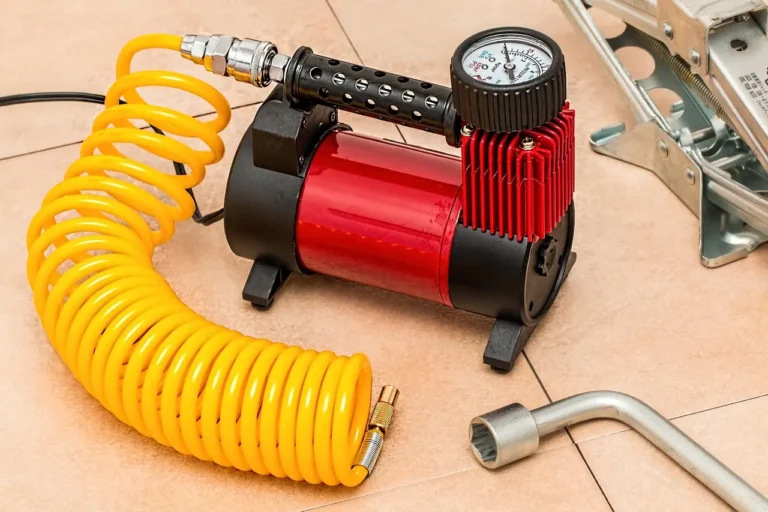
For a daily-driver sedan or compact crossover, the main job is usually routine top-offs and the occasional emergency refill after a seasonal pressure drop or a slow leak. A 12V DC inflator that plugs into the car outlet and supports at least about 50 PSI is often a sensible baseline, even if the tires themselves run far below that.
The reason is simple: the inflator needs headroom above the vehicle’s recommended cold tire pressure. Door-jamb recommendations for passenger cars are often much lower than the inflator’s maximum rating, so a 100 to 120 PSI inflator is commonly enough for this class. That does not mean strong output. It only means the pressure ceiling is high enough.
If the inflator will live in the car full-time, size matters. In practical terms, glove-box-friendly usually means a very small cordless unit or a compact plug-in with a short body and a tightly wrapped cord. Trunk-friendly opens the field to larger 12V units with longer cables and better cooling.
SUVs and pickups
Larger tires hold more air, so they expose weak inflators quickly. A compact inflator that feels acceptable on a sedan can become frustrating on a midsize SUV, and it can be plainly underpowered on a half-ton pickup if more than one tire is low.
Here, runtime and reach matter as much as the PSI number on the box. Some small units advertise a high maximum PSI but move air slowly at car-tire pressures. That means long run times, more heat buildup, and a greater chance of thermal shutdown before all four tires are finished.
Performance cars
Performance-car owners should care less about extra adapters and more about control. A digital gauge you can read at a glance, a PSI preset you can set in 1-PSI steps, and auto shutoff that stops near the target are genuinely useful when a tire setup reacts to a small pressure change.
Valve access can also be harder on larger wheels, low-profile tires, or deep spokes. A short, stiff hose and a bulky chuck can turn a simple top-off into a cramped task. On this kind of car, physical access is part of the buying decision.
Multi-use households
If the inflator also needs to cover a motorcycle, bike, or sports balls, treat those as secondary uses. Portable inflators often ship with a Schrader hose plus a Presta adapter, a ball needle, and a small nozzle for inflatables, but those add-ons should not outweigh car-duty needs.
Tom’s Guide says there are hundreds of tire inflator models available and frames portable air compressors as varying widely in speed, reach, controls, and heat tolerance. That matters here, because a model that looks versatile on a product page may still be too weak, too short-corded, or too heat-limited for the actual vehicle it must support.
Picture a compact crossover with tires set to the door-jamb recommendation and a family bike in the garage. A small cordless inflator may handle both, but if the same unit must also rescue a rear SUV tire on the shoulder at night, steady 12V power and a longer cable suddenly matter more than ball needles and USB ports.
What should you look for in a tire inflator for your car?
Look for an inflator that matches the vehicle’s tire volume, reaches all four tires, and can run long enough to finish the job without overheating. For most cars, that means a 12V plug-in model with at least 50 PSI capability, a digital gauge you can read in low light, preset shutoff, and a storage size the car can actually carry.
Pressure ceiling that matches the vehicle
Do not confuse the tire sidewall maximum with the vehicle’s recommended cold tire pressure on the door jamb. The first is a tire limit; the second is the target you normally set. An inflator needs enough maximum PSI above that target to work comfortably, but going much higher does not guarantee faster filling.
For passenger cars, an inflator rated around 100 to 120 PSI is usually enough on paper. For SUVs and pickups, a higher rating can help, yet the real separator is often heat management, runtime, and how well the unit sustains output through the job.
Airflow, runtime, and cooldown limits
Small inflators are often sold on convenience, but their weak point is sustained work. If the unit does not list a duty cycle, cooldown guidance, or a continuous-use limit, treat that as a warning sign.
A practical example is any inflator that needs a break after 15 minutes: that may be acceptable for a quick sedan top-off, but it can be limiting when one tire is far below target or when more than one tire needs air.
Hose, cord, and chuck design
Cable reach decides whether the inflator is convenient or irritating. A 12V unit should be able to reach from the vehicle outlet to every tire without pulling the cord tight. Rear-tire access is where many cheap units fail.
The hose also needs to be long enough and flexible enough to reach valve stems hidden by wheel design. Screw-on chucks are common and secure, but they can leak a little air during removal. Clamp-style chucks are quicker, though quality varies.
Storage size that suits the car
Compact should mean something practical. For this category, glove-box fit usually points to a very small cordless inflator or a mini 12V unit with a short hose and tightly packed cord. Trunk-kit size is larger, but it allows better cable length, cooling, and stability.
If the inflator must live under a seat or in a side cubby, check the packed shape, not just the weight. A squat rectangular unit is easier to store than a model with hard plastic handles and exposed hose clips.
Is a cordless tire inflator better than a 12V plug-in model?
For most car owners, a 12V plug-in inflator is the more dependable emergency tool because it draws steady power from the vehicle and avoids the dead-battery problem. Cordless inflators are easier to grab for quick checks, but many trade convenience for lower sustained output, shorter runtime, and battery neglect risk.
12V plug-in inflators
A 12V DC inflator plugs into the car’s power outlet, so it can keep running as long as the vehicle electrical system supports it. That is a real advantage on the roadside, where forgotten charging habits can make a cordless unit useless.
The tradeoff is dependence on the car. Some 12V outlets are ignition-switched or current-limited, so a cabin socket may not power an inflator reliably in every vehicle. If the inflator is for roadside use, confirm which outlet can run it and whether that outlet works with the ignition off. If the vehicle battery is weak, follow the manufacturer’s guidance on whether the engine should be running during use; in practice, if guidance allows it, running the engine is the safer choice for longer inflator use. Reach also matters more here, because cord length must cover the farthest tire.
Cordless rechargeable inflators
Cordless units are convenient for quick monthly pressure checks, bike tires, and sports balls. They are also easier to use away from the car. Their weak spot is sustained output, especially when a car tire starts well below target or when several tires need air in a row.
Battery capacity, charging method, and standby time all matter. A unit charged by USB-C is easier to keep ready than one with an odd proprietary cable, but any cordless inflator can fail the day it is needed if it sat uncharged in the trunk for months.
Hybrid and dual-power options
Hybrid designs reduce the biggest cordless risk. That type makes sense for drivers who want cordless convenience for home use and a 12V fallback in the car.
Dual-power is usually worth the extra space only if the inflator will be used regularly. For occasional emergencies in a sedan, a straightforward 12V unit is often the cleaner buy.
When a jump starter with air compressor makes sense
A jump starter with a built-in compressor combines two tools into one case, which can save trunk space. It is a good fit for drivers who want one emergency box rather than separate gear.
The compromise is that combo units are often larger than a basic inflator, cost more, and still need battery maintenance. If jump-start capability matters as much as tire inflation, the combo is reasonable. If air delivery is the main need, a dedicated inflator is usually the simpler choice.
How much PSI and output do you actually need?
You need enough PSI headroom to exceed your car’s recommended tire pressure comfortably. For most sedans and crossovers, a 100 to 120 PSI inflator is usually adequate. As tire size grows, the more important questions become whether the inflator can keep moving air, stay cool enough, and keep running long enough to finish the job.
Typical car tire pressures versus inflator maximum PSI
Vehicle tire pressures and inflator ratings are different numbers for different jobs. The door-jamb sticker tells you the cold tire pressure target for the vehicle. The inflator’s maximum PSI tells you the upper limit of what the machine can produce.
That is why a compact inflator can say 150 PSI and still struggle with a truck tire. The rating may be true as a ceiling, yet the unit may move air slowly under real tire load.
Why larger tires expose weak inflators
As tire volume rises, fill times increase. Long fills create heat, and heat triggers slowdowns or shutdowns. That is where compact cordless models often fall short.
Suppose a half-ton pickup has one rear tire meaningfully low after a temperature swing. A small cordless inflator may start fine, then slow as the battery sags or stop for cooldown before the tire reaches target. A stronger 12V or dual-power model is less likely to turn one low tire into a long stop.
Inflation speed claims and their limits
Many listings promise fast inflation, but those claims often omit starting pressure, tire size, and whether the run was a quick top-off or a deep refill. Those details change everything.
A top-off from slightly low pressure is a light workload. Inflating a larger tire from much lower pressure is not. When comparing products, treat speed claims as rough guidance unless the listing clearly states the tire size and starting PSI.
Which features matter and which are mostly extras?
The most useful features are a digital gauge that stays legible in poor light, preset target PSI, auto shutoff, and enough light to connect the hose safely in the dark. Extras like ball needles, USB output, or flashy screens are secondary. Buy performance, reach, and control first; treat convenience features as tie-breakers.
Digital gauge quality
A digital pressure gauge should show real-time pressure clearly, preferably on a backlit screen that stays readable in poor light. Readability is different from accuracy, though. A bright screen can still show a number that is off by enough to matter on a performance car.
Use the on-board gauge for setting pressure, but verify with a separate trusted gauge if precision matters.
Preset PSI and auto shutoff
Preset pressure and auto shutoff are worth paying for on most inflators. They make the tool easier for beginners, reduce overfill mistakes, and simplify routine monthly checks.
Automatic shut-off is only as good as the gauge feeding it, so final verification still matters.
LED lights, adapters, and controls
An emergency LED light is useful for nighttime visibility and roadside safety, but it should stay secondary to inflation ability.
Accessory adapters for bikes, motorcycles, and balls are common. They are nice to have, but they should not push a buyer toward an underpowered main unit.
Tire inflator decision table
Use the actual cold tire pressure on the vehicle placard as the inflation target before you buy or use any inflator. Treat any inflator PSI figure in the table as tool capability only, not as a tire-pressure setting for motorcycles, bikes, sports equipment, cars, SUVs, or pickups.
| Vehicle type | Typical use case | Recommended minimum inflator PSI | Preferred power source | Common failure risks |
|---|---|---|---|---|
| Sedan | Monthly top-offs and roadside low-tire refill | 50 PSI | 12V plug-in | Short cable to rear tire, weak light, hard-to-read gauge |
| Compact crossover | Routine maintenance plus family-road-trip backup | 50 PSI | 12V plug-in or dual-power | Slow fill speed, cramped storage, hose too short for rear wheel |
| Midsize SUV | Emergency refill from meaningfully low pressure | 60 PSI | 12V plug-in | Overheating, thermal shutdown, underpowered cordless output |
| Half-ton pickup | Larger tire fill and multi-tire recovery | 80 PSI | Dual-power or stronger 12V plug-in | Long fill times, battery drain on cordless, flimsy hose fittings |
| Performance car | Precise pressure setting and frequent checks | 50 PSI | 12V plug-in or quality cordless | Gauge error, poor backlit display, bulky chuck on deep wheels |
| Motorcycle | Garage checks and travel backup | 100 PSI | Cordless or compact 12V | Awkward valve access, overshoot without preset mode |
| Bike and sports equipment | Home convenience use | 100 PSI | Cordless | Missing adapters, poor low-pressure control, dead stored battery |
Where cheap inflators usually fall short
Overheating and short duty cycles
Low-cost inflators often work acceptably for brief top-offs, then struggle in longer sessions. Heat is the main enemy. Once the pump gets hot, output can fall, auto thermal protection can interrupt the run, or the unit may need a long cooldown.
That is why a very cheap inflator can still be useful in a sedan yet disappointing in an SUV. That kind of product can fit a basic emergency role, but price alone does not tell you how it will cope with repeated fills.
Weak output on larger tires
Cheap compact inflators often advertise generous maximum PSI, but their airflow is modest. The result is a machine that can eventually hit the number while taking too long to be pleasant or dependable on larger tires.
Short cables, stiff hoses, poor connections
Physical frustration is common at the low end. A short power cord may barely reach the rear wheel. A stiff hose may push the chuck sideways on the valve stem. Flimsy fittings can leak enough air during connection and removal to make pressure setting inaccurate.
A common first-time buyer mistake is choosing an inflator by the lowest price alone. The unit fits a glove box, but the cable cannot reach the far rear tire without repositioning the car, and the hose barely clears the wheel face. That is not a power problem. It is a packaging problem.
Gauge errors and battery neglect
Digital displays are common even on inexpensive models, but cheap displays are not automatically precise. On cordless units, the bigger failure risk is simpler: the battery is empty when needed.
How to inflate without going past target PSI
If your main concern is avoiding overinflation, the supporting guide shows a simple routine: set the inflator to the tire placard pressure, stop about 1 psi early, then confirm the final number with a separate gauge and bleed off air if needed. That matters because even a small pressure overshoot can reduce grip, change ride quality, and accelerate center wear.
The article also explains the common mistakes that cause inflated readings to drift, plus a quick stop-check method you can use with a portable tire inflator guide to get consistent results without guessing.
How to choose without overspending
The minimum spec set for most daily-driver cars
For a sedan or compact crossover, the sensible floor is straightforward: a 12V plug-in inflator, at least 50 PSI capability, a digital backlit gauge, preset PSI, auto shutoff, enough cord reach for all four tires, and a body small enough for the trunk or under-seat bin.
That covers the real job without paying extra for a giant battery, oversized case, or accessory bundle that will rarely leave its pouch.
When it is worth paying more
Spend more if the vehicle is an SUV or pickup, if the inflator may be used on more than one vehicle in a session, or if roadside reliability matters more than smallest-possible storage. In those cases, better cooling, stronger output, dual power, and longer reach are money well spent.
Features you can usually skip
If the inflator lives in the trunk for emergencies, it does not need to be stylish, app-connected, or loaded with ports. It does need to fill a tire without drama.
Many buyers can also skip an oversized kit of nozzles and adapters if bike and ball use is rare. The must-have extras are the ones that support safe inflation: readable screen, simple controls, and a light that helps connect the chuck at night.
Buyer checklist
- Match the vehicle. Choose for the largest tire the inflator must handle, not the easiest one. If the household includes an SUV or half-ton pickup, treat that vehicle as the deciding case.
- Check the power source. Pick 12V plug-in for dependable in-car emergency use, cordless for convenience, or dual-power if both matter. If choosing cordless, confirm the charging method and plan a recharge schedule.
- Verify PSI headroom. Make sure the inflator can exceed the vehicle’s recommended cold pressure comfortably.
- Look for runtime limits. Read for duty cycle, cooldown, or continuous-use guidance. If the listing hides that information, assume the unit is built for short top-offs rather than long fills.
- Measure reach. Check cable length, hose length, and chuck style against the vehicle layout. Rear tires, deep-spoke wheels, and awkward valve positions are where bad designs show up.
- Prioritize core controls. Put a backlit digital gauge, preset PSI, and auto shutoff ahead of USB ports and novelty extras. Those three features make routine use easier and reduce overfill errors.
- Choose realistic storage. Buy for the space the car actually has. Glove-box size is nice, but trunk size is often the better trade if it buys stronger output and longer reach.
Frequently asked questions
Can a portable tire inflator handle SUV or truck tires?
Some can, many struggle. A portable inflator can handle SUV tires if it has enough airflow, runtime, and cooling, but compact models often become slow or overheat on larger tires. For pickups and frequent multi-tire use, a stronger 12V or dual-power unit is the safer bet.
How long can I run a tire inflator before it needs a break?
It depends on the model’s duty cycle or thermal protection, so the manual matters. Some compact units need a cooldown after a short run. Longer jobs and larger tires make that limit matter more.
What’s the difference between a tire inflator and a jump starter with air compressor?
A dedicated inflator is built around air delivery and is often smaller or better at the job for the price. A jump starter with compressor adds battery-boosting convenience, but it is bulkier, costs more, and needs regular charging to stay useful in both roles.
Are cheap tire inflators reliable enough for emergency use?
They can be adequate for occasional sedan top-offs if cord reach, gauge readability, and cooldown limits are acceptable. They are less dependable for larger tires, repeated fills, or neglected cordless storage. Cheap can work as a backup; it is rarely the best choice for demanding use.
What size tire inflator fits best in a glove box or trunk?
Glove-box fit usually means a very small cordless unit or a mini plug-in inflator with compromises in power or reach. Trunk storage is the better target for most cars because it allows longer cables, better cooling, and a more stable body without taking much useful cargo space.