Magnetic vs Rubber Insert Spark Plug Socket: Which Is Better?

Rubber insert spark plug sockets suit most DIY spark plug jobs because they grip the plug without a magnet. Magnetic sockets work better when the plug is long, oily, or hard to hold. Pick magnetic for tight modern engine bays and rubber for cleaner, simpler removals. Using the wrong socket can drop a plug into the well, crack the porcelain, or slow the job. This guide compares both types by job, plug condition, and access limits so you can pick the right socket for your engine.
| Factor | Magnetic | rubber insert spark plug socket | Winner |
|---|---|---|---|
| Plug retention | Holds by magnet force and keeps the plug centered without friction drag. | Holds by friction and can secure the plug during removal or installation. | Magnetic |
| Release after removal | The plug usually pulls free with less sticking. | The plug can stick, especially if the insert is worn or the porcelain is dusty or damp. | Magnetic |
| Durability over time | No rubber insert to harden, tear, or leave residue. | The insert may wear, harden, or leave residue over time. | Magnetic |
| Oily or wet plugs | Usually keeps holding when the plug is oily or damp. | Friction grip can weaken when oil or moisture coats the plug. | Magnetic |
| Simple clean removals | Works well, but the extra magnet is often unnecessary. | Often the easier pick for a clean, dry plug. | rubber insert spark plug socket |
Retention and release
Magnetic sockets hold the plug by magnet force, so they are often a good choice when the plug is long, oily, or awkward to start in the bore. Rubber insert spark plug sockets hold by friction, which can be secure, but the plug may stick on the way out if the insert is worn or dirty.
Why the winner changes
If the plug needs to stay centered while you guide it out of a deep well, magnetic retention is easier to trust. If the plug is clean and dry, a rubber insert gives enough hold without adding a permanent magnet that can collect debris inside the socket.
Picture a 5/8 inch plug in a clean four-cylinder engine with a straight shot to the well. A rubber insert spark plug socket usually keeps the plug in place and releases it cleanly when the plug is out. The same plug, coated with oil and sitting deeper in the head, is more likely to come out safely in a magnetic socket.
Access in deep or tight wells
Magnetic sockets are usually the easier pick when access is tight, because you are less likely to fight the plug on removal. The socket still has to match the spark plug hex, and a thin-wall socket can help the tool fit where a standard body will not. A deep well socket is the better shape when the plug sits far down and the socket has to clear the porcelain insulator.
Thin-wall and deep well fit
Thin-wall socket design matters when the plug well is narrow or crowded by coil boots, valve cover edges, or recessed spark plug tubes. Deep well reach matters when the socket must extend down far enough to fully seat on the hex without touching the porcelain.
Suppose a 13/16 inch spark plug sits in a recessed well on an older engine, and the socket body keeps bumping the tube before the hex fully engages. A thin-wall deep well socket solves the access problem first; the insert type matters second. If the plug is dry, rubber is fine. If the plug is oily or the angle is awkward, magnetic is the safer hold.
Contamination and plug condition
Oil, moisture, and grime change the grip fast. Magnetic sockets are less affected by a wet or oily plug because the holding force does not depend on friction. Rubber inserts can still work, but contamination can make the plug slip or make the insert hold too tightly when you want the plug back out.
Clean dry plugs
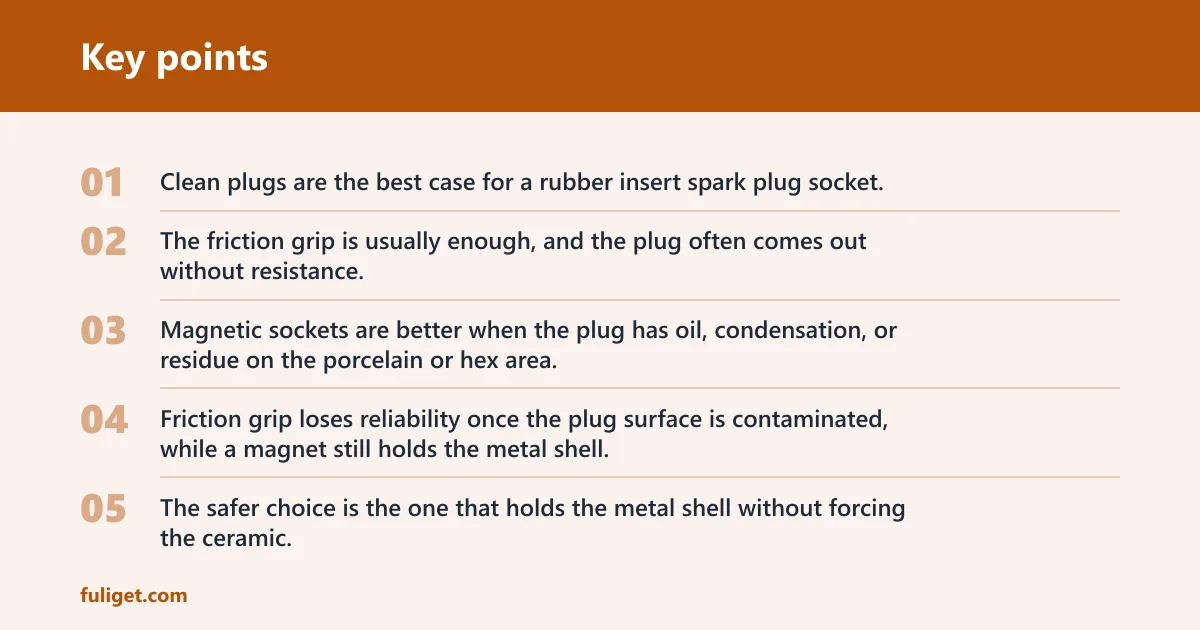
Clean plugs are the best case for a rubber insert spark plug socket. The friction grip is usually enough, and the plug often comes out without resistance. That makes it a simple choice for routine service where access is normal and the plug well is dry.
Oily or wet plugs
Magnetic sockets are better when the plug has oil, condensation, or residue on the porcelain or hex area. Friction grip loses reliability once the plug surface is contaminated, while a magnet still holds the metal shell. That is one reason magnetic sockets are often preferred for hard-to-hold plugs in real service work.
Delicate ceramic clearance
For plugs with narrow ceramic clearance, magnetic retention can be the cleaner option because it avoids extra squeeze on the insulator. Rubber inserts can still work, but a tight or aging insert may bind against the porcelain and make release less predictable. The safer choice is the one that holds the metal shell without forcing the ceramic.
Spark plug socket size and fit
The socket must match the spark plug hex size. Most standard spark plugs require a 5/8 inch socket, larger or heavy-duty plugs need a 13/16 inch socket, and 9/16 inch is also a common spark plug socket size. The correct fit keeps the socket square on the hex, reduces slippage and damage, and lets you apply the specified tightening torque.
-
Match the hex first.
Check the plug’s base hex and choose the socket size that fits it exactly. A wrong-size socket can slip, round the hex edges, or make correct torque impossible. -
Confirm the plug type.
Match the socket to the specific spark plug brand and type, since some plugs call for different reach or shell dimensions. That matters more than the insert style when the fit is borderline. -
Check the well depth.
Use a thin-wall socket for tight wells and a deep well socket when the plug sits farther down and the porcelain needs clearance. This keeps the socket fully seated before you turn it. -
Finish with a torque wrench.
Set the torque wrench to the plug maker’s spec before installation, then tighten until it clicks at that setting. That keeps clamping force in range and helps prevent thread damage and sealing problems.
Why wrong sizing causes trouble
A socket that is even slightly off can rock on the hex instead of gripping it squarely. That slippage leads to rounded edges, damaged plugs, and slow work. Correct size matters before retention features matter.
Choose Magnetic if… / Choose rubber insert spark plug socket if…
Choose Magnetic if you are working with oily or damp plugs, deep recessed wells, or repeated service where clean release matters more than friction grip. Choose rubber insert spark plug socket if the plugs are clean and dry, the access is simple, and you want a straightforward hold for routine removal or installation.
Magnetic is the better pick
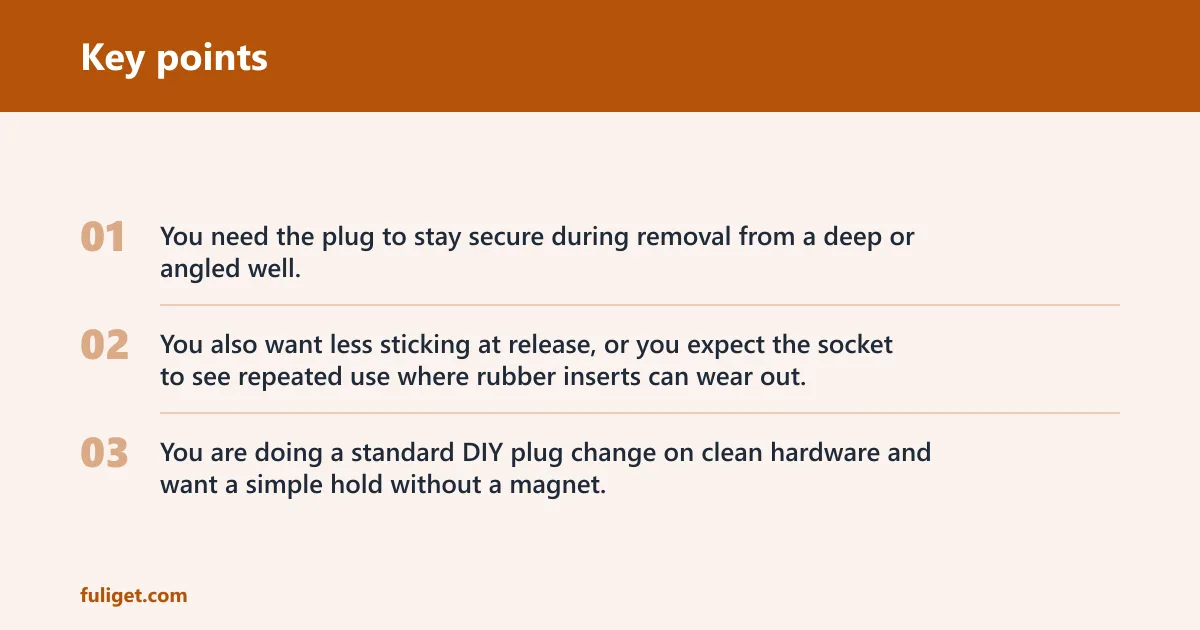
You need the plug to stay secure during removal from a deep or angled well. You also want less sticking at release, or you expect the socket to see repeated use where rubber inserts can wear out.
Rubber insert spark plug socket is the better pick
You are doing a standard DIY plug change on clean hardware and want a simple hold without a magnet. It is also a practical choice for installation when the plug is dry and the well gives you enough room to guide the socket straight on.
Spark plug socket decision table
| Job type | Plug condition | Plug-well depth | Preferred insert type | Reason |
|---|---|---|---|---|
| Clean dry plugs | Dry, clean hex and shell | Standard depth | rubber insert spark plug socket | Friction hold is usually enough, and the plug releases cleanly after removal or installation. |
| Oily plugs | Oil or moisture on the plug | Standard or deep | Magnetic | Magnet force keeps working when friction grip weakens on a wet surface. |
| Deep recessed plugs | Any condition | Deep | Magnetic | Deep wells make plug handling harder, so secure retention and easier release matter more. |
| Delicate ceramic clearance | Fragile porcelain area | Tight or narrow | Magnetic | It avoids extra squeeze on the insulator and reduces the chance of sticking on release. |
| Repeated shop use | Mixed conditions | Varies | Magnetic | No rubber insert to wear, harden, or leave residue over time. |
| Emergency roadside use | Unknown or dirty | Unknown | rubber insert spark plug socket | A simple friction insert is a practical all-around choice when you need quick handling with minimal setup. |
Frequently asked questions
Is a magnetic spark plug socket better than a rubber insert spark plug socket?
Magnetic is better when the plug is oily, deep, or hard to keep centered, but rubber is better for many clean DIY jobs. The better choice depends on plug condition and access, not on the insert type alone. If the well is standard and dry, rubber often feels simpler.
Which spark plug socket holds the plug more securely?
Magnetic usually holds more securely when the plug surface is dirty, wet, or slippery. Rubber insert spark plug socket designs can hold well too, but friction changes with wear, dust, and moisture. For a clean plug in a straight well, both can hold it; the difference shows up as conditions get worse.
Does a rubber insert damage spark plugs or fall out?
A rubber insert can wear, harden, stick, or leave residue over time, which can make removal less smooth. It does not normally damage a plug when the size is correct and the insert is in good shape. Problems start when the insert is old, torn, or too tight for the plug body.
Are magnetic spark plug sockets safe for all plugs?
Magnetic sockets are generally safe for standard spark plugs, but they still have to match the spark plug hex size exactly. A correct fit matters more than the retention feature. If the socket is the wrong size, you can still slip, round the hex, or damage the plug.
Which socket is easier to use in deep or tight plug wells?
Magnetic is usually easier once the socket can physically fit the well, because the plug is less likely to fall out during withdrawal. For the tool to fit at all, a thin-wall socket and sometimes a deep well socket matter just as much. Access comes first; retention comes second.
Which type is better for installing spark plugs versus removing them?
For installation, rubber insert spark plug socket designs are often fine because they hold the plug by friction while you start the threads. For removal, magnetic is often a good choice when the plug is deep, oily, or angled. Either way, finish installation with a torque wrench set to the plug maker’s specification so the plug is tightened correctly.
What size spark plug socket should I use with my engine?
Start by checking the spark plug hex size in your engine, then match the socket to it. Most standard spark plugs require a 5/8 inch socket, larger or heavy-duty plugs need a 13/16 inch socket, and 9/16 inch is also a common size. The exact plug matters more than the engine label.
Should I choose a thin-wall spark plug socket or a standard one?
Choose a thin-wall socket when the plug well is tight or recessed and the socket body needs extra clearance. Choose a standard socket when space is open and you want a more ordinary fit. If the socket cannot seat fully on the hex, go thin-wall before you force the turn.