How Big Should a Tool Roll Be for Basic Car Maintenance?

For a basic car-maintenance kit, pick the smallest tool roll that fits your longest tool laid flat with 1–2 inches of extra length and enough pockets for each item; most kits fit a 12–16 pocket roll. Choose too small, and the roll strains the tools, wears faster, and still wastes trunk space. This guide shows how to size the roll by your exact tool list and pocket count.
Basic car maintenance kit size
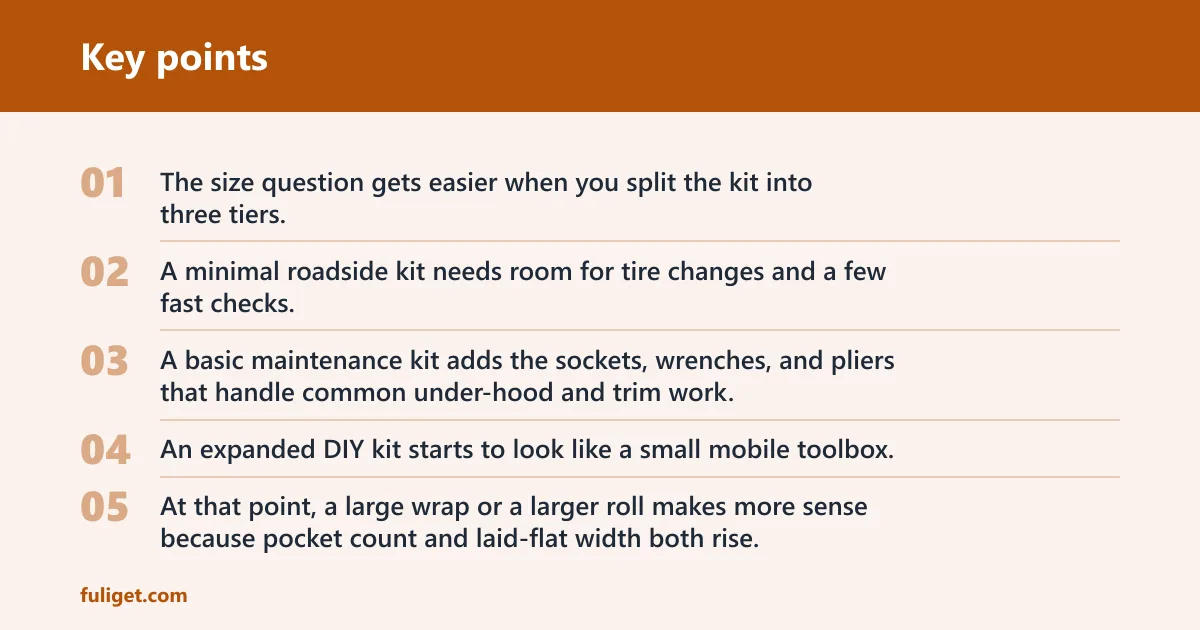
The size question gets easier when you split the kit into three tiers. A minimal roadside kit needs room for tire changes and a few fast checks. A basic maintenance kit adds the sockets, wrenches, and pliers that handle common under-hood and trim work. An expanded DIY kit starts to look like a small mobile toolbox.
Minimal roadside kit
This tier usually includes a lug wrench or tire iron, gloves, flashlight, and a few emergency items. If you add a compact ratchet and a small socket set, the roll needs to fit the ratchet length first, then the socket rail or pouch width. This is where shallow sockets matter more than deep ones because they pack flatter.
Basic maintenance kit
A basic maintenance kit usually adds an adjustable wrench, needle-nose pliers, slip-joint pliers, and a small screwdriver set. That mix still works well in a roll, but it often moves the kit from a small roll into a medium one because the longest tool grows to about 8 to 12 inches once the ratchet and wrench set are included.
Expanded DIY kit
An expanded kit can include both metric and SAE sockets, more wrench sizes, a longer ratchet, extra screwdrivers, and specialty pliers. At that point, a large wrap or a larger roll makes more sense because pocket count and laid-flat width both rise. If you want a jack in the same storage system, a roll alone usually stops being the best fit.
How big should a tool roll be?
Choose the smallest roll that fits every tool laid flat, plus 1–2 inches for the longest item. Pocket count matters, but length decides the roll width you actually need. A 6-pocket roll can still be too narrow for an 11-inch ratchet, while a 12-pocket roll may fit neatly if the pockets match the tool lengths.
Small roll for 6 to 8 hand tools
A small roll works for a tire-change setup or a stripped-down roadside kit. Think 6 to 8 hand tools, including a lug wrench, short ratchet, a few sockets, one adjustable wrench, and one or two pliers or screwdrivers. The roll width often lands around 12 to 16 inches laid flat, depending on the longest tool.
Medium roll for mixed wrench and socket sets
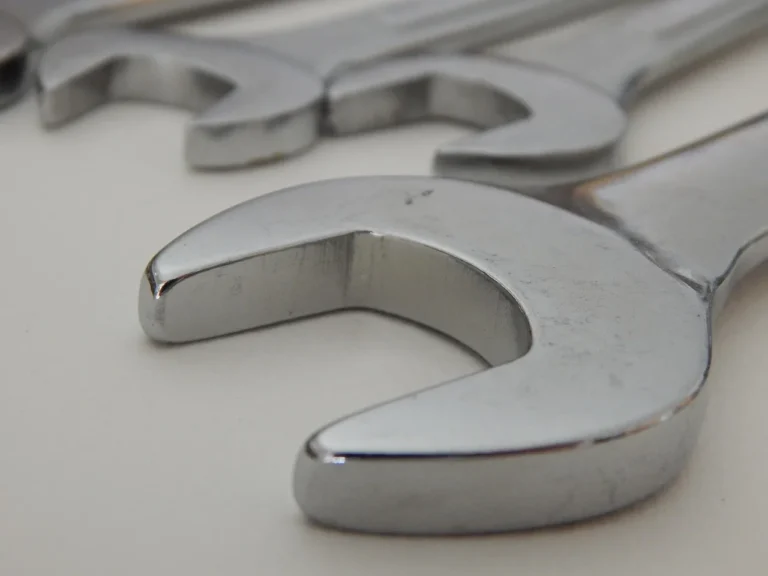
A medium roll suits the common basic maintenance kit. It usually needs 10 to 16 pockets and enough flat width for a ratchet, a small socket rail, an adjustable wrench, and several open-end wrenches. This is the safest choice when you want a real toolkit instead of a bare-bones emergency pack.
Large roll for expanded trunk kits
A large roll fits fuller roadside kits and light DIY work, especially if you carry both metric and SAE sockets. Once you add multiple wrench sizes, extra pliers, and a longer ratchet, the roll should have wider pockets and a wider laid-flat span. If the kit starts to rattle or bulge, the roll is too tight.
Tool roll sizing checklist
| Kit tier | Typical tools | Typical packed length range | Minimum pocket count | Minimum laid-flat roll width |
|---|---|---|---|---|
| Minimal roadside | Lug wrench or tire iron, short 1/4-inch or 3/8-inch ratchet, shallow socket set, gloves, flashlight | 6-12 inches | 6-8 pockets | 12-16 inches |
| Basic maintenance | Ratchet and socket set, adjustable wrench, needle-nose pliers, slip-joint pliers, screwdrivers, gloves, flashlight | 8-14 inches | 10-14 pockets | 16-20 inches |
| Expanded DIY | Metric and SAE sockets, longer ratchet, open-end wrench set, pliers, screwdrivers, gloves, flashlight, small specialty tools | 10-16 inches | 14-20 pockets | 20-26 inches |
This checklist shows the difference between pocket count and actual width. A roll can have enough pockets and still fail if the longest tool forces a pocket to bend closed. Measure the longest item first, then add room for the roll seam and tie straps.
-
Lay out the longest tools. Place the ratchet, wrench, and socket rail flat on a table. Measure the longest item from end to end, then add 1–2 inches so the tool does not press against the closure.
-
Match the pocket count. Count one pocket per tool, then add one extra pocket for gloves, a flashlight, or a small tester. That keeps the roll from crowding the pockets and makes each item easier to remove with cold hands or roadside lighting.
-
Check the pocket width. Make sure the narrowest pocket still fits the thickest item, usually a ratchet handle or a wrench group. If the pocket must stretch hard to close, the roll will wear out faster and the tools will shift inside.
-
Choose the closure type. Pick tie straps or buckles that keep the roll shut under trunk movement. A strong closure matters because loose tools can work free, scratch nearby items, or end up scattered under the spare tire cover.
What tools fit in a small tool roll for a car?
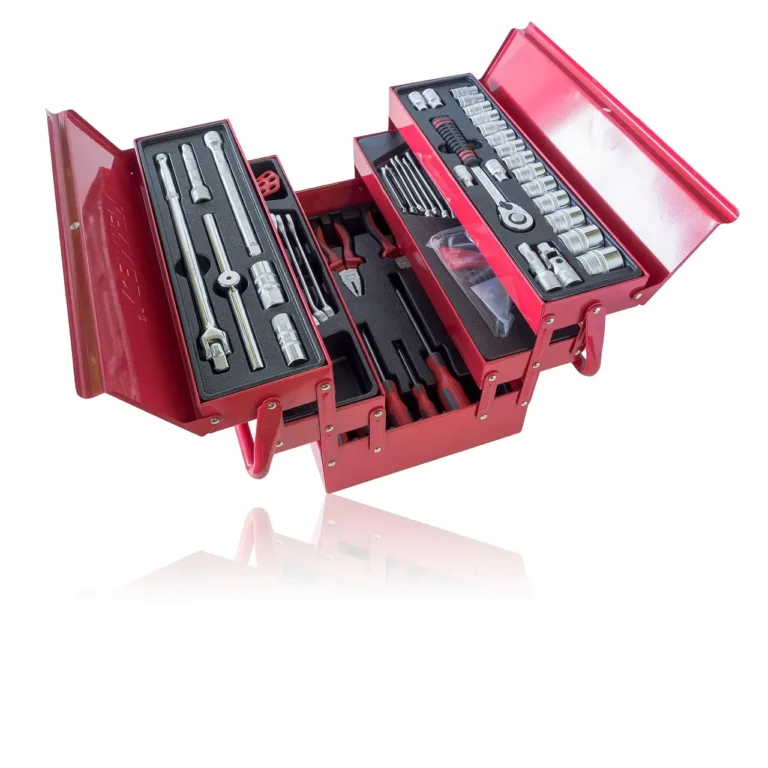
A small tool roll can fit the tools for a tire change kit and a few basic checks, but it cannot hold every hand tool a driver might want. The best small-roll candidates are short tools that lie flat: a lug wrench, a compact ratchet, a small socket set, one adjustable wrench, and a pair of pliers.
Lug wrench and tire change items
A lug wrench or tire iron is usually the longest item in this group, so it decides the roll width. If the wrench is too long for the roll, the rest of the kit will not matter. Add a flashlight and gloves only if the roll still closes without forcing the wrench to curve.
Ratchet and socket set
A 1/4-inch or 3/8-inch drive ratchet is the most practical size range for light vehicle work. A compact head ratchet takes less space than a long-handled model, and shallow sockets pack smaller than deep sockets. If you carry both metric and SAE, the socket rail grows fast, so the roll needs more width than people expect.
Pliers, screwdrivers, and gloves
Needle-nose pliers and slip-joint pliers fit common car tasks such as clips, fuses, and small fasteners. Screwdrivers and gloves usually take little room, but they still need a dedicated pocket so they do not mix with sockets. A common first-timer mistake is stuffing gloves into the same pocket as the ratchet, which makes the roll harder to close.
Say your ratchet is 9 inches long and your widest tool is a 10-inch open-end wrench. A roll with a 12-inch usable pocket width may look close on paper, but the closure will squeeze the tool ends and distort the pockets. That is how a “small” kit starts acting like an overfilled one.
How many pockets does a basic car tool roll need?
A basic car tool roll commonly needs about 10 to 14 pockets, with the exact number depending on tool length and tool count together. A short roll with many narrow pockets can still fail if the ratchet or wrench set is too long. Pockets should match the kit tier, not just the number of items.
Pocket count by tool length
Short tools can share a narrower roll, but longer tools need more room per pocket and more width overall. A 1/4-inch drive socket set in shallow sockets may fit a tighter pocket than a 3/8-inch set with a larger rail. The longest tool should guide the roll width, while the number of tools guides pocket count.
Pocket count by kit tier
The minimal roadside tier commonly fits about 6 to 8 tools, the basic maintenance tier about 10 to 14, and the expanded DIY tier often about 14 to 20. Those numbers assume each item gets its own pocket or a sensible pair of small items shares one pocket. That is why pocket count alone is not enough.
When pockets are too narrow
If a pocket is too narrow, the tool sits above the seam, the roll bulges, and the closure has to fight the contents. That is a problem for sockets on rails, long screwdrivers, and open-end wrench sets. The fix is not more force; it is a wider roll with pockets sized for the longest tool group.
Should I choose a tool roll or a tool bag for roadside repairs?
Choose a tool roll when you want low-profile packing, easy access, and less rattle in the trunk. Choose a tool bag when the kit is larger, heavier, or made of mixed shapes that do not lay flat. For roadside repairs, a roll usually works better until the tools stop fitting flat.
Roadside access and trunk storage
A tool roll opens flat, which helps when the trunk is cramped or the shoulder is narrow. You can spread out the tools without dumping the whole kit. For trunk storage, that is easier than reaching into a deep bag while keeping one hand on the wheel well or bumper area.
Rattle control and weight
A roll controls movement better when the tools are arranged flat and strapped down. That matters next to a jack, warning triangle, inflator, or spare fluids because loose metal items can knock together. A bag can hold more weight, but it often allows more shifting unless the internal layout is carefully managed.
When a bag makes more sense
Use a bag if your kit includes bulky items that do not lie flat, such as a jack handle, tire plug gear, or a mixed set of specialty tools. A roll is better for frequent-access hand tools. A bag is better when volume matters more than quick, one-hand access.
What to check before you buy
Before buying, check three things: metric or SAE sizing, drive size, and closure strength. Those choices affect whether the roll fits your car tools or just your shopping list. A durable fabric or leather organizer with pockets is only useful if the tools stay flat and the closure stays shut.
Metric, SAE, or both
Most vehicles need metric tools, but some older domestic vehicles and mixed fleets still call for SAE sizes. If you own more than one vehicle type, a mixed socket set may be the safer choice. If not, start with the sizes your car actually uses and avoid carrying extra bulk.
Drive size and socket bulk
For light vehicle work, 1/4-inch and 3/8-inch drive tools are the common starting point. A 3/8-inch set is more versatile, but a 1/4-inch set usually packs smaller. Shallow sockets take less room than deep sockets, so they are the better default when storage space is tight.
Closure strength and material
Look for a roll with sturdy stitching, a fabric weight that resists abrasion, and tie straps or buckles that stay closed when the trunk shifts. Leather can be durable, but the material alone does not guarantee useful layout. The pocket layout and closure shape matter just as much.
Suppose you keep a jack, a tire iron, and a small inflator in the trunk. A medium roll may still fit alongside them if the sockets are shallow and the ratchet is short, but a large roll can crowd the spare-tire area fast. In that case, the better move is a smaller roll plus a separate space for the jack.
Frequently asked questions
How big should a tool roll be for basic car maintenance?
For basic car maintenance, a 12–16 pocket roll is often a practical starting point. Size it to the longest tool laid flat, then add 1–2 inches. That usually covers a ratchet and socket set, an adjustable wrench, pliers, screwdrivers, gloves, and a flashlight without forcing the pockets shut.
What size tool roll is best for a tire change kit?
A tire change kit usually fits a small roll if the lug wrench is short and the socket set uses shallow sockets. Plan on about 6 to 8 pockets and enough width for the longest tool. If you also carry an inflator or extra hardware, move up one size before the roll gets tight.
Can one tool roll hold all the tools for routine car maintenance?
Sometimes, but only if your routine list stays modest. A single roll can hold the common hand tools for light maintenance, especially with a short ratchet and shallow sockets. Once you add both metric and SAE sets, more wrench sizes, and extra pliers, a larger wrap or a second storage piece may be the better fit.