Is a Torque Wrench Necessary for Home Car Maintenance?

Yes, if you work on wheel lugs, brakes, spark plugs, oil drain plugs, or any aluminum-thread fastener, buy or borrow one. For light trim, filters, and hose clamps, skip it. Too much torque can strip threads, distort parts, or leave a wheel dangerously loose. This guide shows which home car jobs need a torque wrench, which do not, and when borrowing or paying a shop makes more sense.
Do you really need one?
The short answer is yes for some jobs, no for others. A torque wrench matters whenever a fastener has a specific torque spec that affects safety, sealing, or part life. For low-risk trim and loose-fit hardware, a firm hand tool is often enough.
The clearest buy, borrow, or skip rule is simple: buy one if you regularly service wheels, brakes, plugs, or engine-bay parts with published specs; borrow one if those jobs come up only once in a while; skip it for cosmetic trim and clamps that are not torque-critical. That rule keeps you from buying a tool before you know your actual maintenance mix.
Why torque matters on cars
A torque wrench tightens a fastener to a specific setting, which helps avoid over-tightening and under-tightening. That matters on cars because the wrong clamping force can change how a joint seals, holds, or runs.
Over-torquing can warp a brake rotor or stretch a wheel stud. It can also strip aluminum threads, which is a common risk on spark plugs, valve covers, and other light-duty engine-bay parts. Under-torquing can let a wheel work loose.
Picture a wheel lug that gets run down with an impact gun and no final check. If it is too tight, the stud may stretch and the rotor may distort; if it is too loose, the wheel can shift under load. Neither failure is a small annoyance.
What can fail when torque is wrong?
When a torque spec is ignored, the failure mode depends on the part. Wheels can loosen, brake parts can run unevenly, and soft threaded holes in aluminum can strip before the joint ever reaches the right clamp load.
That is why the tool is less about precision for its own sake and more about preventing avoidable damage. On a car, one wrong turn can mean a damaged stud, a stripped hole, or a repair that costs far more than the wrench.
Torque wrench decision table
| Job | Recommendation | Drive size | Typical torque unit | Risk if over-tightened |
|---|---|---|---|---|
| Wheel lug nuts | use a torque wrench | 1/2-inch | foot-pounds | Warped rotor, stretched stud, uneven clamping |
| Brake caliper bracket bolts | use a torque wrench | 1/2-inch | foot-pounds | Stripped threads, seized hardware, service damage |
| Spark plugs | borrow one | 1/4-inch | foot-pounds or meter-kilograms | Stripped aluminum threads, cracked plug, poor seal |
| Valve cover bolts | borrow one | 1/4-inch or 3/8-inch | foot-pounds or meter-kilograms | Warped cover, oil leak, stripped threads |
| Oil drain plug | use a torque wrench | 3/8-inch | foot-pounds | Stripped pan threads, future leaks, damaged gasket seal |
| Suspension bolts | use a torque wrench | 1/2-inch | foot-pounds | Wrong clamp load, premature wear, shifted alignment points |
| Interior trim | safe to skip | 1/4-inch | None or low-inch-pound spec | Cracked plastic, stripped clips, broken trim tabs |
| Hose clamps | safe to skip | Hand tool only | None | Pinched hose, cut hose, unnecessary clamp damage |
This table shows the practical split. Wheel and brake work belong in the torque-wrench column. Interior trim and most hose clamps do not. Spark plugs and valve cover bolts sit in the middle, where the exact spec matters enough that the right smaller wrench or a borrowed one makes more sense than guessing.
When to borrow instead of buy
Borrowing makes sense when the tool will see only occasional use. If you rotate tires once a year and replace spark plugs once every few years, it is reasonable to borrow a wrench or pay a shop for the one torque-critical step rather than buy a tool that sits unused.
That is also the better move if the job has a low torque value and the fasteners are soft. A one-time rental or a quick shop visit can be cheaper than repairing stripped aluminum threads or cleaning up a warped sealing surface.
Which drive size should you buy first?
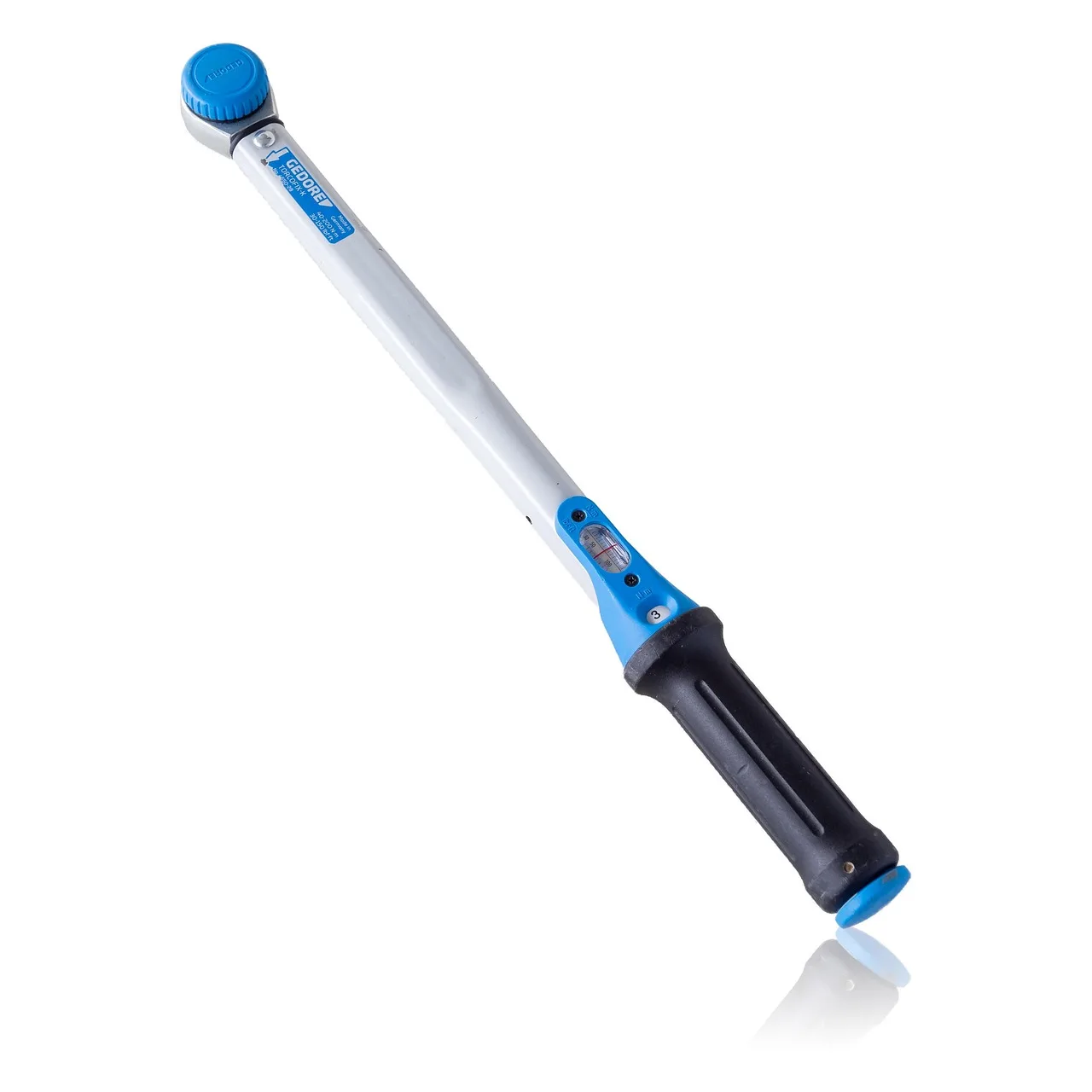
For many passenger-car owners, a 1/2-inch drive is the usual starting point for wheel work. It is the standard first purchase for lug nuts.
A 3/8-inch drive is the mid-range option for engine-bay work. A 1/4-inch drive is better for small, low-torque fasteners where over-torquing is easy, such as spark plugs, valve cover bolts, and some interior trim hardware.
1/2-inch drive for lug nuts and larger bolts
A 1/2-inch drive click-type torque wrench is the standard first purchase for lug nuts. It also fits many suspension and engine bolts, so it covers a broad range of common home-car jobs.
If you only buy one wrench, start here. It gives the best match for wheel work and most higher-load fasteners, which is where many DIY mistakes become expensive or unsafe.
3/8-inch drive for mid-range engine work
A 3/8-inch drive is the middle-ground option. It fits engine-bay bolts that are too small for a 1/2-inch wrench to feel natural but too large for the smallest drive to handle well.
This size is useful if your maintenance list includes brackets, accessory bolts, and other mid-range fasteners. It is less of a first buy than a 1/2-inch wrench, but it can be the better second tool for owners who work under the hood often.
1/4-inch drive for small fasteners
A 1/4-inch drive is recommended for spark plugs and small interior fasteners. It is the safer choice where the spec is low and the thread material can be easy to damage.
That matters here because spark plug specs are much lower than lug nut specs, and a 1/2-inch wrench may not be the best match at those lower torque levels. That is why an oversized wrench is a poor substitute for the smaller tool.
Suppose a valve cover bolt calls for a light torque value and you reach for a 1/2-inch wrench because it is already on the bench. The tool may be too far below its useful zone, and the fastener can be overtightened before the reading is trustworthy.
Click vs digital torque wrenches
Click-type and digital torque wrenches both solve the same problem: they help you tighten to a set value instead of guessing. Click-type models give a mechanical feedback signal at the target torque and do not need batteries. Digital wrenches show an exact live value and may add audible and vibration alerts near the target torque.
For most home garages, click-type is the simpler default. Digital is worth considering if you want a live display, preset memory, or a clearer signal during careful work on low-torque fasteners.
How click-type models work
A click wrench is common because it is straightforward. You set the desired torque, pull until the wrench clicks, and stop.
For many DIY owners, that is enough. The lack of batteries, screens, and menus makes it easy to store and easy to trust for routine wheel, brake, and under-hood work.
When digital is worth it
Digital models can be useful when you want the exact live value instead of relying on a click point alone. They may also use audible and vibration alerts near the target torque, which can help on jobs where you want a clear cue before the final pull.
That added feedback is useful, but it is not required for most DIY work. If your maintenance list is mostly wheels and occasional brake service, a click wrench usually makes more sense than paying extra for features you will rarely use.
How range and units affect accuracy
Use the right unit and the right range. Foot-pounds is the common scale for lug nuts and many car bolts, while the unit listed in the vehicle spec also appears on some wrench markings. The wrench scale must match the vehicle spec, or the number you set will not mean the same thing as the number in the manual.
Range matters too. A wrench used far below its intended working range may not be as reliable as one operating in its intended middle band. That is why a large wrench is a poor choice for tiny fasteners.
Foot-pounds and meter-kilograms
The point is not which unit sounds familiar; the point is matching the wrench marking to the spec listed for the vehicle. wikihow.com
If the manual lists one unit and the wrench is set to the other without conversion, the fastener can end up too loose or too tight. That mistake is easy to make and hard to see until the joint fails.
What happens near the low end of the range
When a wrench is pushed far below its intended working range, the reading can drift from the fastener’s real clamp load. This is the trap with using a 1/2-inch wrench on small spark plugs or valve cover bolts.
That is why low-torque jobs belong with a smaller drive. If the spec is well below the zone where the tool reads cleanly, borrow the right size or use a shop instead of forcing the wrong tool to do it.
Matching the wrench to the vehicle spec
Check the owner’s manual or the service data for the exact torque number, then match both the unit and the wrench size. A 1/2-inch drive usually handles lug nuts and larger bolts, while a 1/4-inch or 3/8-inch tool fits low- and mid-torque work better.
That match matters more than brand or extras. A correctly sized wrench used in its proper range is the tool that protects the fastener, the part, and the repair.
Storage and calibration basics
Store the wrench at its lowest setting when it is not in use. A torque wrench left set high in storage can drift out of calibration over time, and dropped tools raise the same concern.
Calibration matters because a torque wrench is only useful if the setting remains dependable. If accuracy is in doubt after a drop, heavy misuse, or long neglect, treat the tool as suspect until it is checked.
- Set the wrench to the lowest value before storage.
- Do not leave it cranked high between jobs.
- Keep it clean and dry after use.
- Avoid using it as a breaker bar.
- If it is dropped, assume accuracy may have changed.
A common first-timer mistake is storing the wrench at a high setting because it is ready for the next job. That habit works against the tool’s accuracy. Low setting storage and careful handling are simple habits that keep the wrench trustworthy.
Frequently asked questions
Do I really need a torque wrench for home car maintenance?
For some jobs, yes. Wheels, brakes, spark plugs, and aluminum-thread fasteners are the clearest cases. For trim, basic clamps, and other low-risk fasteners, you can usually skip it. The right answer depends on the job, not on the car as a whole.
Can I get by without a torque wrench on lug nuts?
You can get by only if you are willing to accept more risk than is ideal. Lug nuts are a safety-critical job, and both over-torquing and under-torquing cause problems. A 1/2-inch drive is the usual first purchase because it fits most passenger-car lug nut specs.
What jobs on a car actually require a torque wrench?
Wheel lug nuts, brake fasteners, spark plugs, oil drain plugs on vehicles that specify a torque value, and many aluminum-thread engine-bay bolts are the main home jobs that call for one. The common theme is simple: the torque value matters to safety, sealing, or thread survival.
Is one torque wrench enough for both lug nuts and spark plugs?
Usually no. A 1/2-inch wrench is the standard first purchase for lug nuts and larger bolts, but spark plugs sit much lower in torque and often need a 1/4-inch drive. One oversized wrench may not be the best match at spark-plug torque levels.
What drive size should I buy first for DIY car work?
Start with a 1/2-inch drive if you want the most useful single tool for passenger-car maintenance. It covers lug nuts and many engine and suspension bolts. Add a 3/8-inch or 1/4-inch wrench later only if your job list actually calls for smaller fasteners.
Should I buy click or digital for home garage use?
Click-type is the best all-around DIY choice for most owners. It is simple, battery-free, and common. Digital is worth extra only if you want an exact live readout, audible or vibration alerts, or preset memory for repeat jobs.
Does a torque wrench need calibration or special storage?
Yes. Store it at the lowest setting, not cranked high, and do not treat drops lightly. Accuracy can drift over time, especially after rough handling. If the wrench has been dropped or neglected, calibration concerns are real enough to check before using it on critical fasteners.