How to Choose a Beginner Mechanic Tool Set for Home Use

Choose a beginner mechanic tool set for home use by matching it to the jobs you will actually do: a 3/8-inch drive with 8 mm to 19 mm sockets, plus a few 1/4-inch pieces and a sturdy case, beats a high piece count. Buy the wrong set and you waste money on duplicates, miss the sizes you need, or end up with tools you cannot store or keep organized. This guide shows how to pick drive size, socket range, and storage based on common home repairs.
Core tools for common fasteners
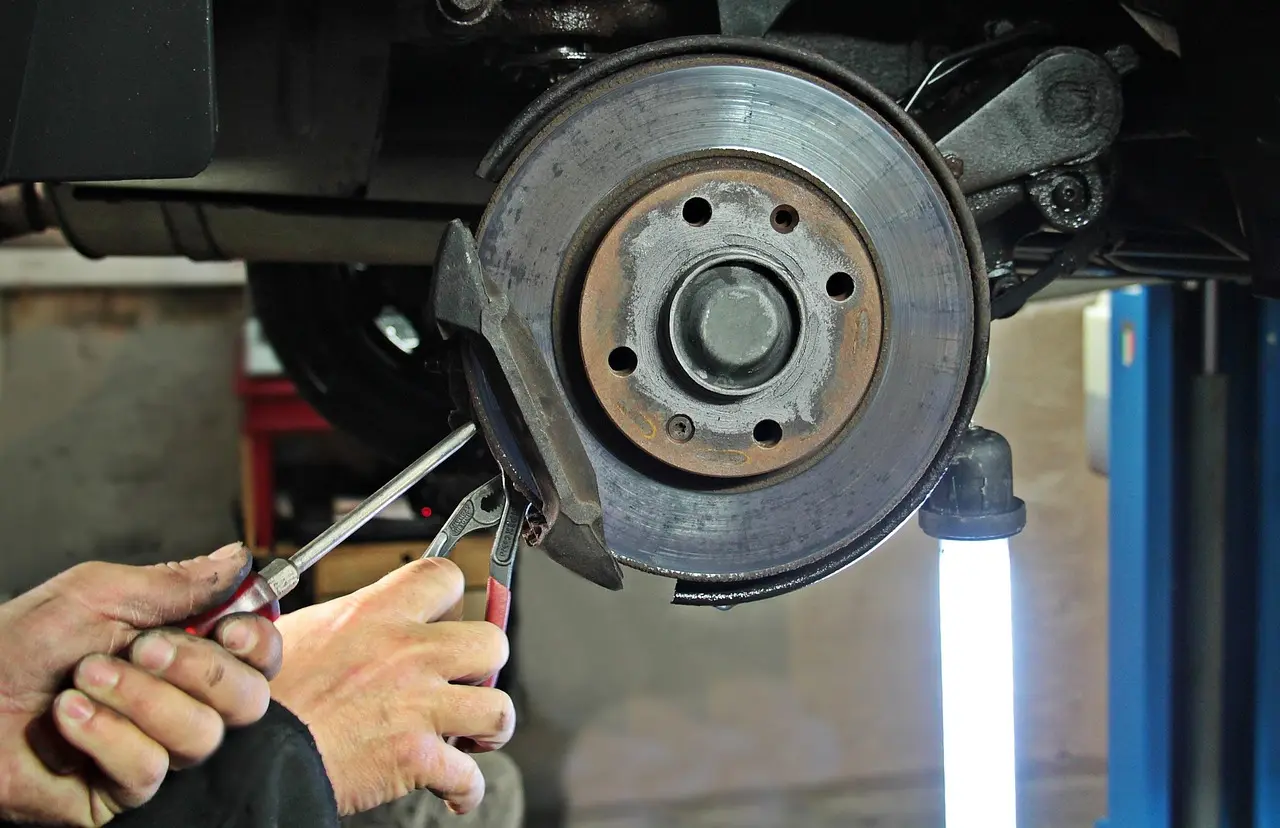
A good first set covers the fasteners you are most likely to meet at home: sockets, a ratchet or two, combination wrenches, and enough metric and SAE coverage to handle common bolts. Add hex keys, extensions, and adapters if you want to reach recessed fasteners and keep the set useful as your repairs expand.
Sockets and ratchets
For home use, sockets and ratchets do the heavy lifting. Ratchets in 1/4-inch, 3/8-inch, and 1/2-inch drive sizes let you match the tool to the bolt size and the space around it. Beginner sets often include 72-tooth ratchets, which help in tight spaces because the handle needs less swing to reset.
Socket ranges matter more than glossy packaging. Common beginner coverage includes metric sizes from 5 mm to 19 mm and SAE sizes from 5/16 inch to 7/8 inch. Standard sockets handle shallow fasteners; deep sockets are worth having when a long stud or a protruding bolt keeps a standard socket from seating fully.
Combination wrenches
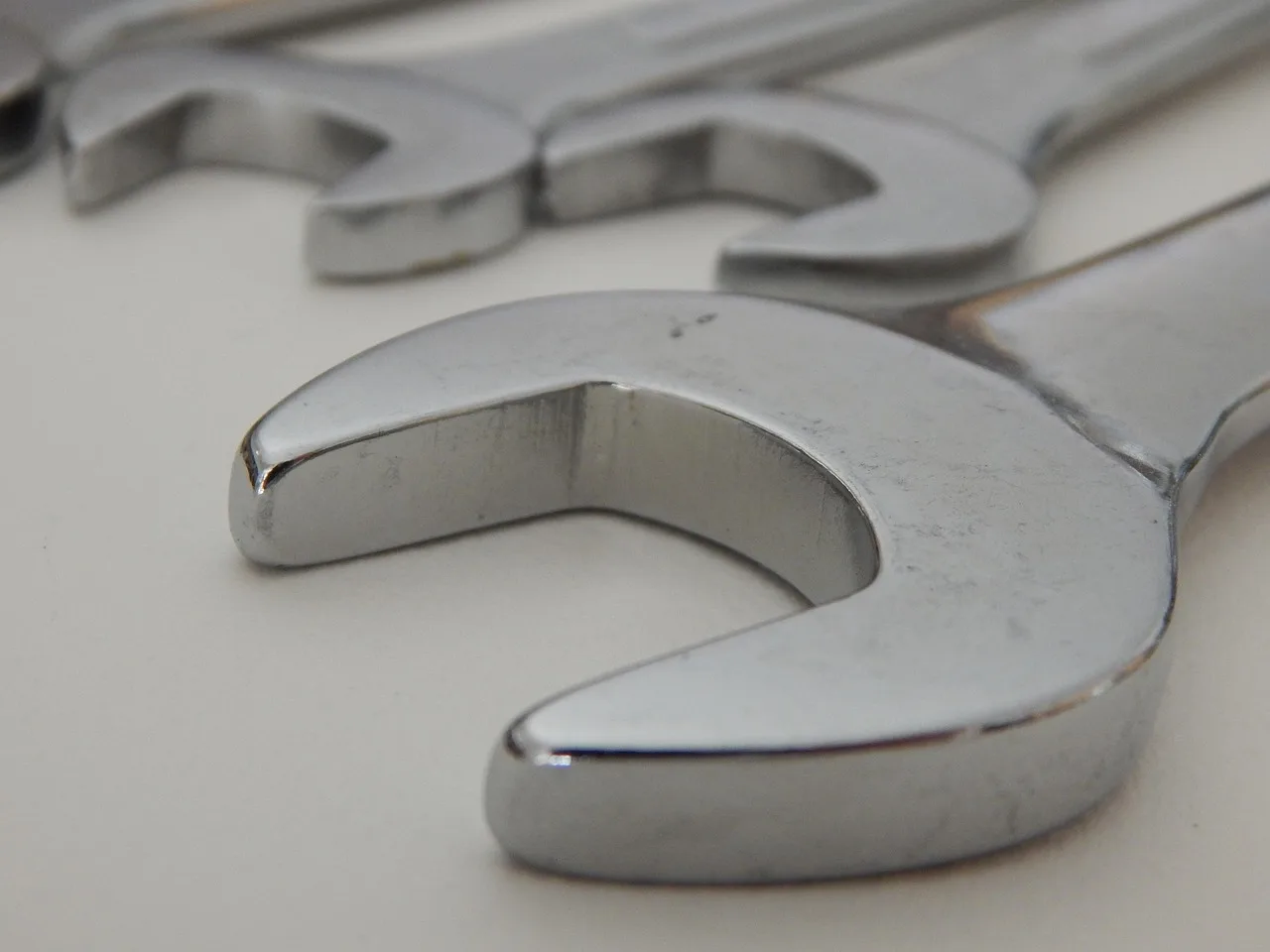
Combination wrenches belong in a starter kit because sockets cannot fit every fastener. The open-end side helps when space is limited, while the box-end side grips more securely on a hex head. Precision-cut box ends give better engagement, which matters when a stubborn bolt does not tolerate sloppy fitment.
Hex keys, extensions, and adapters
Hex keys are useful for furniture, clamps, brake hardware, and many small car tasks. Metric and SAE versions both come up in beginner kits, and a more complete set usually includes extension bars and adapters. Those extras help reach bolts buried behind brackets, hoses, or engine accessories, and some kits support impact-driver compatibility for added flexibility.
Metric or SAE for your first set?
Metric is the safer default for many beginners, especially if the household vehicles are newer imports or most household repairs involve modern hardware. SAE still matters for older vehicles, lawn equipment, and many American-made fasteners. If your home has mixed vehicles, choose a set with both systems rather than trying to guess.
When metric is the safer default
Metric fasteners are common on many modern small cars and compact SUVs, so a metric-first set often sees the most use. If you are choosing one system first, metric usually gives you the broader match for everyday automotive work and general DIY tasks. A set covering 5 mm to 19 mm handles a large share of beginner repair jobs.
When SAE still matters
SAE coverage matters when you own an older domestic vehicle, a truck with mixed hardware, or older equipment that still uses inch-based fasteners. A beginner who skips SAE can end up stuck on a simple bracket, battery hold-down, or accessory mount. The safer choice is a starter set that includes both systems in the core socket range.
Mixed-vehicle households
If one person drives a metric-heavy compact car and another drives an older truck, buy a mixed set from the start. That choice is usually cheaper than buying a metric kit now and a separate SAE kit later. It also avoids the common problem of having the right drive size but the wrong bolt system.
Which drive size should you buy first?
For a first home set, 3/8-inch drive is often the most practical choice. It covers most beginner auto and DIY repair work without feeling too bulky or too small. Add 1/4-inch for tight spaces and small fasteners, then move to 1/2-inch only if you expect larger bolts, suspension work, or heavier-duty jobs.
1/4-inch for small fasteners and tight spaces
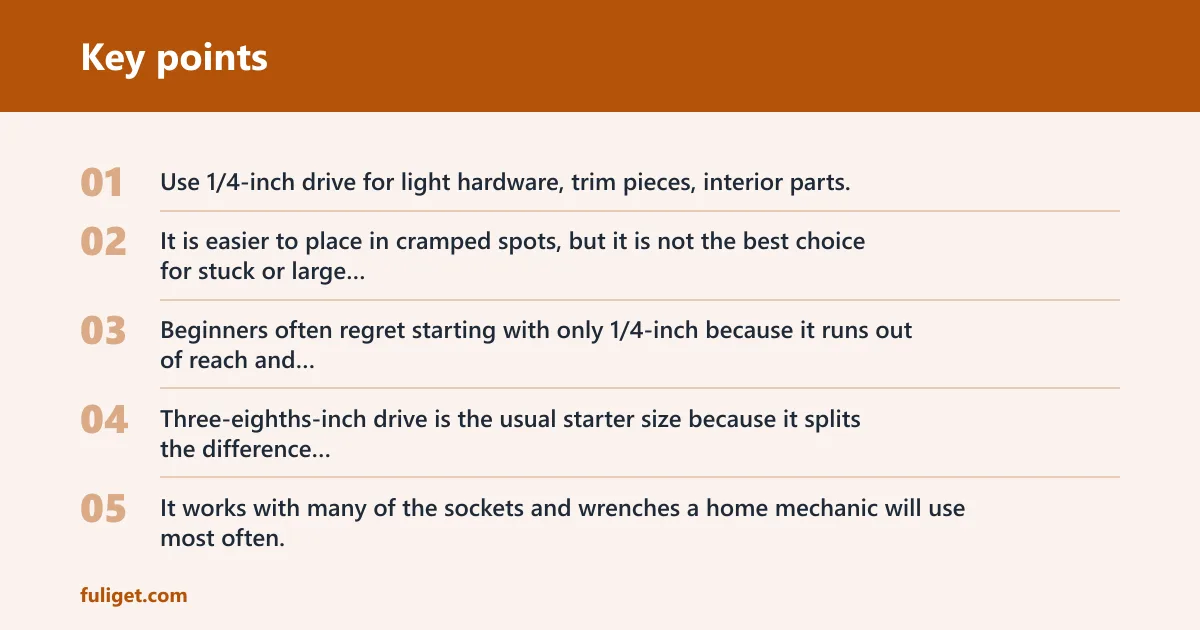
Use 1/4-inch drive for light hardware, trim pieces, interior parts, and other small fasteners where a large ratchet would be awkward. It is easier to place in cramped spots, but it is not the best choice for stuck or large bolts. Beginners often regret starting with only 1/4-inch because it runs out of reach and torque quickly.
3/8-inch as the best all-purpose choice
Three-eighths-inch drive is the usual starter size because it splits the difference between reach and strength. It works with many of the sockets and wrenches a home mechanic will use most often, including common engine-bay and undercar jobs. If you buy only one drive size first, this is the one to prioritize.
1/2-inch for larger fasteners and heavier work
Half-inch drive is better for larger fasteners, tighter torque, and heavier hardware such as lug-related work or stubborn chassis bolts. It is less nimble in cramped spaces, so it is usually not the best only drive size for a beginner. It becomes more valuable as your repairs move beyond light maintenance.
Why 72-tooth ratchets and locking heads matter
A 72-tooth ratchet can move in a smaller arc before it clicks back, which helps when a bolt sits near a panel or hose. Push-button locking mechanisms also matter because they keep sockets seated when you are working at odd angles. These details affect how often you can use the tool, not just how it looks on the shelf.
Beginner mechanic tool matrix
Use the repair, not the box size, to decide what belongs in a starter kit. A small set can be exactly right for interior work, battery service, and light maintenance. A larger set only makes sense when it adds the right sockets, wrench sizes, and storage, not duplicate bits.
| Common home repair | Minimum drive size | Socket types | Wrench types | Case style | Buy now or later |
|---|---|---|---|---|---|
| Battery replacement | 3/8-inch | Metric and SAE, standard sockets | Combination wrenches for clamps and brackets | Portable case with labeled trays | Buy now |
| Cabin filter, trim, and interior panels | 1/4-inch | Small metric sockets, a few bits | Light combination wrench use | Compact case or tray insert | Buy now |
| Brake hardware and caliper brackets | 3/8-inch, sometimes 1/2-inch | Metric deep sockets | Combination wrenches for holding counter-faces | Case with space for extensions | Buy now if you work on brakes |
| Lug nuts and larger chassis fasteners | 1/2-inch | Larger metric or SAE sockets | Combination wrenches for support work | Metal box or larger tray storage | Buy later unless needed often |
| Alternator, starter, and accessory brackets | 3/8-inch with extensions | Deep sockets, standard sockets, adapters | Combination wrenches | Organized case with room for add-ons | Buy now if you expect engine-bay work |
Say your car needs a battery swap and a cabin filter the same weekend. A 3/8-inch set with metric sockets, a few extensions, and combination wrenches will handle both jobs cleanly. If the set lacks tray labels or a fixed place for extensions, the tools tend to vanish into the garage drawer faster than the repair is finished.
How many pieces do you actually need?
The useful answer is smaller than many boxes suggest. Starter kits often range from roughly 140 to 450 pieces, but piece count alone says little about usefulness. A better set can be smaller if it includes the right drive sizes, socket depths, and wrench coverage without padding the box with duplicates or filler bits.
What counts as useful versus filler
Useful pieces are the ones you will actually touch: ratchets, sockets in the sizes you need, combination wrenches, extensions, adapters, and a few hex keys. Filler pieces are duplicate bits, oddball adapters you will never use, and large blocks of extras that look impressive but do not help with common repairs. If the case is crowded with unused inserts, the set is usually larger than it is helpful.
Why 142-piece and 450-piece sets can mislead
Bob Vila’s top pick is the DeWalt DWMT73802 142-Piece Mechanics Tool Set, while the upgrade pick is the Craftsman 450-Piece Mechanics Tool Set. Those counts do not tell you which one fits your jobs. A 142-piece set can be enough for a beginner if it covers the right socket range, while a 450-piece set can still hide lots of extras you may never reach for.
The minimum set size for a first home kit
A first home kit does not need to chase the highest count. It needs the core drive sizes, the socket sizes you are most likely to use, and storage that keeps the set complete. If a smaller box gives you those basics and leaves room for a torque wrench later, it is usually the smarter buy.
What makes one set better than another?
Quality shows up in fit, finish, ratchet feel, and how long the tools stay usable. Chrome vanadium steel is a common material in quality sets and is widely described as durable and rust-resistant. That matters, but material alone does not decide whether the set is worth buying. Socket engagement, ratchet smoothness, and clear storage matter too.
Chrome vanadium steel and finish quality
DeWalt’s DWMT73802 uses chrome vanadium steel alloy, and that material is common in quality mechanic sets. Look for a finish that resists corrosion and cleans easily after use, but do not stop at the marketing label. A decent steel grade with poor socket fit is still a frustrating set.
Socket fit, radius corners, and ratchet feel
Some socket sets use radius corners for better torque transfer and less rounding on bolt heads. That detail helps when a fastener is already worn or tight. The ratchet should also feel smooth, with a head that does not wobble excessively. Bob Vila notes 72-tooth ratchets in the DeWalt set, which is the kind of feature that helps in confined spaces.
Warranty and replacement support
Warranty matters because beginner sets often see hard use and occasional loss. Strong replacement support can save money when one socket breaks or a ratchet wears out. For a first set, a clear warranty is useful only if the kit also contains the right drive sizes, so do not let the warranty distract you from the actual tool mix.
A common first-timer mistake is buying a huge kit because the box says “all-in-one,” then discovering it has no deep sockets in the size needed for a bracket bolt. The repair still stops, but now the kit also takes up more shelf space than the job deserves.
Storage, portability, and future upgrades
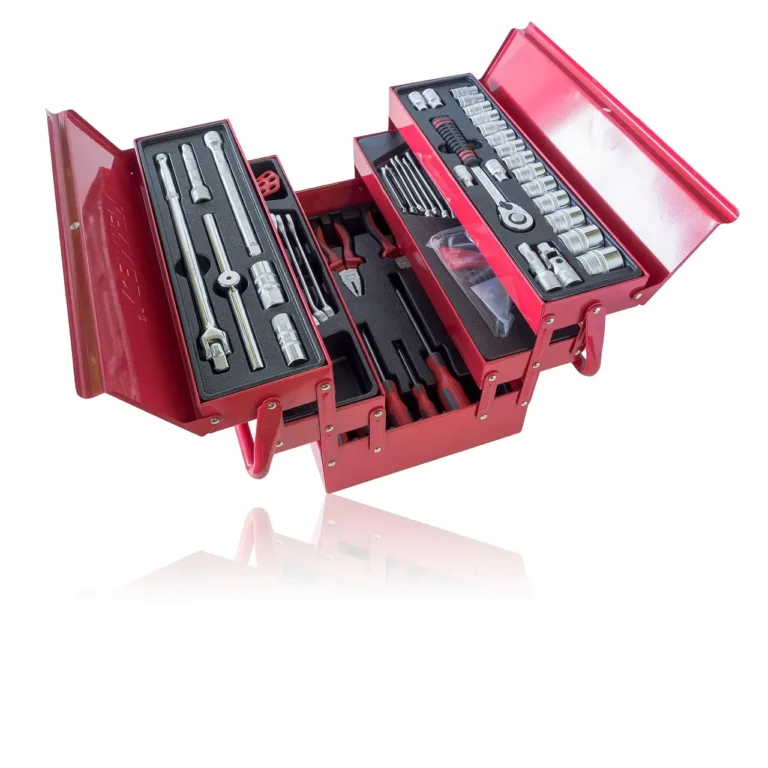
Storage is part of the purchase, not an afterthought. A portable case, metal box, drawer tray, or molded insert helps keep the set complete and easy to sort. Larger kits may use drawer or tray storage, while smaller sets often live in a portable case that moves between the house, driveway, and trunk.
Case, tray, drawer, or metal box
A molded case is fine for a first kit if every tool has a marked slot. A metal box is sturdier for heavier sets, and drawer or tray storage works well when the set grows. The best choice is the one that keeps sockets from mixing, ratchets from rattling loose, and missing pieces easy to spot.
How to keep a starter set complete
Choose a case that closes securely and leaves room for the sockets you will add later. After each job, return the ratchet, extensions, and most-used sockets to the same place. That habit matters because a starter kit loses value fast when one missing socket turns a simple repair into a search.
Likely add-ons: torque wrench, specialty sockets, and more
Future ownership cost is easy to miss. Many beginners later add a torque wrench, specialty sockets, spark plug sockets, and a few extra extensions or adapters. Mech-tools notes that some premium sets include these items, but if yours does not, plan for them when you budget. A starter set should leave room for upgrades, not force a full replacement.
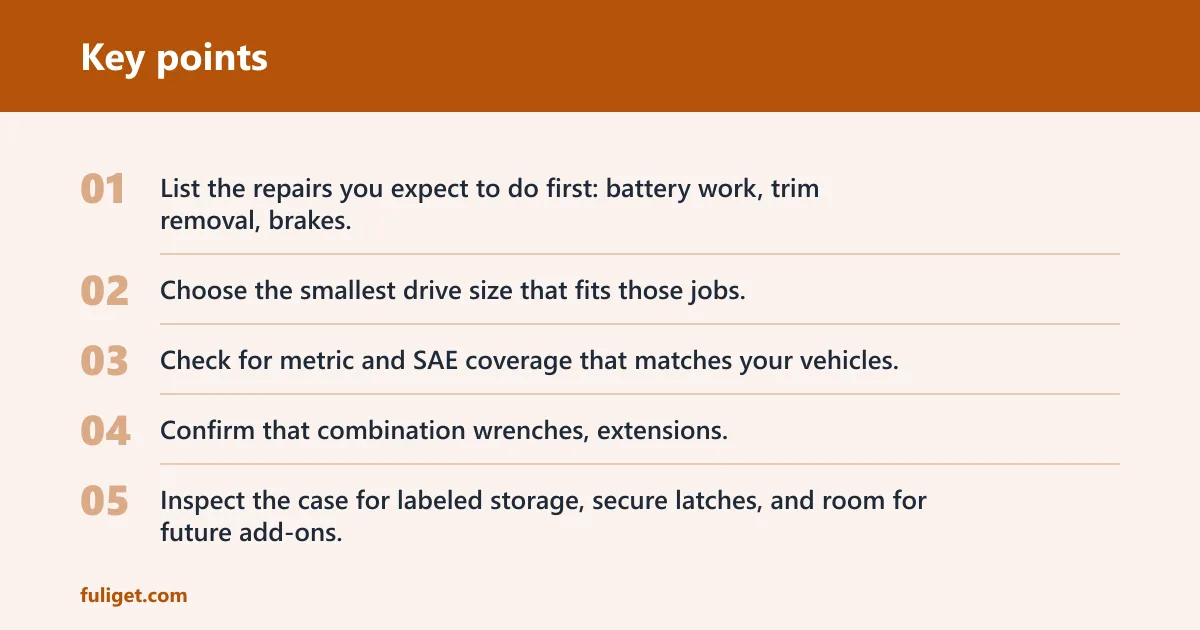
- List the repairs you expect to do first: battery work, trim removal, brakes, or basic engine-bay tasks.
- Choose the smallest drive size that fits those jobs, then make 3/8-inch the main driver unless your list points elsewhere.
- Check for metric and SAE coverage that matches your vehicles, with deep sockets if bolts sit on studs or in recessed pockets.
- Confirm that combination wrenches, extensions, and adapters are included or easy to add later.
- Inspect the case for labeled storage, secure latches, and room for future add-ons.
Frequently asked questions
What should be in a beginner mechanic tool set for home use?
A beginner set should include a 3/8-inch ratchet, a smaller 1/4-inch option, sockets in metric and SAE sizes, combination wrenches, and a sturdy case. Extensions and adapters help with tight spaces, while deep sockets improve reach on recessed fasteners. That combination handles most first-time home repairs without excess filler.
How many pieces do I actually need in a starter mechanic set?
Enough to cover your jobs, not enough to chase a box number. A set in the 142-piece to 450-piece range can work, but the useful piece is the one that matches your bolts. If the set lacks the right drive sizes or socket range, more pieces will not fix the gap.
Should I buy a metric or SAE mechanic tool set?
Buy metric if most of your work is on modern cars, and add SAE if you own older domestic vehicles, small engines, or mixed hardware. For a mixed-vehicle household, a set with both systems is the safer buy. Skipping one system usually means a second purchase later.
Is a 1/4-inch, 3/8-inch, or 1/2-inch drive best for beginners?
Three-eighths-inch drive is often a strong first choice for most beginners. It fits a wide range of home and automotive jobs. Add 1/4-inch for small fasteners and tight spaces, and 1/2-inch for larger bolts or heavier work. A starter kit that includes all three gives the most flexibility.
What’s the difference between a cheap and a good mechanic tool set?
A good set fits bolts cleanly, includes the right drive sizes, and stores tools so they stay complete. A cheap set often looks large but hides duplicates, weak organization, or poor socket engagement. Chrome vanadium steel, 72-tooth ratchets, and radius-corner sockets are better signs than piece count alone.
Which storage case or box is best for a beginner tool set?
The best storage is the one that keeps every tool visible and in place. A molded portable case works well for smaller kits, while a metal box or drawer tray suits larger sets with more sockets and extensions. Pick the format that makes missing pieces obvious after each job.