What Is the Best Mechanic Starter Tool Kit for DIY Car Care?

A common mechanic starter tool kit for DIY car care is a 60- to 120-piece set with 3/8-inch metric sockets, a ratchet, extensions, combination wrenches, pliers, screwdrivers, and a torque wrench. Smaller kits miss the fasteners and access tools that turn basic jobs into stripped bolts, broken clips, and wasted money. This guide maps the first 10 common car-care jobs to the tools you actually need and compares kit buying with piecemeal buying.
Mechanic starter kit vs piecemeal buying
A starter kit should cover the jobs you will actually touch first: battery terminals, air filters, wiper blades, hose clamps, trim clips, basic fasteners, and simple under-hood access. A piecemeal approach makes sense when you already know the car’s fastener sizes or only need one specialty item. Piece count alone is a poor guide.
Bob Vila’s top overall pick is the DeWalt DWMT73802 with 142 pieces, and Bob Vila notes that mechanic tool sets typically include more than 100 tools. That range usually gives you enough socket coverage, two drive sizes, and the accessory pieces that make real car work possible without buying a giant box full of repeats.
For home use, the smallest genuinely useful kit is the one that covers the first jobs cleanly. A very small set can still leave you stuck on a hose clamp, a battery hold-down, or a fastener that sits too deep for a shallow socket.
What the first 10 car jobs need
The best starter kit is the one that matches your first 10 jobs, not the one with the highest count. For most DIY drivers, that means tools for simple under-hood work, light underbody work, and a few safety-adjacent jobs that need jack stands and a jack if you go below the car.
Picture a battery-terminal cleanup on a 10 mm nut. A small kit with only shallow sockets may do it. Picture an air-filter box with a buried clamp and a trim clip nearby. You need pliers, screwdrivers, and enough socket reach to avoid forcing the fastener.
Mechanic starter kit matrix
| Task | Tools | Size notes | Purchase priority |
|---|---|---|---|
| Battery terminal cleaning or replacement | 3/8-inch ratchet, socket set, combination wrench, pliers | Common metric fasteners are often in the 8 to 13 mm range; check the vehicle manual for the exact clamp hardware. | Must-have |
| Air filter swap | Screwdrivers, small socket set, pliers | Usually light fasteners; often a mix of clips and small screws rather than large bolts | Must-have |
| Wiper blade replacement | No special hand tools or a small screwdriver | Most jobs do not need sockets; keep a small screwdriver for stubborn tabs | Optional |
| Hose clamp service | Pliers, screwdriver, combination wrench | Clamps and nearby brackets often sit in tight spaces where a socket cannot fit | Must-have |
| Trim clips and covers | Trim-friendly screwdriver, pliers | Use light hand force; oversized tools can crack clips and panels | Must-have |
| Spark plug access where appropriate | 3/8-inch ratchet, spark plug socket, extensions, swivel joint | Deep reach matters; socket size varies by engine and plug design | Must-have for that job |
| Oil change or underbody inspection | Jack, jack stands, 3/8-inch ratchet, deep socket, drain-pan support gear | Follow the vehicle manual; never work under a vehicle held only by a jack | Must-have for under-car access |
| Tire pressure check | Tire gauge | No socket size needed | Must-have |
| Wheel removal or tire rotation | Lug wrench, jack, jack stands, socket set | Lug size varies by vehicle; confirm in the owner’s manual before buying extras | Optional until you plan to rotate tires |
| Headlight restoration | Headlight restoration kit, microfiber towels, masking care items as directed by the kit | No socket size needed; the adjacent tools are for cleanup and protection | Optional but practical |
That matrix is the buying filter. If a kit misses the items in the “must-have” column, it is too thin for a first toolbox. If it adds lots of duplicates without giving you deeper sockets, extensions, or a second ratchet size, it is padding the count.
-
Start with the socket set.
This is the core mechanic-tool-kit piece because many car fasteners need a socket, not a screwdriver. Choose deep sockets, standard sockets, and a sensible spread of metric and SAE sizes, then check that the tray labels match the actual contents.
-
Add the right ratchets.
Begin with 1/4-inch and 3/8-inch ratchets. The smaller drive helps in tight engine-bay spaces, while 3/8-inch is the more flexible everyday size for under-hood and light underbody work.
-
Include access pieces.
Extensions, adapters, and a swivel joint help reach bolts that sit behind hoses, brackets, or crossmembers. These pieces matter more than many beginners expect because they reduce side-loading and the temptation to round a bolt.
-
Check the wrench selection.
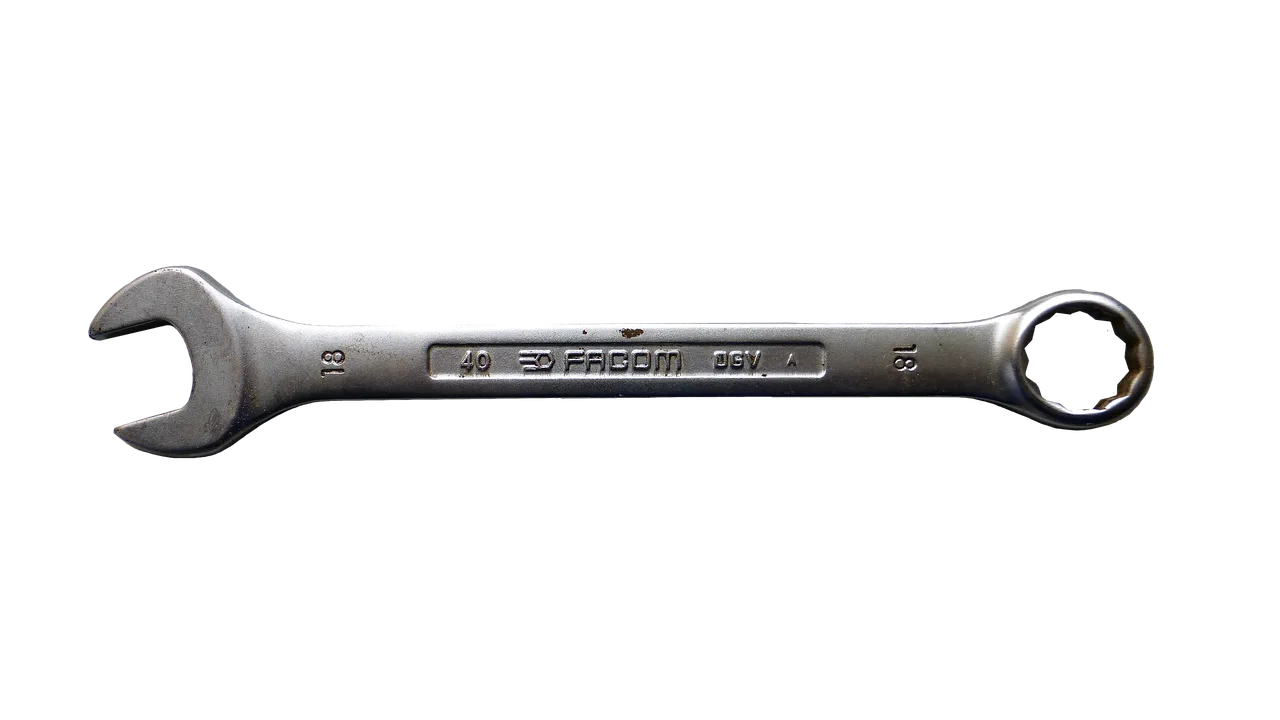
Combination wrenches are useful for automotive nuts and bolts, especially where a socket cannot fit. A starter kit should include the common sizes you will actually use, not a long row of rarely touched extras.
-
Confirm storage and case quality.
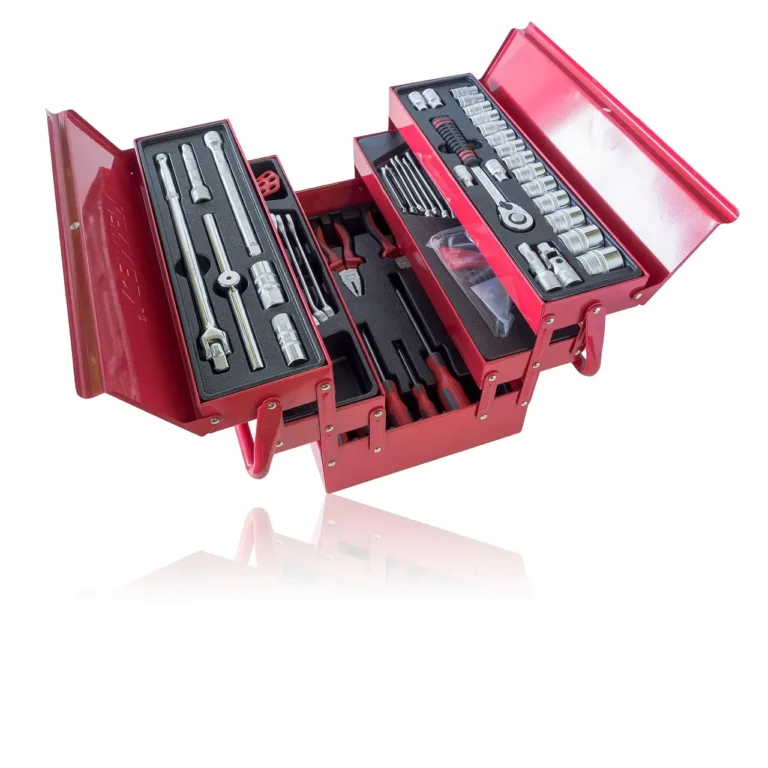
Check whether the case closes tightly, the latches hold under load, and the sockets stay in place when you lift it. A molded case, metal box, or rolling box keeps pieces organized and easy to carry.
Do you need metric, SAE, or both?
Most beginner kits should include both metric and SAE sizes because modern vehicles can use either one depending on brand, age, and the specific fastener. If you only buy metric, you may still be stuck on a bracket, clamp, or accessory bolt that uses SAE. If you only buy SAE, the reverse problem is common.
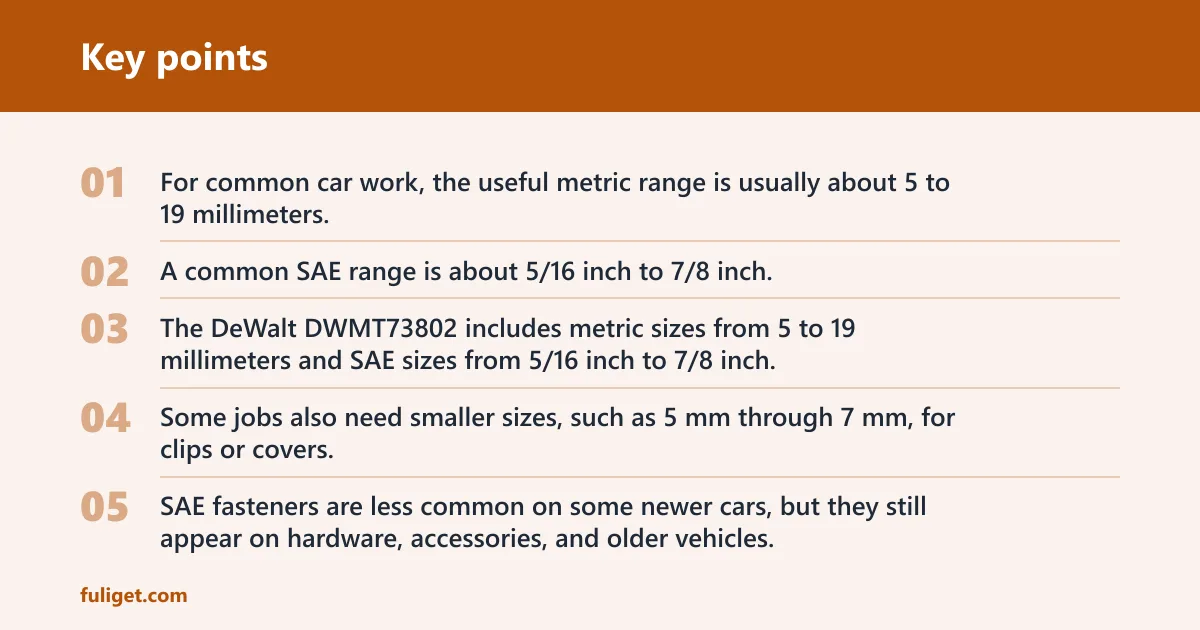
For common car work, the useful metric range is usually about 5 to 19 millimeters. A common SAE range is about 5/16 inch to 7/8 inch. That does not mean every car needs every size every time, but it does mean a starter kit should cover the common spread rather than one narrow band.
The DeWalt DWMT73802 includes metric sizes from 5 to 19 millimeters and SAE sizes from 5/16 inch to 7/8 inch. That is a practical model of what a broad starter set should cover.
Common beginner metric sizes
For most DIY car care, metric fasteners in the 8 mm, 10 mm, 12 mm, 13 mm, 14 mm, 15 mm, 17 mm, and 19 mm range show up often enough to matter. Some jobs also need smaller sizes, such as 5 mm through 7 mm, for clips or covers.
Common beginner SAE sizes
SAE fasteners are less common on some newer cars, but they still appear on hardware, accessories, and older vehicles. A starter kit should not ignore 5/16 inch, 3/8 inch, 7/16 inch, 1/2 inch, 9/16 inch, 5/8 inch, 11/16 inch, 3/4 inch, and 7/8 inch coverage if you want broad compatibility.
How to avoid duplicate or missing sizes
Buy coverage first, then fill gaps later. If two kits look similar, choose the one with better spread across common sizes, deep sockets, and the drive sizes you need. A kit with many repeated bits and thin size coverage is usually a poor first buy.
Which tool types matter most?
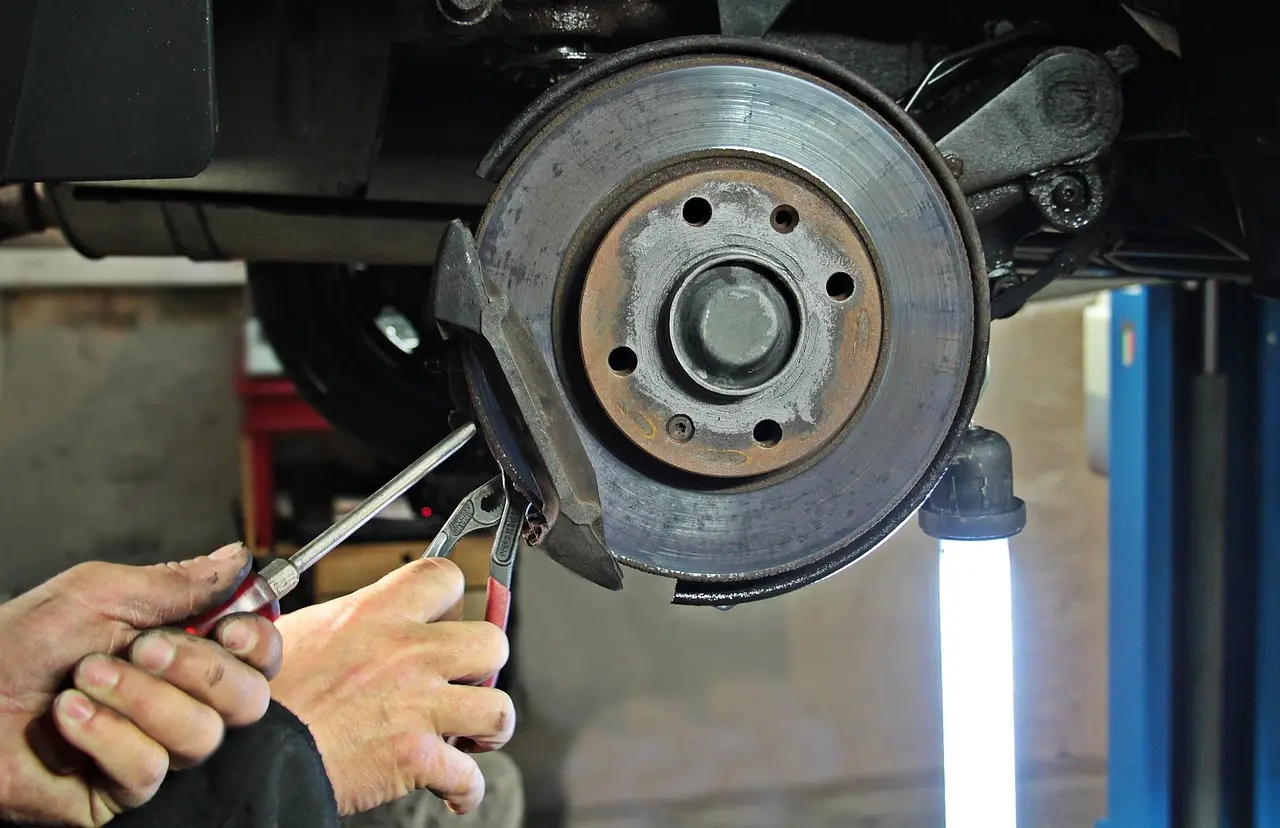
The most important tools are the ones that solve access. Ratchets, sockets, deep sockets, extensions, and combination wrenches do most of the real work. Screwdrivers and pliers matter too, but they do not replace proper socket coverage for automotive fasteners.
The DeWalt set is described as including 3 ratchets, including 1/4-inch and 3/8-inch sizes, and as using 72-tooth ratchets for smoother operation. It also uses chrome vanadium steel alloy construction, which is a common durability material worth looking for in listing details.
Ratchet sizes and drive choice
For a home mechanic, 1/4-inch and 3/8-inch are the beginner-friendly ratchet sizes that matter most. The 1/4-inch ratchet is better when space is tight. The 3/8-inch ratchet is the workhorse for engine-bay bolts and many underbody jobs.
Do not buy a kit that only looks complete because it has many bits. If the ratchet drive size does not match the bolts you will actually see, the count is misleading.
Sockets, deep sockets, and extensions
Socket set coverage should include deep sockets because exposed studs, recessed nuts, and long fasteners show up often enough to justify them. Extensions help clear obstructions, and adapters let you use the right drive with the right socket without forcing a bad fit.
Bob Vila notes that the DeWalt kit includes deep-socket versions for common socket sizes. That detail matters because a shallow socket can fail where a deep one fits cleanly.
Combination wrenches and access-limited fasteners
Combination wrenches are the answer when a socket cannot slide over the fastener or when clearance is too tight for a ratchet head. They are especially useful around battery clamps, brackets, hose hardware, and small accessories near panels or the radiator support.
Storage case and material quality
A sturdy storage case matters because starter kits live or die by organization. If the sockets spill around the case or the latches are flimsy, you lose time and pieces. Chrome vanadium steel is a sensible construction material to seek because it is widely used for durability and torque resistance in hand tools.
Choose a starter kit or buy tools separately
The trade-off is simple: a starter kit gives you immediate coverage in one box, while piecemeal buying lets you spend only on tools tied to specific jobs. If you do not know your fastener sizes yet, a compact but complete starter kit is usually the safer first move.
Bob Vila’s best bang-for-the-buck pick is the Deko 258-Piece Mechanics Tool Kit On Wheels, while the upgrade pick is the Craftsman 450-Piece Mechanics Tool Set. The Deko option suits buyers who want broader organization in a rolling box. The Craftsman option fits someone who wants a larger spread of pieces and expects to grow into more repair work.
| Buying path | What it gives you | What to watch | Best fit |
|---|---|---|---|
| Small starter kit | Core sockets, basic ratchet, a few accessories | May miss deep sockets, better organization, or both drive sizes | Very light DIY and occasional trim work |
| Mid-size starter kit | Enough coverage for most first jobs, plus extensions and wrenches | Check for metric and SAE spread, deep sockets, and a useful case | Best fit for most first-time DIY drivers |
| Piecemal buying | Only the tools you know you need | Easy to miss a needed size or accessory on the first few jobs | Drivers with a clear repair plan |
Choose a starter kit if you want one purchase that covers battery work, air filters, trim clips, hose clamps, and basic fastener removal. Choose individual tools if you already know the exact jobs ahead of time, such as a headlight restoration and a battery-terminal cleanup.
Choose DeWalt DWMT73802 if… / Choose Deko 258-Piece Mechanics Tool Kit on Wheels if…
These two options solve different starter-kit problems. The DeWalt kit is the cleaner minimum-useful pick because its size spread, two common drive sizes, and deep sockets line up well with the first 10 jobs. The Deko kit makes more sense when portability and storage layout matter more than keeping the set compact.
Follow the vehicle and product manual for every job, especially anything involving lifting, load, electricity, fuel, tires, child seats, airbags, or the driver’s view. Never work under a vehicle held only by a jack, never exceed the vehicle’s rated roof, hitch, or tow limit, keep items out of airbag zones and the driver’s view, and check local laws.
- Choose DeWalt DWMT73802 if… you want a 142-piece kit that stays focused on the most common beginner jobs. It includes 1/4-inch and 3/8-inch ratchets, metric sizes from 5 to 19 millimeters, SAE sizes from 5/16 inch to 7/8 inch, and deep sockets.
- Choose DeWalt DWMT73802 if… you prefer a more compact first kit instead of a larger rolling box. It is a better match for someone who wants to stage purchases later rather than buy a broad all-in-one set right away.
- Choose Deko 258-Piece Mechanics Tool Kit On Wheels if… you want a kit on wheels for easier storage and transport at home. That format suits drivers who plan to keep tools in a garage, basement, or shared space where carrying a heavy box is annoying.
- Choose Craftsman 450-Piece Mechanics Tool Set if… you already know you will expand beyond starter work and want a larger set from the start. It fits buyers who value breadth more than minimum size.
What should you avoid in a cheap kit?
A cheap kit often looks complete because the piece count is high, but the important details are missing. The worst buys have redundant bits, weak storage, vague size coverage, and missing deep sockets. Those flaws matter more than the number printed on the box.
Redundant pieces without better coverage
If a kit gives you many duplicates of the same small drive bits but skips common socket sizes, it is padding the count. A beginner needs coverage of common fasteners, not a mountain of near-identical pieces.
Weak cases and poor organization
A flimsy case that lets pieces fall out or shift around turns every job into a search. Good organization matters because the right socket should be easy to grab, not buried under loose pieces.
Missing deep sockets or common fastener sizes
Deep sockets are not a luxury add-on. They matter for recessed fasteners, long studs, and engine-bay hardware. Missing common sizes such as 10 mm, 12 mm, or 13 mm coverage can stop a basic job before it starts.
Add-on tools worth buying separately
A headlight restoration kit is a smart add-on if your lenses are cloudy or yellowed. A portable jump starter is another practical add-on because it helps with cars, trucks, SUVs, and motorcycles, which keeps a starter kit useful beyond hand tools. For tire work, add a tire gauge first, then buy a lug wrench or torque wrench separately if your vehicle and manual call for them.
Frequently asked questions
What should be in the best mechanic starter tool kit for DIY car care?
Start with a socket set, 1/4-inch and 3/8-inch ratchets, deep sockets, extensions, combination wrenches, pliers, and screwdrivers. Add a sturdy storage case and a torque wrench if you plan to do more than light trim work. Metric coverage should be the priority, with SAE included for wider compatibility.
How many pieces do I need in a beginner mechanic tool set?
A practical starter set usually falls in the 60- to 120-piece range, but the exact count matters less than coverage. The same source notes that mechanic tool sets typically include more than 100 tools, and the DeWalt top pick has 142 pieces. More pieces only help if they add useful sizes and access tools.
Do I need metric or SAE tools for car maintenance?
Most DIY drivers should have both, because fasteners vary by vehicle and by component. Metric is the safer starting point for many newer cars, but SAE still appears often enough to matter. A good beginner kit should cover metric sizes from 5 to 19 millimeters and SAE sizes from 5/16 inch to 7/8 inch.
Which tools are most important for basic car repairs at home?
The most important tools are the ones that reach and turn fasteners cleanly: sockets, a ratchet, deep sockets, extensions, and combination wrenches. Pliers and screwdrivers are next. If you plan to work under the car, add a jack and jack stands, and follow the manual before lifting or crawling underneath.
What should I avoid buying in a cheap mechanic tool kit?
Avoid kits with weak cases, missing deep sockets, unclear size coverage, or lots of duplicate pieces that do not improve usefulness. A high piece count does not guarantee the right socket sizes. Buy for the first jobs you will actually do, not for the biggest number on the box.
Is a tool kit on wheels worth it for a home mechanic?
A kit on wheels is worth it if you want easier storage and transport, especially in a garage or shared space. It is less about raw performance than convenience. Bob Vila’s Deko 258-Piece Mechanics Tool Kit On Wheels fits that use case, while a smaller case can be better if you want less bulk.