Deep vs Shallow Sockets: When Do You Need Each Type?

Use a shallow socket when the fastener sits flush or nearly flush and space is tight; use a deep socket when the nut, bolt, or stud sticks past the fastener face or sits down in a recess. Pick the wrong depth and you can round fasteners, waste time, or fail to seat fully. This guide gives a simple rule based on fastener shape, stud length, recess depth, and access.
| Decision factor | Deep | shallow sockets | Winner |
|---|---|---|---|
| Protruding stud or bolt length | Long barrel leaves room for threads that stick past the nut. | Short barrel can bottom out on exposed threads before the hex is fully engaged. | Deep |
| Tight clearance around the fastener | Longer body can crowd nearby brackets, panels, and walls. | Shorter body fits where surrounding parts leave little side room. | shallow sockets |
| Recessed fastener access | Can reach down into a pocket while still leaving space for the stud. | May not reach far enough if the fastener sits deep below the surface. | Deep |
| Tool control in cramped spots | Longer body can feel less nimble near obstructions. | Shorter body is easier to align and less likely to strike nearby parts. | shallow sockets |
What is the difference between deep and shallow sockets?
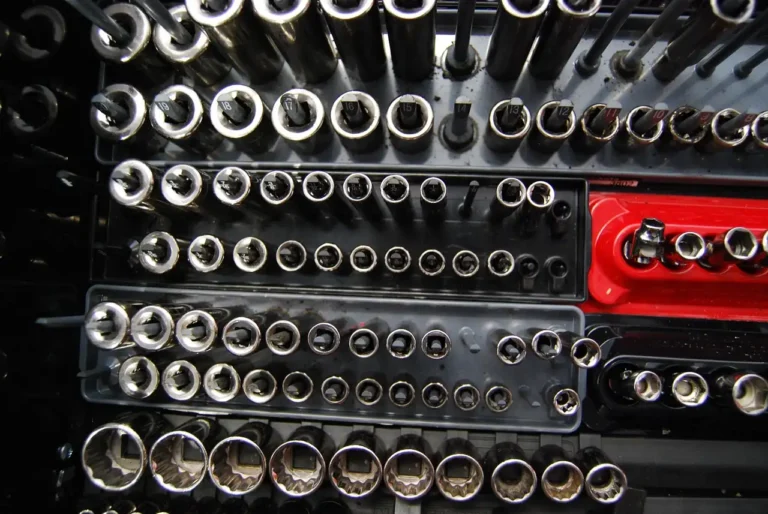
A deep socket has a longer barrel, so it can cover protruding threaded studs and long bolts without the threads hitting the back of the socket. A shallow socket has a compact profile, which makes it easier to use when the fastener is flush or when nearby parts limit access. Socket depth changes reach, not torque capacity.
Both types fit on a ratchet handle, breaker bar, or wrench as long as the drive size matches. That means 1/4-inch, 3/8-inch, and 1/2-inch drive systems are separate from socket depth. A 3/8-inch drive socket can be deep or shallow; the drive size does not determine the depth.
Shallow socket use
Shallow sockets work best when the hex on the nut or bolt is close to the surface and the area around it is cramped. Their shorter body can make it easier to get the ratchet on straight, especially near brackets, panels, battery trays, and appliance frames.
Deep socket use
Deep sockets are the better fit when the fastener shank or stud extends beyond the nut. They are also the safer choice when the fastener sits down in a recess and a short socket cannot fully surround the hex without the protruding threads hitting the end of the socket.
How drive size differs from socket depth
Drive size is about how much load the ratchet and socket interface can handle. Socket depth is about how much length the socket has. A 1/4-inch drive socket set is common for lighter fasteners, 3/8-inch drive is a general-purpose size, and 1/2-inch drive is used for larger fasteners and more load, but none of those drive sizes tells you whether you need a deep or shallow socket.
When do you need a deep socket?
You need a deep socket when the stud, bolt, or threaded shaft extends past the nut enough that a shallow socket would bottom out before the hex fully seats. You also need one when the fastener sits in a pocket or recess and the socket has to reach down while still clearing exposed threads. In those cases, depth is what makes the socket usable.
Fasteners with protruding threads
If the threaded end sticks out beyond the nut, a shallow socket may stop on the threads before the hex corners are fully engaged. That partial engagement raises the risk of rounding the fastener and usually makes hand force feel spongy or unstable.
Picture a wheel lug nut on a stud that projects 12 mm past the nut face. A shallow socket may start on the nut, then stop against the exposed threads. A deep socket gives the threads room, so the socket can seat on the hex instead of on the stud.
Bolts or nuts set in a recess
Some appliance panels, furniture hardware, and engine-bay fasteners sit down inside a pocket. A socket extension can help you reach the opening, but the socket still needs enough barrel length to clear the protruding shaft or to fully cover the nut inside the recess.
- Measure the protrusion. Check how far the stud or bolt sticks out beyond the nut face. If it is long enough to reach the closed end of a shallow socket, move to a deep socket.
- Check the recess depth. Measure from the outer surface down to the fastener hex. If the hex sits below the surface and the short socket cannot reach it without hitting the surrounding wall, choose deep.
- Verify tool clearance. Hold the ratchet and socket in place before forcing anything. If nearby parts crowd the socket body, a shorter socket may fit better even if you use an extension.
When a shallow socket bottoms out
A shallow socket can fail in a very specific way: it reaches the nut, but the exposed threads touch the closed end first. That prevents full seating. The ratchet then loads the top edges of the hex instead of the flats, which is how fasteners get rounded or stuck.
A common first-time mistake is trying to save time by using a shallow socket on a long battery-terminal bolt. The socket may seem close enough, but if the bolt shank protrudes past the nut, the socket can stop early and slip when you apply torque.
When is a shallow socket the better choice?
Shallow sockets are the better choice when the fastener sits nearly flush with the surface and the surrounding area is tight. Their shorter body leaves more room for the ratchet and can make it easier to angle the tool into place without hitting nearby parts. For many light-duty repairs, that is the cleaner fit.
Tight-clearance fasteners
Brackets, appliance frames, cabinet hardware, and panel fasteners often have little extra space around the hex. In those spots, a deep socket can interfere with adjacent surfaces before it ever reaches the fastener, while a shallow socket keeps the tool compact.
Flush or nearly flush fasteners
If the nut or bolt face sits at the surface and there is no meaningful protrusion, the extra length of a deep socket adds no advantage. The shorter socket usually engages the same flats while giving you better control in the space you actually have.
Suppose a 10 mm cabinet bolt sits flush in a narrow appliance bracket. A shallow 3/8-inch-drive socket is usually the cleaner pick because there is no stud to clear. The extra depth of a long socket would only add bulk.
Socket depth decision table
Use the fastener geometry first. Then decide whether reach, thread clearance, or tool clearance matters more. The socket that fits the hex without bottoming out is the correct one, even if the other depth can attach to the ratchet.
| Common scenario | Protruding stud length | Recess depth | Recommended socket type | Extension helps? |
|---|---|---|---|---|
| Wheel lug nut on a long stud | Long enough to extend past the nut face | Little to none | Deep | No, not as a substitute for depth |
| Battery terminal clamp bolt | Often protrudes beyond the clamp | Shallow pocket or open access | Deep | Sometimes, but depth still matters |
| Appliance panel screw or bolt | Usually short | Moderate recess | shallow sockets | Yes, if the fastener sits farther back |
| Furniture connector bolt | Usually flush or nearly flush | Tight pocket | shallow sockets | Only if reach is the issue, not depth |
| Threaded stud on a bracket | Moderate to long | Moderate recess | Deep | No, because the stud still needs room inside the socket |
Do you need both depths in a socket set?
Many DIYers do better with both. A mixed set covers flush fasteners, recessed fasteners, and protruding studs without forcing you to improvise. If your jobs are light-duty and limited to open-access fasteners, a starter set can lean shallow, but a combined set saves time across more repairs.
Starter set buying priorities
If you are buying one basic set, start with the socket sizes you actually use most often and make sure they match your fasteners in metric or SAE. For home use, a common core is 8 mm through 19 mm in metric, plus the inch sizes you need for older equipment or some imported hardware. The depth choice still depends on the fastener shape, not the size marking alone.
When a mixed set helps
A mixed set is useful when the same home or workshop throws different jobs at you: wheel hardware, battery terminals, furniture assembly, appliance repairs, and small machinery. Deep sockets cover the threaded hardware. Shallow sockets handle cramped, flush, or lightly recessed fasteners.
Metric and SAE sizing basics
Metric and SAE sockets are generally not interchangeable. A metric fastener marked 10 mm needs a 10 mm socket, while an inch-size fastener needs the matching inch socket. Choosing the wrong system can make the socket feel almost right while still slipping under load.
What to check before you buy a socket set
Before buying, it helps to match three things: the socket size, the drive size, and the depth. The socket size must fit the fastener exactly enough to grip the flats. The drive size must match the ratchet, breaker bar, or adapter you plan to use. Depth then decides whether the socket can reach and clear the fastener shape.
- Match the fastener size. Check whether the hardware is metric or SAE, then buy the exact socket size that fits the flats. A close but wrong size increases the chance of rounding.
- Match the drive system. Use 1/4-inch, 3/8-inch, or 1/2-inch drive parts that fit together. Drive size affects compatibility and load handling; it does not replace the need to choose the correct socket depth.
- Check the fastener shape. Look for protruding threads, recessed mounting, or a flush nut. If the stud sticks out past the nut, choose deep. If space is tight and the fastener sits flush, choose shallow sockets.
- Add impact sockets when needed. If you will use an impact wrench or impact driver, buy impact sockets rather than standard chrome sockets. Impact sockets are a separate category and are built for impact tools, not for depth alone.
Where impact sockets fit
Impact sockets are usually black oxide and heat-treated for impact tools. They are available in deep and shallow forms, so impact and depth are separate decisions. For hand ratchets, standard chrome sockets are common; for impact tools, choose impact sockets in the depth that fits the fastener geometry.
Choose Deep if…
Choose Deep if the stud or bolt protrudes past the nut, if the fastener sits in a recess that short sockets cannot reach, or if a shallow socket bottoms out before the hex is fully engaged. Deep is the safer pick for long studs, many wheel fasteners, and threaded hardware that extends past the surface.
Choose shallow sockets if…
Choose shallow sockets if the fastener sits flush or nearly flush, if surrounding parts leave little clearance, or if you want a more compact socket body for better tool control. Shallow is usually the better first choice for tight brackets, panels, cabinet hardware, and many appliance fasteners.
Frequently asked questions
When do I need a deep socket instead of a shallow socket?
You need a deep socket when the fastener has enough exposed thread or shank length that a shallow socket would stop before fully seating on the hex. It is also the better choice for recessed fasteners, where the socket must reach down into a pocket while still clearing the protruding shaft.
Are deep sockets better than shallow sockets?
No. Deep sockets are often better for protruding studs and recessed fasteners, while shallow sockets are often better for tight clearance and flush hardware. The right pick depends on the fastener geometry, not on which one is stronger or more versatile in every case.
Can I use a deep socket on any bolt?
You can often use a deep socket on many bolts, but that does not mean it is the best choice for every job. If the fastener sits flush in a tight spot, the longer body may get in the way. Depth should match the space and the protrusion, not just the size.
Do I need both deep and shallow sockets in a socket set?
For a useful general-purpose set, yes, both depths are worth having. Shallow sockets handle common flush fasteners and cramped spaces, while deep sockets solve protruding studs and recessed hardware. If you only buy one depth, shallow often fits more tight-access jobs, but it leaves gaps on threaded hardware.
Will a shallow socket fit over a nut with a protruding bolt?
Sometimes, but only if the bolt does not protrude far enough to hit the closed end of the socket. If the threads reach the end of the shallow socket before the hex is fully seated, the socket will not grip properly. In that case, a deep socket is the correct fix.