How to Use a Tire Pressure Gauge Correctly

Check tire pressure with a cold tire, press the gauge straight onto the valve stem until the hiss stops, and read the PSI once. A crooked seal or a late reading can leave you several PSI off, which can affect handling, wear, and fuel use. This guide shows the hand position, timing, and reading steps that keep results accurate at home or at a gas station. Check monthly and before long trips.
What you’ll need
- Tire pressure gauge in the style you prefer: digital, dial, or pencil/stick.
- Valve cap for each tire.
- Air compressor or gas station air pump for topping up pressure.
- Driver-side door jamb placard for the target PSI.
- Flashlight for low-light checks.
When should you check tire pressure?
Check pressure when the tire is cold, which means after at least 3 hours parked. That gives you a baseline that is not distorted by driving heat, sunlight, or recent inflation. A hot tire can read higher by 4–6 PSI after driving, so it should not be treated as the final number.
Use the driver-side door jamb placard, or the fuel door placard if that is where your vehicle lists it, as the target. The sidewall number is the tire’s maximum, not the vehicle’s recommended PSI. TPMS can help, but it often warns only after about 25% pressure loss, so it is not a precise substitute for a manual reading.
A common first-timer mistake is checking right after a short drive to the store. The tire may feel only warm, but even that can nudge the reading upward enough to hide a low tire.
Cold versus hot pressure at a glance
| Condition | What happens | What to do |
|---|---|---|
| Cold tire | Used as the baseline for inflation | Set PSI to the placard target |
| Recently driven tire | Can rise by 4–6 PSI temporarily | Check again after the tire cools |
| Cold after long parking | Most accurate for home checks | Use this reading as your reference |
How do you seat the gauge correctly?
Remove the valve cap, set the gauge squarely on the tire valve stem, and hold steady pressure until the seal is set. You should hear a brief hiss when the gauge first seats. That sound should stop quickly; if it keeps hissing, the tool is angled or not pressed firmly enough.
The valve stem is the only spot where the gauge should seat. A firm square seal matters because a tilted tool can leak air during the reading and lower the number. Keep the gauge still while it is on the stem. Do not twist it while reading.
Suppose the gauge shows 31 PSI on the first try and 28 PSI on the second. That is usually a sign of a poor seal, not a sudden pressure drop. Reseat it squarely before trusting the number.
- Park on level ground and let the tires cool.
- Remove the valve cap and keep it nearby.
- Align the gauge straight with the valve stem.
- Press firmly until the hiss stops.
- Hold the tool steady until the reading appears.
How do you read the PSI?
Read the PSI without lifting the tool off the stem. Compare that number with the placard target, then decide whether the tire needs air or needs pressure bled off. PSI means pounds per square inch, and that is the unit tire gauges display.
Digital tire pressure gauges usually have a backlit display, which makes them easier to read in low light. Pencil/stick gauges are simple mechanical tools with no batteries, though the number can be harder to read precisely. Dial gauges use an analog needle and are often a good quick-read option, especially if you prefer a steady pointer instead of a screen.
When the first reading looks odd, take a second reading right away. If the second result differs, reseat the gauge and check again. Repeated consistency matters more than any one reading.
Gauge type differences
| Gauge type | Readability | Handling note |
|---|---|---|
| Digital tire pressure gauge | Backlit display, easier in low light | Requires batteries |
| Dial gauge | Analog needle display | Useful for quick reads, often durable |
| Pencil/stick gauge | Simple mechanical scale | No batteries needed, but reading can be less exact |
How do you add air without overinflating?
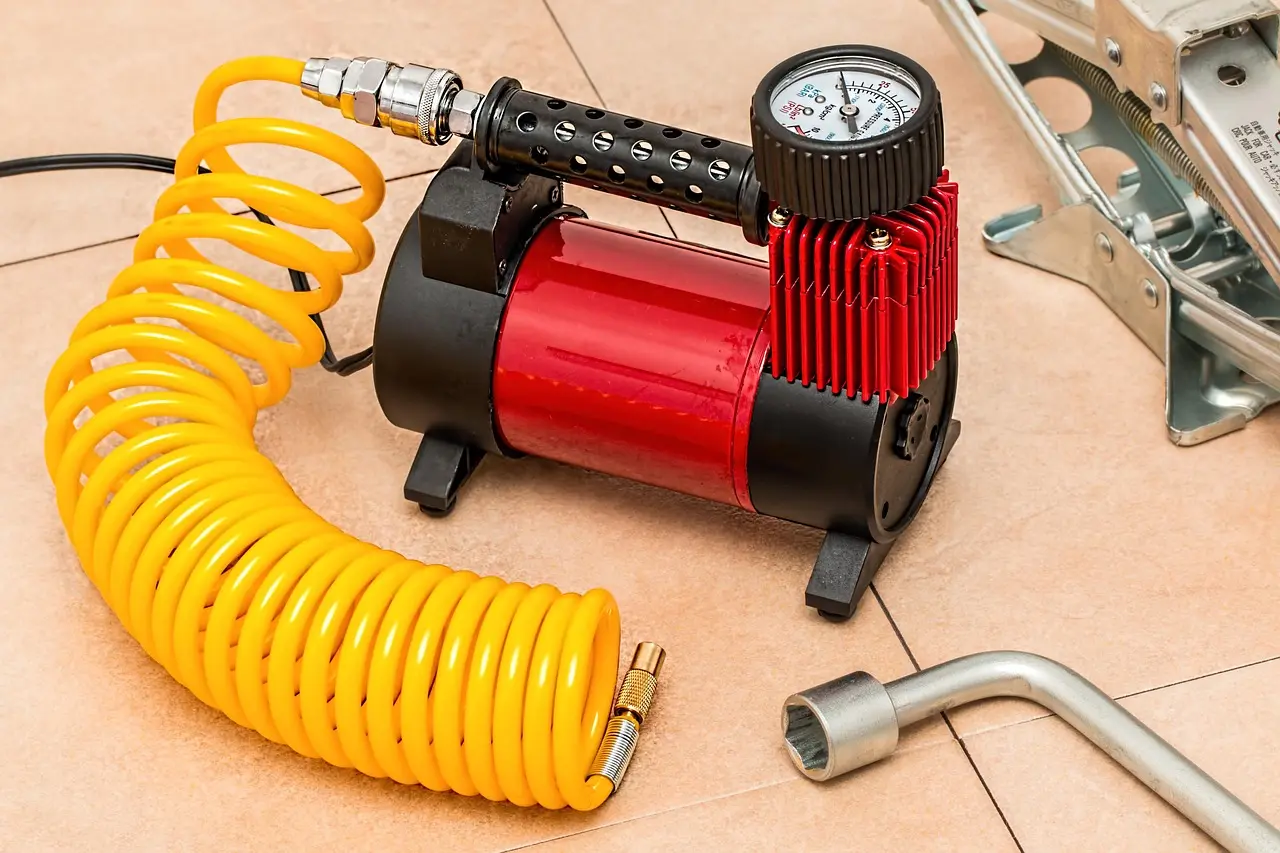
Add air in short bursts, then recheck with your handheld gauge. If the pump is imprecise, stop a little before the target and use the handheld gauge for the final number. Many air compressors and gas station pumps can overshoot fast, especially when the tire starts out low.
If you go past the target, bleed off air in a brief tap and check again. Some gauges can also bleed air, and that makes small corrections easier. After any adjustment, recheck before moving to the next tire.
What PSI should you inflate to? Use the number on the driver-side door jamb placard, not the sidewall maximum. That target is the figure the vehicle maker expects for the car’s weight and setup.
- Connect the pump chuck to the valve stem.
- Add air for about 2 to 3 seconds.
- Remove the chuck and check with your gauge.
- Repeat in short bursts until you reach the placard PSI.
- Bleed off pressure if the tire goes over target.
- Reinstall the valve cap after the final check.
Common mistakes
Using the sidewall number as the target is a frequent error. That number is the tire’s maximum, not the vehicle’s recommended pressure. Checking too soon after driving is another problem, because heat can raise the reading by 4–6 PSI and make a tire seem fuller than it is.
Another mistake is letting the gauge sit at an angle. A poor seal can cause a hiss and a false low reading. Trusting one odd reading without repeating it can also send you in the wrong direction. If the numbers do not line up, reseat the gauge and read again.
TPMS is useful, but it is only a dashboard warning system. It may alert after about 25% pressure loss, so it cannot replace a manual gauge for exact PSI.
Pressure checks checklist
- Valve seal angle — Make sure the gauge sits straight on the valve stem, not cocked to one side.
- Cold vs hot tire — Confirm the tire has been parked for at least 3 hours before using the reading as final.
- Repeated read consistency, Take a second reading if the first number looks odd.
- Gauge type differences, Check whether a digital, dial, or pencil/stick tool is easier to read in the current light.
- Valve cap interference, Remove the cap fully and keep it out of the way while checking.
- Pump gauge vs handheld gauge mismatch, Treat the handheld tire-pressure gauge as the final check if the pump display differs.
- Low-light readability, Use a flashlight or a backlit digital display at night.
- Battery check for digital gauges, Replace weak batteries if the screen is dim, slow, or blank.
- Slow leak warning signs, Recheck a tire that loses pressure again soon after topping up.
- When to recheck after adding air, Read the tire again after every adjustment before moving on.
Frequently asked questions
How do you use a tire gauge correctly?
Remove the valve cap, press the gauge straight onto the valve stem, and hold it still until the hiss stops. Read the number once, compare it with the placard PSI, then add or release air as needed. Recheck after every change and replace the cap when you finish.
How do you read a tire pressure gauge?
Read the PSI while the gauge is still seated on the valve stem. Digital gauges show a screen, dial gauges show a needle, and pencil/stick gauges show a sliding scale. If the number jumps around, reseat the tool and repeat the check before making any adjustment.
How do you check tire pressure with a gauge?
Check when the tire is cold, remove the valve cap, and seat the gauge squarely on the stem. Use the reading against the door jamb placard, not the tire sidewall. If the pressure is low, add air in short bursts and verify again right away.
How do you know if you are using the gauge on the valve stem correctly?
A correct seal usually gives a brief hiss at the start, then stops as the gauge seats. The tool should feel centered and steady, not tilted. If the hiss continues or the reading changes when you press harder, remove it and try again at a straighter angle.
When should you check tire pressure for the most accurate reading?
Check after at least 3 hours parked, before driving, and before sunlight or heat has had time to change the tire. A cold tire gives the baseline number the placard assumes. If you checked hot, use that reading only as a temporary reference and confirm later.
What PSI should you inflate to after using a gauge?
Inflate to the PSI listed on the driver-side door jamb placard or fuel door placard. That is the vehicle’s target pressure for normal use. If you are slightly low, add air in short bursts and stop at the placard number, then recheck before replacing the cap.