Why Does My Tire Inflator Keep Shutting Off?

A tire inflator may shut off early if the preset pressure is lower than the tire’s target, the battery or 12V supply is sagging, or the chuck is leaking; a common check is to review those three causes in about 10 minutes. If you skip them, you can chase a false tire fault, underinflate the tire, or stress the inflator with repeated failed starts. This article shows how to tell preset cutoff from power loss or a real leak, in order.
What you’ll need
- The tire inflator and hose
- A separate tire-pressure gauge
- The vehicle door-jamb tire-pressure label
- A soapy-water mix in a spray bottle or cup
- A multimeter with continuity and resistance modes
- Needle-nose pliers or a fuse puller
- A known-good 12V outlet or a fully charged battery, if the unit is portable
Tire inflator troubleshooting matrix
| Symptom | Most likely cause | First safe test |
|---|---|---|
| Shuts off immediately | Preset target reached, wrong pressure unit, or a bad power connection | Check the display unit and compare the preset to the door-jamb label; reseat the plug or battery |
| Shuts off after several minutes | Thermal protection, duty-cycle limit, weak outlet, or low battery | Let it cool, then test on a fresh power source for one short cycle |
| Display reaches PSI too fast | Preset logic, a disconnected chuck, or a leak in the pressure path | Listen for air at the chuck and confirm the hose is locked on the valve |
| Motor runs but tire stays flat | Leak at the chuck, Schrader valve core, or hose; blocked airflow | Spray soapy water at the valve stem, chuck, and hose fittings |
| Fuse blows again | Outlet overload, shorted cord, or compressor draw above the circuit rating | Inspect the fuse element and test continuity with a multimeter before replacing anything |
Why does my tire inflator keep shutting off before it reaches the target PSI?
Early shutoff usually means the inflator thinks it has reached the preset, or it is losing power before the compressor can keep running. Check the preset PSI, the pressure unit, and the power source first. If the unit stops after a few minutes, thermal protection or duty-cycle limits are also likely.
What to check first
- Match the target. Read the vehicle door-jamb tire-pressure label and set the inflator to that cold-tire pressure, not the tire sidewall maximum. Use the correct unit, whether PSI, bar, or kPa.
- Reset the preset. Change the target on the inflator, then restart inflation. Some automatic shutoff tire inflators stop once the preset pressure target is reached, so a wrong setting can end the cycle early.
- Watch the timing. If it shuts off in seconds, think preset or pressure-path issues. If it lasts several minutes and then quits, think power, heat, or a duty-cycle limit.
Picture a compact inflator set to 32 PSI while the door-jamb label calls for 36 PSI cold. It will stop early every time, and the tire will still be underfilled unless you change the preset and verify with a separate gauge.
How do you tell if the power source is the problem?
Power problems usually show up as slow inflation, early shutdown after a few minutes, or a dead outlet even though the display still lights. A weak 12V outlet, a low cordless battery, or a poor battery seat can starve the compressor before pressure rises much. A separate gauge helps confirm whether air is actually entering the tire.
12V plug-in inflators
- Test a different outlet. Move the plug to another vehicle outlet that works with ignition or accessory on. If the inflator runs better there, the first circuit may be weak or overloaded.
- Check current limits. Compare the inflator label to the outlet rating. If the unit needs around 15A or 180W and the vehicle circuit is rated lower, the outlet may shut down or blow its fuse.
- Inspect the plug fit. A loose plug can interrupt current when the compressor starts drawing load. Wiggle the connector gently; if the display flickers or the motor cuts out, reseat the plug and recheck.
Cordless inflators
- Reseat the pack. Remove and reinstall the battery until it clicks fully into place. A partly seated pack can act like a weak battery.
- Charge and retry. Use a fully charged battery before ruling out the compressor. Battery protection can shut the unit down before the tire rises much.
Dual-power inflators
- Switch power modes. Try the corded and battery mode one at a time. If one mode works and the other does not, the fault is likely in the supply path rather than the compressor head.
- Compare run time. If it stops after several minutes on either source, thermal protection is more likely than a pure source problem.
How do you check the valve, chuck, and hose for leaks?
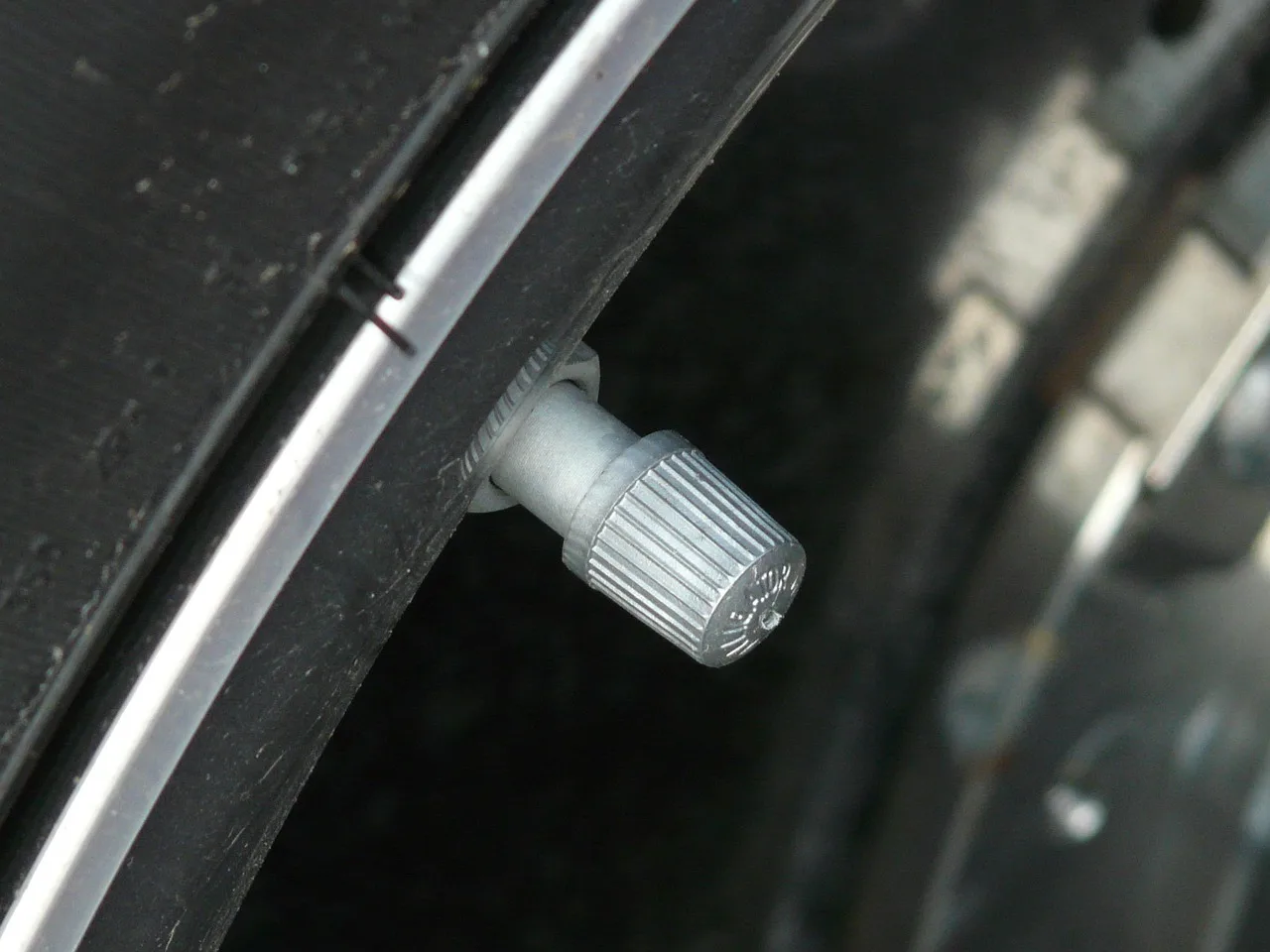
If the motor runs but the tire stays flat, air is leaking before it reaches the tire or escaping through the valve stem. Focus on the Schrader valve core, the chuck seal, the hose, and the cap or stem condition. Hissing is a clue. So is a display that jumps up too fast.
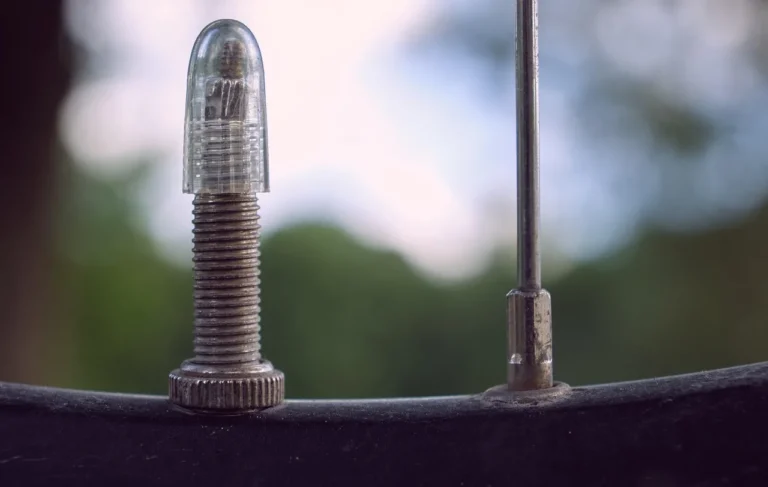
- Lock the chuck fully. Attach the air chuck straight onto the Schrader valve. A locking or screw-on connection should hold without wobble; cross-threading or a poor seal can create hissing and prevent pressure rise.
- Spray the leak points. Apply soapy water to the valve stem, valve core area, chuck, and hose fittings. Bubbles can indicate a leak path.
- Inspect the stem cap. Replace a missing or damaged cap and check the valve stem for cracks. A bad cap does not seal the tire by itself, but it often points to neglected stem damage.
- Repeat at the core. If bubbles form at the Schrader valve core, the valve may be loose or damaged. Tighten only if the core is visibly loose; otherwise plan a repair.
If an inflator display jumps from about 18 PSI to about 32 PSI in a few seconds, yet the tire still feels soft, the chuck may not be sealing well. That can mean the chuck is not sealing, so the unit is reading pressure in the hose rather than in the tire.
Why does my tire inflator keep shutting off after a few minutes?
Shutdown after a few minutes more often points to power, heat, or a duty-cycle limit than to a wrong preset. A slow pressure rise can also mean the compressor is working against a weak supply, a hose leak, a clogged intake, or a hot compressor. Cooling the unit and retesting on a fresh power source usually separates those causes.
- Stop and cool down. Let the inflator rest until it is cool to the touch. Do not restart immediately if the case feels hot or if the unit smells hot.
- Check the duty cycle. Look up the model-specific run time limit and cool-down period in the manual. Thermal protection can trip after the limit is exceeded.
- Retest on one tire. Run a short cycle on a known good outlet or charged battery. If the shutdown repeats at the same time, the inflator may be overheating or drawing too much current.
What should you check first when your tire inflator keeps stopping?
Start with the simplest items that change the result fastest: preset pressure, pressure units, and power delivery. That order separates a full-tire cutoff from a power-loss cutoff. It also keeps you from pulling apart hoses or valves before you know whether the inflator itself is the real fault.
- Read the door label. Confirm the manufacturer-recommended cold tire pressure on the vehicle door-jamb label. Do not use the tire sidewall maximum as the inflation goal.
- Verify the units. Make sure the inflator is set to the same unit as the label. PSI, bar, and kPa do not match numerically.
- Check final pressure. When the inflator stops, verify the tire with a separate gauge. Automatic shutoff is only a convenience feature; the final reading still needs confirmation.
Common mistakes
- Using the tire sidewall maximum instead of the vehicle door-jamb pressure label
- Leaving the inflator in the wrong pressure unit, such as PSI when the preset was entered in bar
- Assuming every auto-stop means the tire is full
- Ignoring a weak 12V outlet, low battery, or poorly seated battery pack
- Skipping the hose, chuck, valve core, and stem leak check
- Replacing a fuse with a higher-amp fuse than specified
- Restarting a hot inflator without waiting for cool-down
- Continuing to inflate if the unit smokes, sparks, or shows melting
Prevention is simple here: keep the pressure preset tied to the door-jamb label, and check the valve cap and stem whenever you top up a tire. That reduces repeat shutdowns caused by a bad seal or a bad target.
Frequently asked questions
Why will my tire not take air even though the inflator turns on?
The motor can run while the air path leaks or slips off the valve. Refit the chuck, listen for hissing, and spray soapy water on the Schrader valve core, hose fittings, and chuck seal. A separate gauge helps confirm whether pressure is actually rising.
Is my inflator shutting off because the preset PSI is wrong?
Very often, yes. Compare the inflator setting to the vehicle door-jamb label and make sure the unit matches the label in PSI, bar, or kPa. If the display reaches the target immediately, the preset or pressure path is the first place to look.
Can a weak battery make an automatic tire inflator stop early?
Yes. Cordless inflators can stop because of a low battery, a poorly seated battery, or battery protection. Recharge the pack fully, reseat it until it clicks, and retest. If a corded mode works better, the battery path is the likely issue.
Why does my 12V tire inflator blow a fuse or stop after a few minutes?
A 12V outlet may be undersized, overloaded, or protecting itself with a fuse. Some inflators require a 15A or 180W outlet. Check the fuse element, test continuity with a multimeter, and use only the fuse rating specified for the vehicle circuit.
How do I know if the problem is the inflator or the tire valve?
Use soapy water on the valve stem, valve core, chuck, and hose. If bubbles appear at the Schrader valve or the chuck will not hold air, the leak path is outside the compressor. If the power source and hose are sound, the inflator is more likely at fault.