
Mechanic Tool Kit: How to Choose the Right Set

Choose a mechanic tool kit by drive sizes and socket access first: For most home automotive work, a 3/8-inch set plus key 1/4-inch and 1/2-inch pieces is often a better fit than a bigger piece count. If you buy by piece count alone, you can end up without deep sockets, missing common sizes, rounding fasteners, and then spending more on replacements than the better kit would have cost. This guide shows how to match a set to your repair scope, clearance limits, fastener sizes, steel quality, and upgrade path.
Start with your repair scope
Basic maintenance versus repair work
Match the kit to the jobs you expect to do in the next year, not to the biggest case you can afford. Oil changes, battery swaps, cabin filter access, spark plug service, and brake work all call for different drive sizes, socket depths, and wrench coverage.
If your list stays close to basic maintenance, a compact set is often the better buy. If you plan to tackle brake calipers, suspension links, or stubborn underbody fasteners, you need broader socket coverage and at least some higher-torque capability.
How often you will use the kit?
If you wrench on weekends or once or twice a month, coverage and storage usually matter more than raw piece count. A home mechanic in that pattern gets more value from better ratchets, no skipped common sizes, and a case that shows missing tools right away.
Heavy-duty repair and technician use change the target. That is where drawer storage, duplicate working sizes, impact sockets, and wider specialty coverage start to matter.
When a smaller starter set is the smarter buy
A smaller starter set is often better when space, portability, and budget matter more than maximum coverage. Bob Vila says mechanic tool sets typically include more than 100 tools, but that does not mean every buyer needs a giant case.
For basic automotive work, around 100-plus pieces is often enough if the kit includes the sizes you will actually use, plus extensions, deep sockets, and combination wrenches. A well-chosen smaller set is easier to carry to the driveway and easier to keep complete.
When a mid-range or master set makes sense
Mid-range sets usually land in the 100 to 300 piece range and can make sense for committed home mechanics. This is where you start to get more deep sockets, more wrench sizes, more bits, and fuller coverage across 1/4-inch and 3/8-inch drive.
Master sets at roughly 400-plus or 800-plus pieces fit a different use case. Road & Track lists a Husky set at 815 pieces, which is useful if you work across vehicles, household equipment, and frequent repair jobs, but excessive if you only handle routine service.
How do you choose the right drive sizes?
Choose drive sizes by access and torque, not by marketing. For most home mechanics, 3/8-inch is the core because it balances reach, control, and strength. Add 1/4-inch for tight spaces and smaller fasteners, then 1/2-inch for wheel, suspension, and other higher-torque work.
1/4-inch drive for trim, clamps, and tight access
1/4-inch drive is for small fasteners and cramped spaces. It works well around battery terminals, hose clamps, intake tubing, splash shields, interior fasteners, and light brackets where a larger ratchet head gets in the way.
Look for short sockets, a small-head ratchet, and at least one short extension. Deep sockets matter here too, especially on battery hold-downs and long threaded studs.
3/8-inch drive as the core for most home mechanics
For first-time buyers, 3/8-inch should sit at the center of the kit. It covers most common automotive socket sizes while still fitting around engine bays, brake components, and underbody service points.
Road & Track says a DeWalt 168-piece Mechanics Tool Kit and Socket Set is best for most people, and that same publication says the DeWalt kit includes 1/4-inch, 3/8-inch, and 1/2-inch ratchets. That broad layout reflects a sound buying rule: start with strong 3/8-inch coverage, then add the smaller and larger drives around it.
1/2-inch drive for higher-torque fasteners
1/2-inch drive earns its place when fasteners are larger, tighter, or rust-prone. Lug nuts, suspension bolts, larger brake bracket bolts, and some axle-related work often push beyond what a short 3/8-inch ratchet should handle.
Do not confuse chrome hand-tool sockets with impact sockets. If you plan to use an impact wrench, buy impact-rated sockets separately instead of assuming the chrome sockets in a mechanic kit can take that abuse.
Do you need all three drives from day one?
No. Many buyers can start with a strong 3/8-inch set and a few 1/4-inch pieces. Add 1/2-inch drive when your job list includes wheels, suspension, or other high-torque work.
The same source lists a 142-piece DeWalt mechanics tool set as Best Overall, and Bob Vila says that set includes 3 different ratchets. That kind of spread is useful, but it is still more important that the kit includes the sizes and depths your repairs need.
Should you buy metric, SAE, or mixed?
Buy metric first if you work on modern passenger vehicles. Mixed sets still make sense for older domestic equipment, motorcycles, lawn equipment, and household overlap, but many first-time buyers pay for SAE coverage they barely use while still missing key metric sizes and deep sockets.
Why most modern vehicles push buyers toward metric-first sets
Most modern passenger vehicles use metric fasteners for the work DIY owners handle most often. The sizes many mechanics reach for often include 10 mm, 13 mm, 14 mm, 15 mm, 17 mm, 18 mm, and 19 mm, so a kit that skips one of those can be more frustrating than a smaller set with complete coverage.
The same source says its featured DeWalt metric sockets run from 5 to 19 millimeters. That is a useful baseline because it covers small interior and clamp work up through many common automotive fasteners.
When mixed coverage still earns its place
Mixed coverage earns its place if your work spans an older pickup, a lawn tractor, garage hardware, and a modern car. In that situation, paying for both systems can save repeat trips to buy single sockets later.
The same source says the same DeWalt set has SAE sockets from 5/16 inch up to ⅞ inch. That range is broad enough for household and older-equipment overlap, even if your daily vehicle work stays mostly metric.
Which socket size ranges matter most for automotive work?
Useful range matters more than inflated count. For modern vehicle service, make sure the metric sizes most often used in maintenance and repair are present in both standard and deep sockets where possible.
A common first-timer mistake is buying a set with many bits and duplicate driver pieces, then finding out it has only shallow metric sockets and no deep 14 mm or 17 mm for a brake or battery-related job.
How to spot filler sizes versus useful sizes
Filler shows up as duplicate bits, rarely used tiny sockets, and broad counts that do not improve repair coverage. Useful content is simpler: complete metric sizes, a few SAE sizes if you need them, deep sockets in common sizes, and combination wrenches that match your socket range.
What tools should a good kit include?
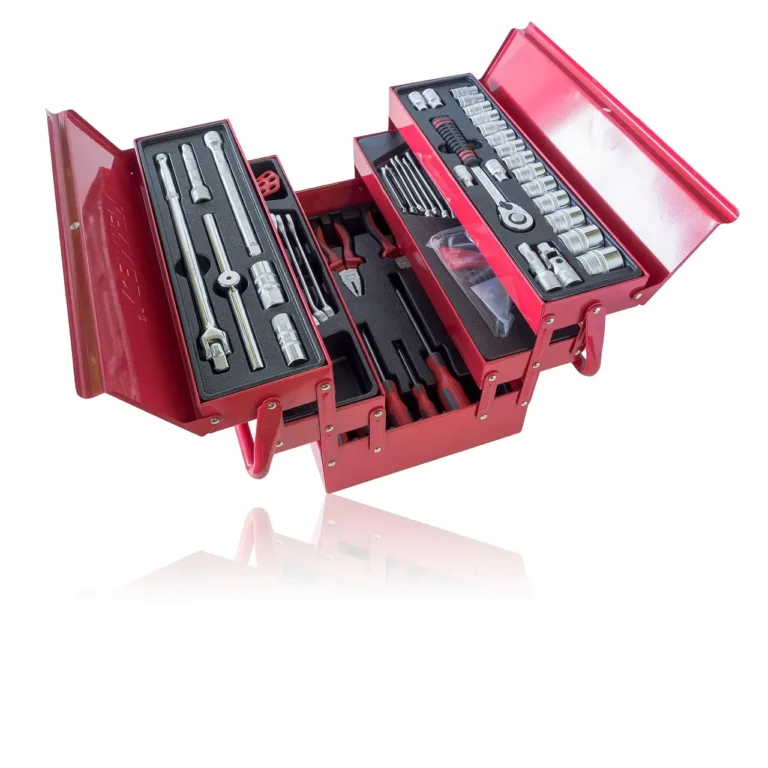
A good mechanic kit should include 6-point standard and deep sockets, a strong 3/8-inch ratchet, combination wrenches, extensions, and a few access pieces such as swivel joints and adapters. Bits, hex keys, and a magnetic nut driver add value when they support real repair tasks rather than inflate count.
Sockets: standard, deep, 6-point, and 12-point
For most buyers, 6-point sockets are the default. They grip the flats of a fastener better and are the safer choice for stubborn or high-torque work, where rounded corners get expensive fast.
12-point sockets are acceptable for lighter-duty work, faster indexing in tight angles, and applications where the fastener itself is 12-point. They should supplement 6-point coverage, not replace it.
Deep sockets matter more than many starter kits admit. Long studs, battery hold-downs, some brake hardware, and engine-bay brackets can force you into deep sockets even on otherwise simple jobs.
Combination wrenches for bolt heads and tight spaces
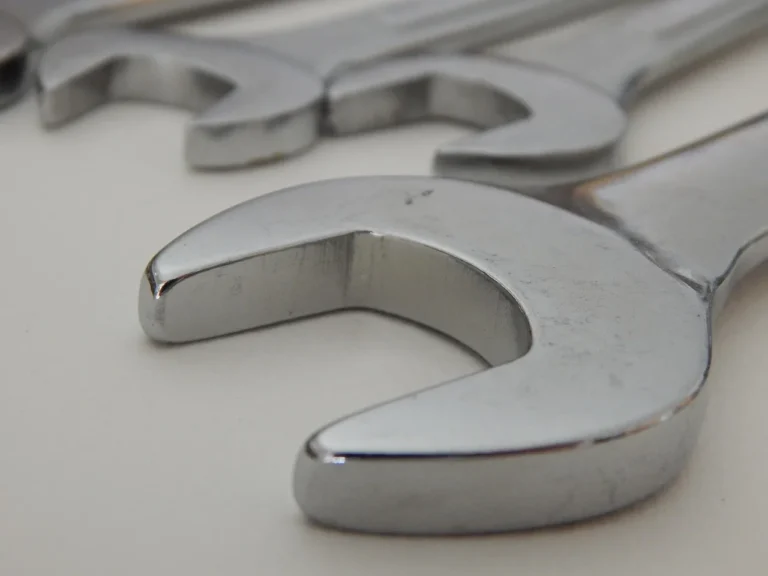
Combination wrenches separate a decent kit from a frustrating one. You need them to hold a bolt head while turning the nut on the other side, and they often fit where a ratchet and socket simply will not.
Better kits include a useful run of combination wrenches in common metric sizes. For home automotive work, missing 10 mm through 19 mm coverage creates obvious gaps.
Extensions, adapters, and swivel joints for access
Extensions are not extras. They are basic access tools. A short and medium extension cover many engine-bay and brake jobs, and a swivel joint helps when the fastener is visible but not square to the ratchet.
Adapters matter too. A 1/4-inch hex to square-drive adapter can be useful with a hand impact driver or drill for light-duty spinning of already-loose fasteners, but it is not a replacement for proper impact tools or impact-rated sockets.
Suppose your battery tray bolt sits below wiring and the ratchet handle hits the fender. A short extension plus a swivel can reach it cleanly, while a larger socket set with no access pieces leaves you stuck.
Bits, hex keys, and magnetic nut drivers
Allen hex keys and driver bits belong in a mechanic kit when they cover common fastener types you will actually meet: hex, slotted, Phillips, and often Torx for trim, sensors, and interior hardware. A magnetic nut driver is handy for battery clamps, hose clamp screws, and small trim fasteners.
Look for bit storage that keeps sizes visible. Tiny loose bit rails disappear quickly in deep, crowded cases.
What makes one kit better than another?
A better mechanic tool kit fits fasteners accurately, gives you access in tight spaces, and stays organized after real use. Ratchet design, skipped sizes, wrench inclusion, steel quality, hinge strength, and warranty terms matter far more than headline piece count once the kit passes basic coverage.
Ratchet quality, tooth count, and head clearance
Ratchet quality shows up in small moments: how little handle swing it needs, how much resistance the mechanism adds, and whether the head fits between nearby parts. Higher tooth count can help in confined spaces, but the smaller head shape and usable handle length often matter more.
Backdrag matters when you are threading a fastener by hand feel. Too much internal resistance makes the ratchet want to turn the fastener back out instead of running smoothly.
Tool steel, finish, and torque resistance
Chrome vanadium steel is a common standard for hand-tool sockets and wrenches because it balances hardness and toughness well for general mechanic use. The same source says its featured DeWalt set uses chrome vanadium steel-alloy construction, which lines up with what many mainstream automotive kits use.
Stainless steel is better understood as a corrosion-focused material, not an automatic strength upgrade for mechanic tools. For sockets and ratchets, fit, heat treatment, and how cleanly the tool contacts the fastener matter at least as much as the alloy name.
Case design, metal hinges, and drawer or molded layouts
Storage is part of tool quality because poor organization slows every job. Molded cases are portable and work well for driveway use if the tool cavities are labeled, the latches stay shut, and the hinges are not flimsy plastic weak points.
Metal hinges and secure latches are worth paying for. Shallow cases that spill sockets when carried upright waste time and make it easier to lose the one size you need most.
Drawer boxes suit a fixed garage better than a carry case. They weigh more, but they make growing a kit easier because added sockets, pliers, and specialty tools do not need exact molded cutouts.
Warranty terms and standards claims
A standard lifetime warranty is easier to value than a vague limited lifetime warranty, especially if replacement is simple through a store counter or direct parts request. Road & Track says the Gearwrench set has a lifetime warranty, which is the kind of clear term many buyers want.
Standards claims are useful when they are specific. Road & Track says the Gearwrench set meets or exceeds ASME standards. That does not guarantee perfect fit or ideal storage, but it is a more concrete signal than broad quality language.
Repair scope decision matrix
| Repair task | Minimum kit spec | Drive sizes | Socket and wrench needs | Storage format | When to skip a larger set | Buy this if |
|---|---|---|---|---|---|---|
| Oil changes | Compact starter kit with solid 3/8-inch coverage | 3/8-inch primary; 1/4-inch optional for splash shield fasteners | Metric 6-point standard sockets, a few deep sockets, short extension, combination wrenches for drain plug or filter housing access | Molded case with labeled slots | Skip a larger set if you only do fluid service and light filters; you will carry less and use more of the kit you own | Buy this if your jobs are oil, filters, battery replacement, and basic underhood checks |
| Brake jobs | Mid-range home kit with full 3/8-inch set and some 1/2-inch support | 3/8-inch core; 1/2-inch for tighter bracket or wheel-related fasteners; 1/4-inch for clips and shields | Metric standard and deep 6-point sockets, combination wrenches to hold slide pins or bolt heads, extensions, swivel joint, hex or Torx bits where caliper hardware requires them | Sturdy molded case or small drawer box | Skip a master set if brakes are your heaviest recurring job; add a torque wrench and brake tools separately instead | Buy this if you plan to service pads, rotors, and calipers a few times a year |
| Battery and electrical work | Small, access-focused kit | 1/4-inch primary; 3/8-inch secondary | Small metric sockets, deep sockets for hold-downs, driver bits, Allen hex keys, magnetic nut driver, compact ratchet, short extension | Light molded case that is easy to carry to the vehicle | Skip a larger set if most work is terminals, interior trim, sensors, and fuse-box access | Buy this if you mostly handle batteries, lighting, trim, and accessory installs |
| Suspension work | Broader kit plus separate heavy-duty add-ons | 1/2-inch essential; 3/8-inch secondary; 1/4-inch rarely central | Metric 6-point sockets, deeper size coverage, combination wrenches, longer extensions, swivel joint; separate impact sockets strongly advised | Drawer box or garage storage with room to expand | Skip a giant chrome master set if you still need to buy impact sockets, breaker bar, and torque wrench; put money there first | Buy this if control arms, struts, links, and rusted underbody fasteners are on your list |
| General maintenance | Mid-range mixed-use home kit | 3/8-inch core; 1/4-inch for interior and tight spaces; 1/2-inch added if wheels or suspension are included | Metric-first standard and deep sockets, 6-point as default, some 12-point, combination wrenches, extensions, adapters, bits, hex keys | Molded case for portability or 3-drawer box for a fixed garage | Skip a larger set if you need better coverage quality, not more duplicate pieces | Buy this if you want one serious base kit that can grow with your repair skills |
How many pieces do you actually need?
Piece count is a secondary filter, not the buying rule. For basic car maintenance, around 100-plus pieces can be enough if the set includes the right metric sizes, deep sockets, and wrenches. Move into the 100 to 300 range for broader repair work, and consider 400-plus or 800-plus only when your task list truly supports it.
What around 100-plus pieces usually covers
At this level, you should expect a workable selection of sockets, ratchets, a few extensions, and some bits. The same source says mechanic tool sets typically include more than 100 tools, which lines up with where basic automotive kits begin to feel useful rather than toy-like.
The question is whether those pieces are useful pieces. A tight 120-piece set with complete metric coverage can beat a padded 180-piece set with shallow socket coverage and weak wrench selection.
What 100 to 300 pieces adds in real use
This range often adds the pieces that keep jobs from stalling: more deep sockets, fuller wrench runs, more drive combinations, and broader bit coverage. Road & Track says the Amazon Basics kit is a 201-piece mechanic’s tool set with case, which shows how this range often targets general DIY buyers who want a more complete starting point.
What 400-plus and 800-plus sets usually include
Larger sets often add duplicate lengths, broader SAE coverage, more specialty bits, and more wrench variations. That can be useful in a shop. It can also mean paying for filler, extra weight, and a case too bulky to move easily.
Picture a two-car garage with one shelf left for tools. A compact 3/8-inch-centered kit plus a torque wrench and separate impact sockets may cover more real work than a giant master case that is too heavy to bring to the car.
How filler pieces inflate the count
Filler usually means repeated bit patterns, rarely used mini sockets, and multiple adapters that solve the same problem. Better value comes from complete runs in the sizes you actually need, especially the missing-middle metric sizes that cheap kits skip.
How should you build your kit over time?
Build your kit in stages. Start with a serious 3/8-inch-based set that includes deep sockets, combination wrenches, and access pieces. Add 1/4-inch coverage for tight spaces, then 1/2-inch and separate heavy-duty tools only when your repair list grows into brakes, wheels, or suspension work.
The best first serious set for most home garages
A strong first set has complete metric coverage, at least some SAE if your other equipment needs it, 6-point sockets, deep sockets in common sizes, and a case that keeps tools in place. Bob Vila’s Best Overall example is a 142-piece DeWalt mechanics tool set, and Bob Vila says it includes ⅜-inch and ¼-inch ratchets.
That profile makes sense for a first serious buy because it centers on the drives most often used in home automotive work. If the same set also gives you a clean upgrade path, it is doing its job.
What to add next instead of buying a huge master set
- Add a torque wrench once you start doing wheel, brake, or spark plug work where final tightening matters.
- Add impact sockets and a breaker bar before attempting frequent suspension or rusted underbody fasteners.
- Add pliers, picks, trim tools, and locking pliers as separate pieces instead of chasing a larger all-in-one count.
- Add specialty sockets only when a recurring job demands them, such as spark plug sockets, axle sockets, or sensor sockets.
When wheeled storage is worth the space
Wheeled storage is worth it when your kit has outgrown a carry case and your tools live in one garage bay most of the time. It is far less useful for apartment parking, shared spaces, or anyone who needs to carry tools to the vehicle.
For a home mechanic, a rolling box pays off only after the hand-tool kit is already solid. Storage should follow tool growth, not substitute for it.
A simple upgrade path by repair difficulty
Start with a 3/8-inch-focused kit for maintenance. Add 1/4-inch drive and bits for interior, battery, and trim access. Add 1/2-inch drive, torque wrench, and impact sockets when your work reaches wheels, brakes, and suspension.
Road & Track says the DeWalt kit includes 1/4-inch, 3/8-inch, and 1/2-inch ratchets, which is one example of a set that can shorten this process. Still, staged buying usually beats paying for a huge master assortment upfront.
Frequently asked questions
How do I choose the right mechanic tool kit for home use?
Choose by the jobs you expect to do in the next year. For most home users, that means a 3/8-inch-centered kit with metric 6-point sockets, some deep sockets, combination wrenches, and extensions. Buy larger only when brakes, wheels, or suspension work are actually on the plan.
What size mechanic tool set do I need for basic car maintenance?
Basic car maintenance usually fits a set with around 100-plus pieces if the contents are right. Prioritize a 3/8-inch ratchet, useful metric sizes, deep sockets, and a few wrenches over inflated count. A smaller, complete kit is better than a larger one with skipped sizes.
Should I buy a metric, SAE, or mixed mechanic tool kit?
Metric-first is the default choice for most modern vehicles. Buy mixed coverage if you also work on older domestic equipment, motorcycles, lawn gear, or household hardware. Paying for SAE coverage you rarely use makes less sense than getting stronger metric depth and wrench coverage.
What tools should be included in a good mechanic kit?
A good kit includes 6-point standard and deep sockets, a solid 3/8-inch ratchet, a few extensions, combination wrenches, and basic adapters. Bits, Allen hex keys, and a magnetic nut driver are useful when they support real tasks like trim, battery service, and sensor removal.
Do I need 1/4-inch, 3/8-inch, and 1/2-inch drives?
No, not on day one. Most home mechanics should start with 3/8-inch as the core, add 1/4-inch for small fasteners and tight spaces, and add 1/2-inch when higher-torque work appears. Drive size should follow fastener size, access limits, and repair scope.
What warranty should I look for in a mechanic tool set?
Look for a clear lifetime warranty with an easy replacement path, not vague language that sounds broad but limits claims. Standards claims can help too: Road & Track says the Gearwrench set meets or exceeds ASME standards, which is more useful than generic quality wording alone.